
Nothing elevates a succulent roast or braise like a luscious sauce. You can make a quick and easy pan sauce with the options below depending on what you have in your pantry or fridge.
This post is organized by primary thickening ingredient (wheat flour, cornstarch, cream-based or none in which case you reduce).
Table of contents
Quick Summary Table
| Method | Ratio (per 1 cup pan juice) | Texture Result | Best For | Avoid When |
|---|---|---|---|---|
| Flour Slurry | 1 tablespoon flour (light) 1.5–2 tablespoon (gravy) | Smooth, classic gravy | Roasts, braises, stews | Gluten-free diets |
| Beurre Manié | 1–2 tablespoon flour + equal butter | Silky, slightly richer | Pan sauces needing reliable thickening | Already very fatty dishes |
| Flour from Start | Light dusting before browning | Lightly thickened | Braises, soups, meatballs | When you want a thick gravy |
| Cornstarch Slurry | 1 teaspoon (light) 2 teaspoon (gravy) | Glossy, slightly gel-like | Gluten-free sauces | When reheating repeatedly (can loosen) |
| Heavy Cream (30–40%) | 2–4 tbsp, reduce to thicken | Rich, silky, creamy | Cream gravies, mushroom sauces | Lean, delicate dishes |
| Crème Fraîche | 2–4 tbsp | Thick, stable, slightly tangy | Savory pan sauces | Very high-heat reduction |
| Coconut Cream | 2–4 tbsp | Creamy with coconut flavor | Curries, SE Asian dishes | Classic European-style gravies |
| Reduction Only | Simmer until reduced | Intensely flavored, lighter body | When no thickeners available | When very little liquid remains |
Option 1: Make a pan sauce with flour
Since most of us have flour in the pantry, one of the simplest ways to make a quick pan sauce is by using flour.
There are three different ways to make a pan sauce with flour: making a slurry, using a beurre manié (or kneaded butter), or incorporating the flour from the start.
Make a slurry with flour and pan juice
This is the most common way to make a pan sauce and uses the pan juice already present. If there's not enough liquid left in the pan at the end of cooking, you can put some water or stock back in and cook for a few minutes on the stovetop to infuse flavors.
To make a pan sauce with flour and pan juice, you make a slurry. Spoon 3 tablespoons of pan sauce into a separate bowl and then mix or whisk in 1-2 tablespoons flour, depending on thickness desired (see the info on quantities a few paragraphs down).
Why use a separate bowl for a slurry?
It's done in a separate bowl with a smaller quantity of liquid in order to prevent clumps. If you add flour directly to the pan in a larger volume of juices it can get coated by the liquid and form clumps that are near impossible to amalgamate unless you use a blender which is to say the least, uber annoying.
So the small sacrifice of dirtying an extra bowl is well worth it.
Flour thickened sauce has to be cooked
Once the slurry is well mixed and there are no white specks of flour remaining, pour it back into the pan and cook over medium heat until thickened (usually only about 5 minutes).
Since the sauce has to be mixed and cooked, it's usually necessary to remove solids like meat and vegetables from the pan (but if the pieces are smaller, you can sometimes get away with leaving them in).
As far as quantities go, a rough guideline is that for every cup of liquid left in the pan after cooking (usually no more than 1 cup is left) use 1 tablespoon flour for a slightly thickened sauce or 1.5 - 2 tablespoons flour for more of a gravy consistency.
Quick summary slurry method: In a separate bowl whisk together 3 tablespoons pan juice with 1-2 tablespoons flour (depending on thickness desired). Once combined pour back into pan and heat until thick. This quantity thickens about 1 cup of pan juice.
| Benefits | Drawbacks |
| - Convenient and easy. - Accessible (most people have flour in their pantry). - Smooth texture and neutral taste. - Flavorful sauce due to using pan juice. | - The slurry needs to be cooked to thicken. - It's possible to still have some lumps if you use too much liquid to make the slurry. - Solids may need to be removed from the pan for ease. - Not good for gluten-free diets. |
Use a beurre manié
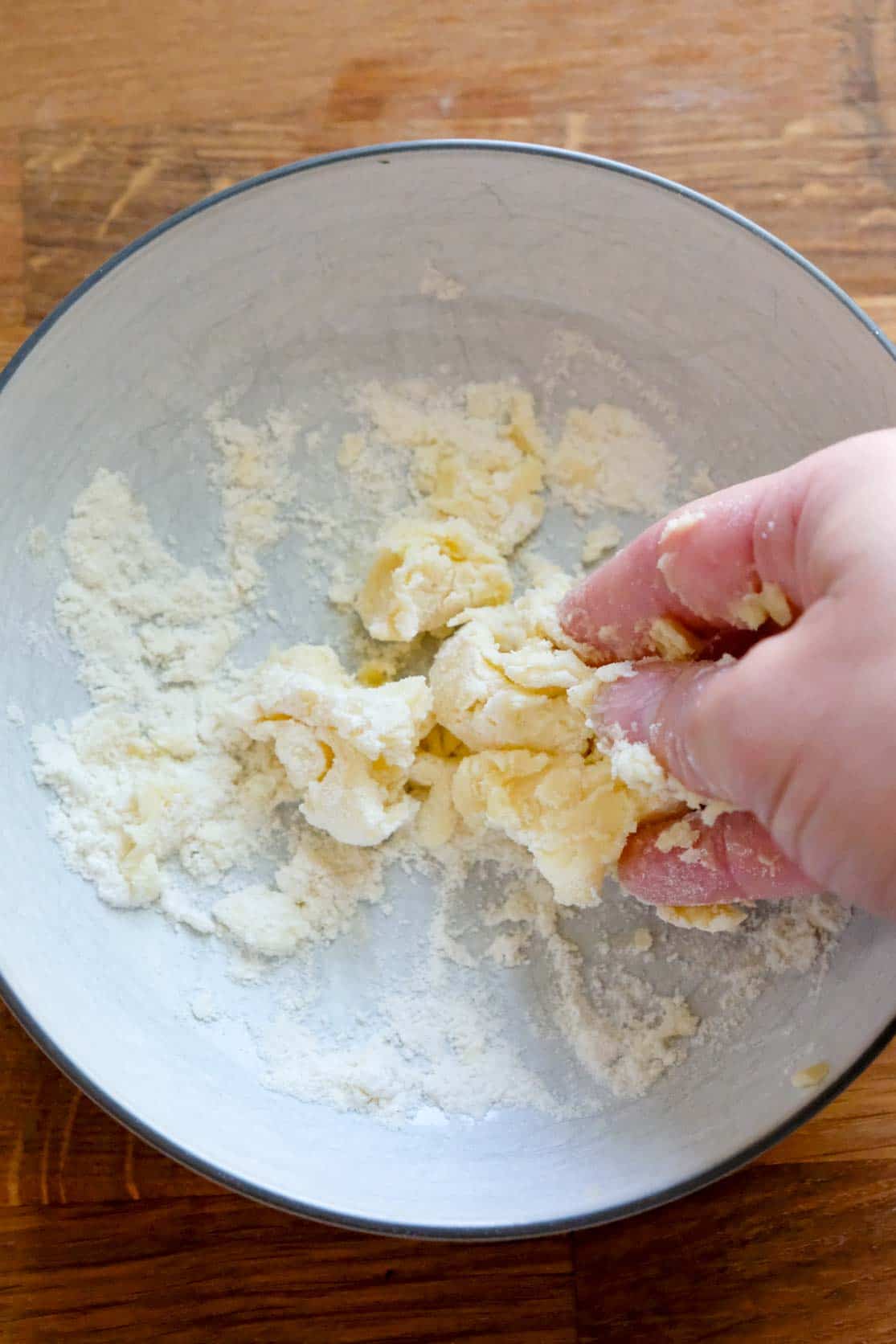
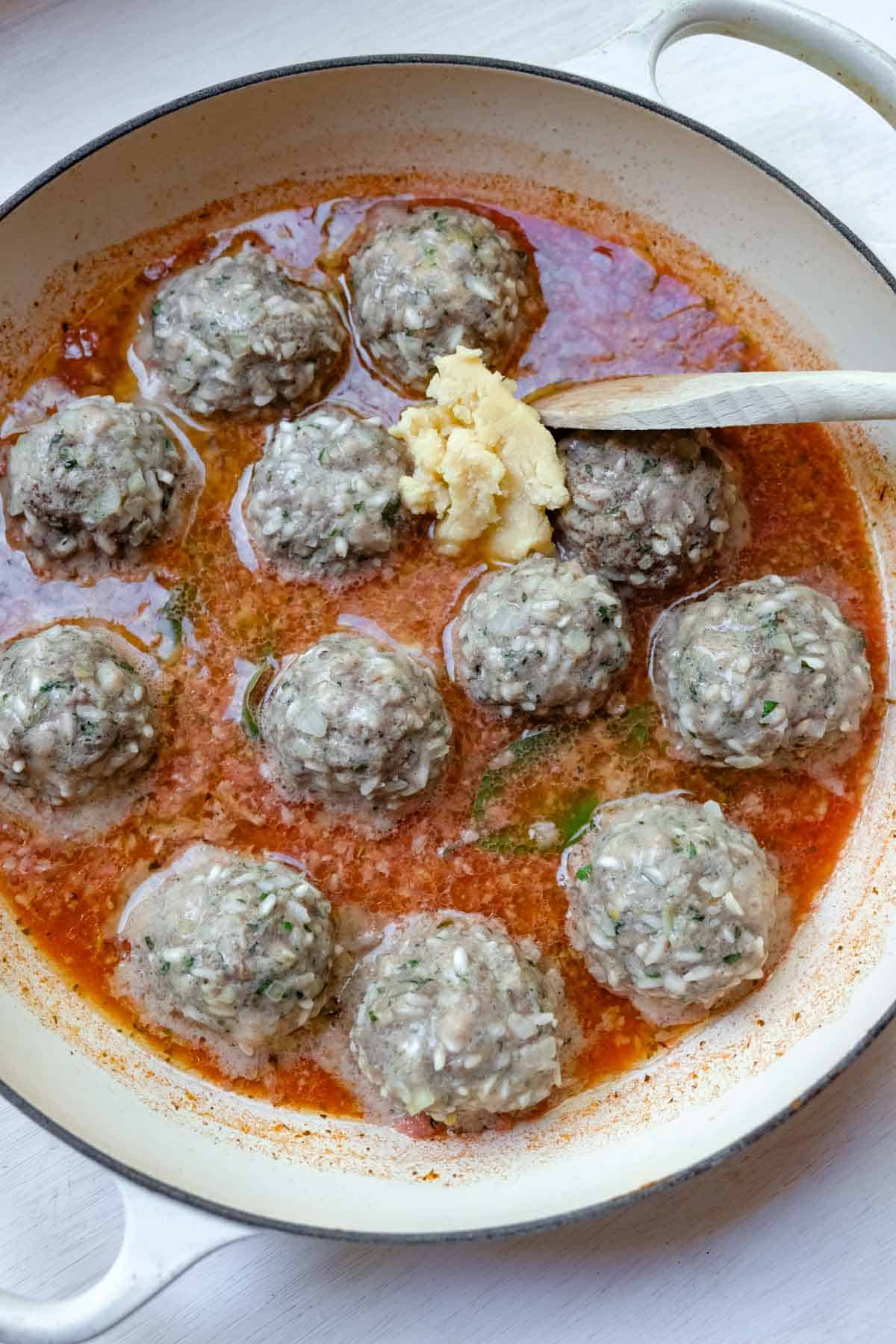
A beurre manié is a French technique that involves kneading together equal amounts of flour and butter. Kneading the butter with the flour doesn't just mix them together, it coats the flour with butter so that when it mixes with warm liquid, it predictably and reliably transforms into a silky sauce.
In general this is a somewhat more predictable way to incorporate flour as compared to a slurry because there's virtually no chance of clumps.
The ratios are mostly the same: for every cup of liquid left in the pan after cooking (usually no more than 1 cup is left) use 1 tablespoon flour for a slightly thickened sauce or 1.5 - 2 tablespoons flour for more of a gravy consistency.
Quick summary beurre manié: Knead together 1-2 tablespoon each (depending on thickness desired) of flour and butter until incorporated. Put back in pan and cook over medium heat until thickened (5 minutes or so). This is enough to thicken about 1 cup of pan liquid.
| Benefits | Drawbacks |
| - Convenient and easy. - Very predictable and reliable thickening. - Accessible (most people have flour in their pantry). - Smooth texture and neutral taste. - Flavorful sauce due to using pan juice. | - The kneaded butter needs to be cooked to thicken. - You need to get your hands a bit dirty. - Solids may need to be removed from the pan for ease. - Not good for gluten-free diets. - Not good for sauces that are already rich or fatty since this method adds more fat. |
Incorporate flour from the start
A very reliable way to "bake-in" thickening is to add flour from the start. You can do this by dusting cuts of meat with flour before browning for a roast or braise or likewise for meatballs as shown below. This method is also great for thickening soups.
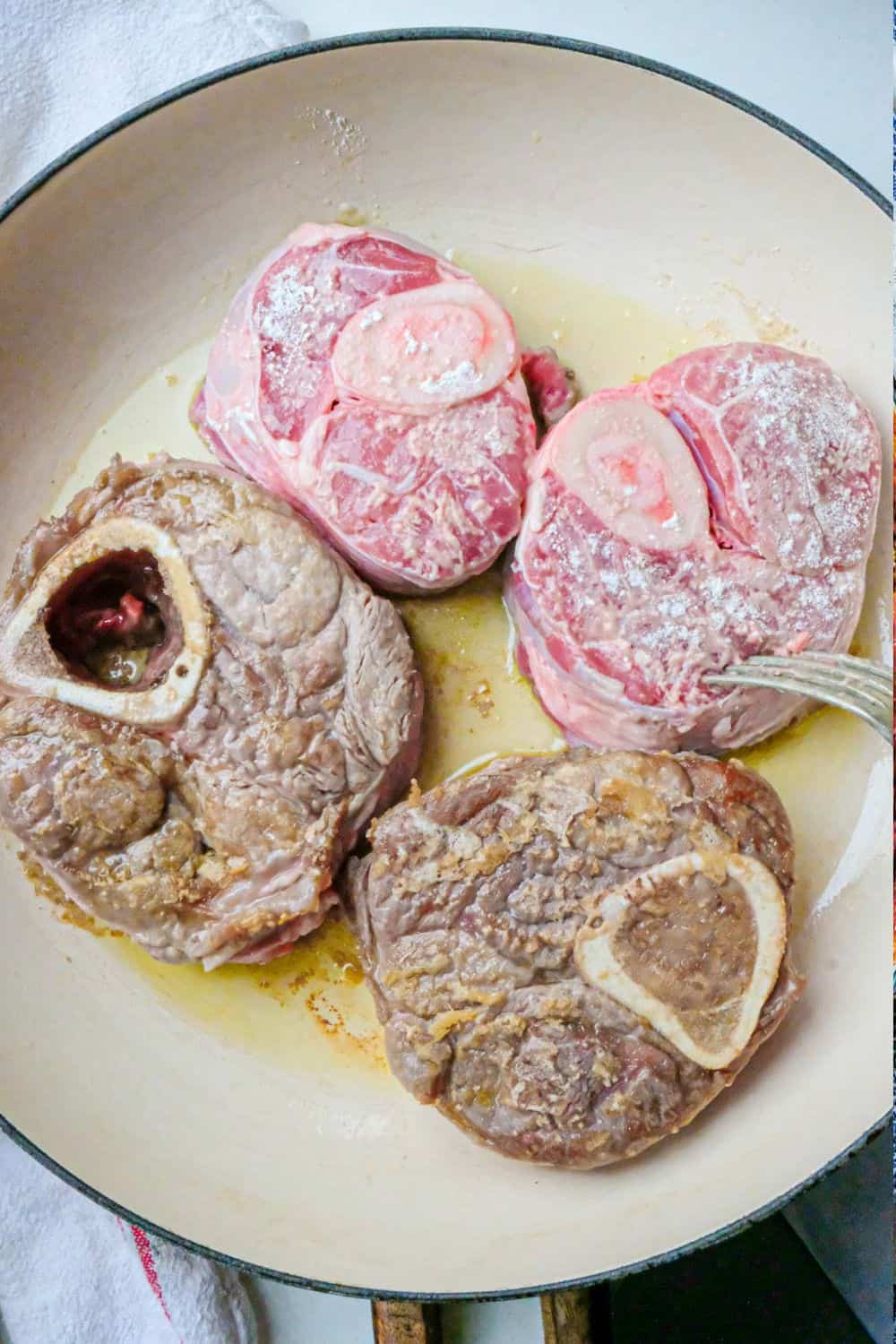
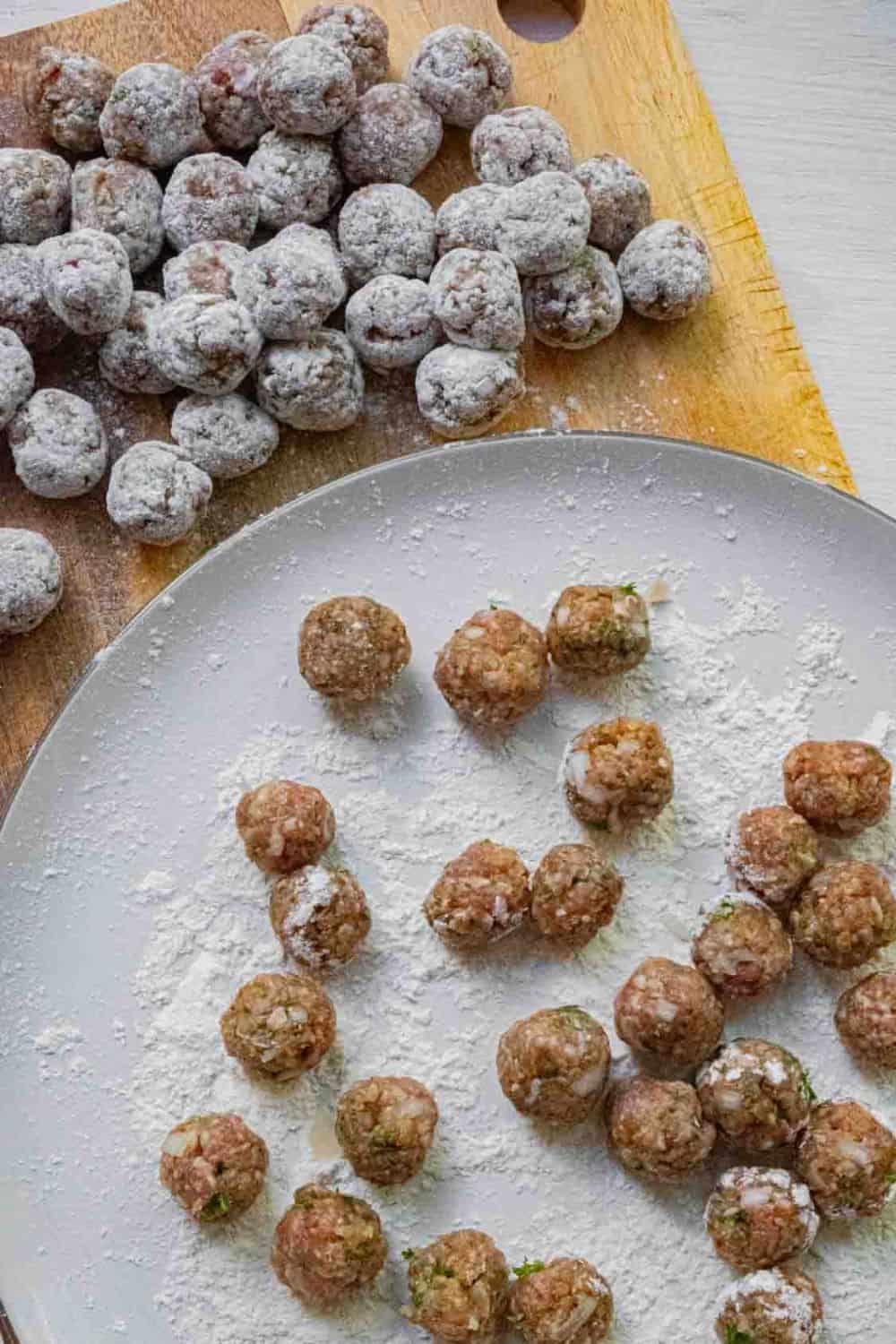
This method is usually reliable but generally is better for just making a lightly thickened pan sauce rather than a rich gravy. This is for two reasons. First, because the total amount of flour introduced this way is relatively small. And second, because the thickening power of wheat flour is somewhat reduced with long or very hot cooking. You can see below the thickness of the pan sauce in the Milanese veal shanks after long, low and slow cooking.
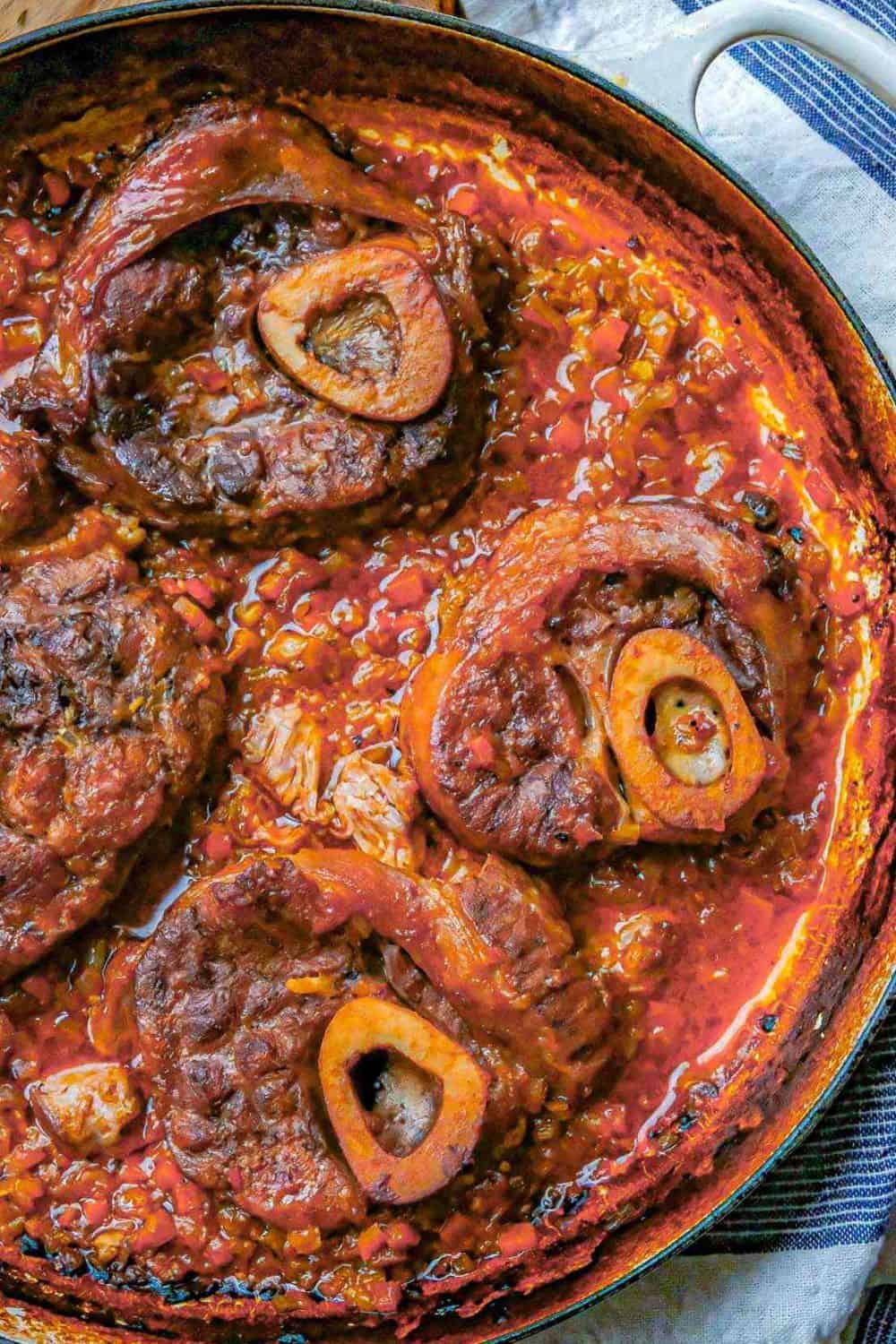
Quick summary incorporate flour from the start: Dust ingredients like meat or even vegetables with flour before roasting or braising to incorporate thickening from the start. Good for making lightly thickened pan sauces.
| Benefits | Drawbacks |
| - Convenient and easy. - No extra steps at the end. - Not necessary to remove solids. - Very predictable and reliable thickening. - Accessible (most people have flour in their pantry). - Smooth texture and neutral taste. - Flavorful sauce due to using pan juice. | - Long cooking can weaken thickening power of flour. - Not good for gluten-free diets. |
Option 2: Make a pan sauce with cornstarch
Cornstarch is a great gluten-free alternative to flour as a thickener. It also has more thickening strength which means you need less cornstarch than flour to thicken an equal amount of liquid.
The basic premise is the same as making a pan sauce with flour. The ratios are just different because cornstarch has more thickening capacity due to being pure starch.
Take out 2 tablespoons of the liquid and whisk it up in a separate bowl with 1-2 teaspoon cornstarch to make a slurry. Then mix the slurry back in and cook a few minutes over medium heat to thicken.
Per every cup of liquid left in the pan after cooking (usually no more than 1 cup is left) use 1 teaspoon cornstarch for a slightly thickened sauce or 2 teaspoons cornstarch for more of a gravy consistency.
Quick summary cornstarch slurry: In a separate bowl whisk together 2 tablespoons pan juice with 1-2 teaspoons cornstarch (depending on thickness desired). Once combined pour back into pan and heat until thick. This quantity thickens about 1 cup of pan juice.
| Benefits | Drawbacks |
| - Convenient and easy. - Very predictable and reliable thickening. - Accessible (a lot of people have cornstarch in their pantry). - Great alternative to wheat flour for gluten free diets. | - The texture of a cornstarch thickened sauce can be a bit gloopy rather than viscous and smooth (depends on ingredients and thickness). - The cornstarch slurry needs to be cooked in order to thicken. - Solids may need to be removed from the pan for ease. |
Option 3: Make a pan sauce with cream
Cream is a great option if you don't have flour or cornstarch. Depending on the fat content, you can just swirl some in at the end or otherwise slightly reduce until thick.
Cream-based thickening is a great option for things like:
- Creamy pan sauces
- Creamy soups
- Alfredo-style sauces
- Mushroom cream sauces (as shown in the photo below)
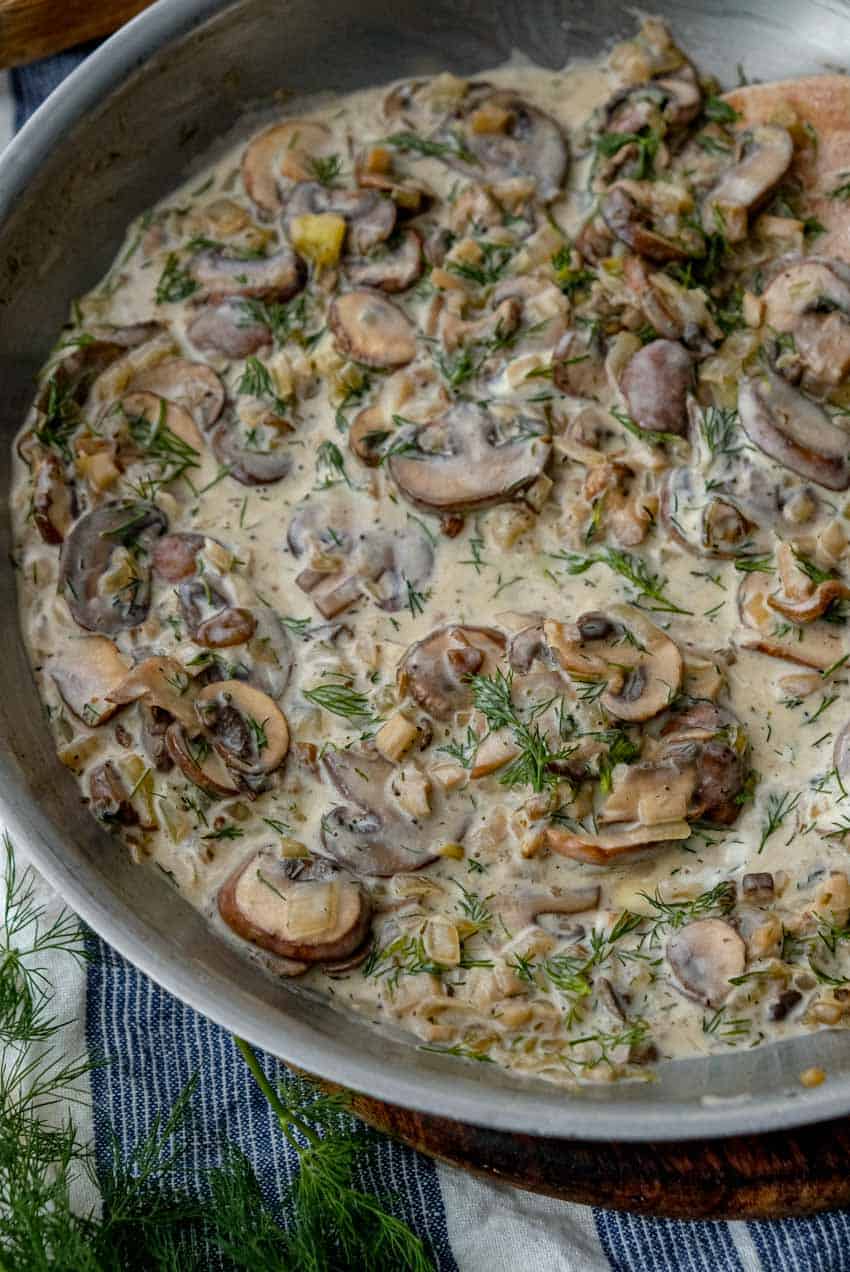
Not all creams are right for thickening.
To thicken a sauce with cream, you want something with a high enough fat content to reduce properly without splitting.
The higher the fat, the more stable and thick it becomes when simmered.
Top choice: 30-40% cream (heavy/double/whipping cream)
High-fat cream thickens very well when simmered but is also very stable (doesn't curdle easily). You can just drizzle in about a ¼ cup and heat gently while mixing. This is usually enough to create a rich, glossy cream-based pan sauce. For a thicker gravy-like sauce, continue heating over medium until reduced and thickened.
Since cream is quite sweet on its own, you'll want to taste and add more seasoning if necessary.
Top choice: Crème fraîche 30-40% fat
In my experience the best cream for thickening is crème fraîche. You can add a few tablespoons directly to the pan and just mix in while warming gently. Since it's thick to start, it adds thickness readily and then can also be lightly reduced for more thickness. It's especially stable and great in savory sauces.
Okay for thinner sauces: Cooking Cream (18-25% fat)
Cooking cream, being lower in fat and not especially viscous, offers moderate thickening. It's good for whisking up a quick pan sauce that's mostly creamy and only slightly thick. This can be great if you're aiming for a lighter touch.
Cooking cream can split when exposed to high or prolonged heat so it doesn't always work to reduce it into a thicker sauce.
Okay for thinner sauces: Coconut cream (20-30% fat)
Whisk a few tablespoons of coconut cream into the reduced pan juices and simmer briefly to create a quick, silky sauce. You can also use coconut cream as a base to a stew so you have a built-in creamy sauce, for example like creamy coconut curry meatballs or one pot coconut curry with whole sweet corn wedges.
Coconut cream thickens beautifully, but keep in mind it will add a subtle coconut flavor, so it works best in preparations that go with coconut flavor like Southeast Asian dishes.
Cream cheese 30-45% fat
Cream cheese like mascarpone or regular Philadelphia can also work for thickening a pan sauce.
Mascarpone has 40-45% fat, thickens well and can handle some heat. On the downside it's very rich which, when paired with pan juices that contain a bit more fat, may result in a greasy mouthfeel. You can see an example of creamy coconut curry meatballs finished with mascarpone.
Cream cheese like Philadelphia has about 30-33% fat which means it can handle a bit of heat without curdling.
Usually cream cheeses (in particular Philadelphia) contain stabilizers to help them keep their shape and firmness. This can also make them difficult to incorporate into a liquid. For best results, temper cream cheese: whisk together a few tablespoons of pan juice with cream cheese until smooth and then add back to the pan and mix in.
Not ideal: Sour cream (18-20% fat)
Sour cream is not an ideal choice for a pan sauce since the fat content usually means it splits easily. Unlike cooking cream (which has a similar fat content) it isn't formulated to be cooked with. Plus, it adds a sort of tangy flavor which isn't usually desirable for a sauce accompanying a rich or deeply flavored roast or braised dish.
That being said, it can work in a pinch. Stir a few tablespoons of sour cream into pan juices at the end of cooking (off heat). Taste and adjust seasoning if necessary.
Sometimes you can find higher fat sour cream but generally it's an inferior option to higher fat creams like crème fraîche or even just whipping cream.
Not ideal: Milk
Milk is not great for making a pan sauce because it's too thin and low fat to make a rich sauce. It doesn't reduce readily and can also split if exposed to very high heat.
The only way milk can work for making a pan sauce is if you make a bit of béchamel sauce in a separate pan and then add it to the pan juices to thicken.
Quick summary pan sauce with cream:
| Cream Type | Fat % | Thickening Power | Stability When Heated | Why It Works (or Doesn’t) | Best Use |
|---|---|---|---|---|---|
| Heavy / Whipping / Double Cream | 30–40% | Strong | Very stable | High fat allows reduction without splitting; thickens naturally as water evaporates | Classic cream gravies, mushroom sauces, rich pan sauces |
| Crème Fraîche | 30–40% | Very strong | Extremely stable | Already thick and cultured; resists curdling and incorporates easily | Savory pan sauces, braises, mushroom stews |
| Mascarpone | 40–45% | Strong | Stable (moderate heat) | Very high fat content thickens well but can feel overly rich or greasy | Finishing rich sauces, creamy braises |
| Philadelphia-Style Cream Cheese | 30–33% | Moderate–Strong | Moderately stable | Contains stabilizers; thickens well but can be harder to incorporate smoothly | Quick pan sauces when whisked with hot liquid first |
| Coconut Cream | 20–30% | Moderate | Stable | High fat thickens nicely, but adds coconut flavor | Curries, Southeast Asian–style sauces |
| Cooking Cream | 18–25% | Mild–Moderate | Moderately stable | Lower fat = less reduction power; may split under prolonged high heat | Light creamy sauces, gentle thickening |
| Sour Cream | 18–20% | Mild | Low stability | Lower fat and high acidity; prone to splitting when boiled | Only off heat, in a pinch |
| Milk | 3–4% | Very weak | Low stability | Too low in fat to reduce properly; splits easily at high heat | Only as part of a béchamel made separately |
Option 4: Make a pan sauce without flour, cornstarch or cream
Times are tough. You want a sauce for your roast but find yourself without flour, cornstarch or a suitable cream. What to do, what to do...
Oftentimes you can still make a sauce simply by reducing the liquid to concentrate the flavors.
Bonus points if you have the forethought to add extra liquid to the pan from the start, so you have ample flavorful liquid to reduce and concentrate.
This method usually doesn't make a very smooth or silky sauce since you're (probably) relying on thickening from the dispersed vegetable and meat fibers from your roast or braise. Still, better than no thickening at all.
Related
If you enjoyed this deep dive into cooking techniques, you may also like:
Comments
No Comments