
Give your soups, stews and braises a flavor boost this winter with this Romanian lacto-fermented soup starter called zarzavat.
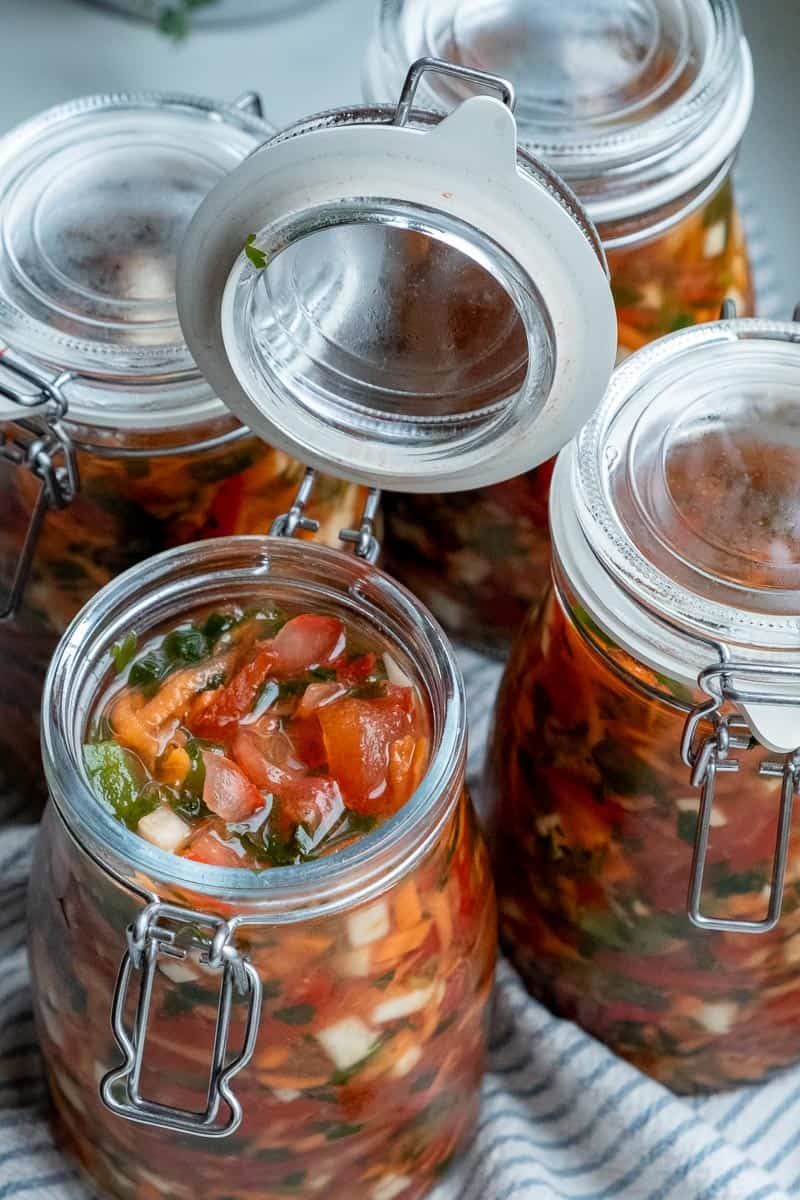
This lacto-fermented soup starter mix is so much more than the sum of its parts.
Zarzavat is a common preparation in Romania, part of our fermentation tradition that also includes sauerkraut and all kinds of pickled vegetables. Many people mix up a batch of zarzavat to have on hand for the winter months.
The vegetables that make it up are already full of flavor. Tomatoes, red and green pepper, carrot, celeriac and lots of fresh parsley are enough to make a tasty soup on their own.
But add lacto-fermentation to the mix and it becomes something special. The level of depth this starter brings to soups would make you think they took ages to prepare. But a wildly flavorful soup can be ready in only about 30 minutes.
- Totally transform simple soup with loads of depth and flavor;
- Adds more complexity than bouillon;
- Add one finely diced onion and protein of choice (beans, chicken, beef etc.);
- Simmer together and in as little as 30 minutes you have a delicious soup;
- Also great as a flavor starter for braises or stews.

Soup Starter Ingredients
The recipe in this post is one shared with me by my mother in law Ghinița. Ghinița's recipe has a base of carrots, celery root, parsnip, and parsley, with tomatoes and green and red peppers for 'juice' and acidity.
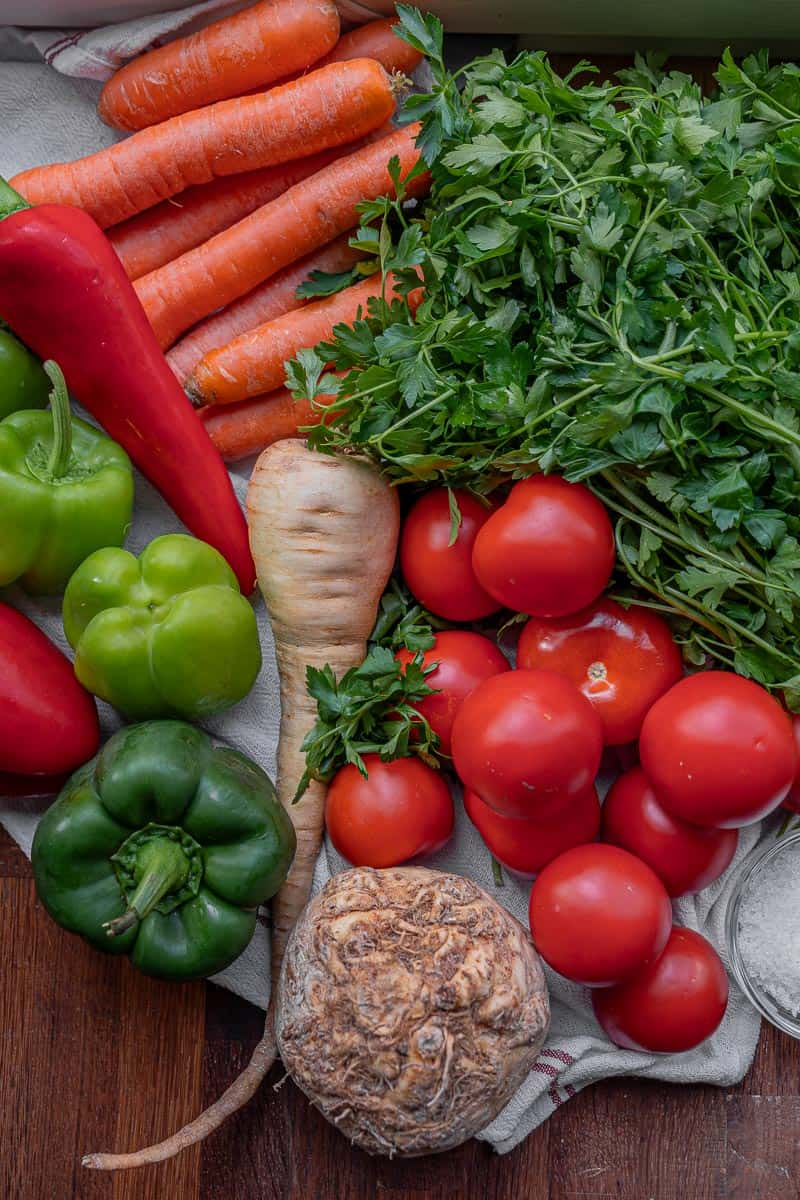
But there is no set-in-stone recipe for zarzavat. You can tailor the mix to your taste and add just about any vegetable or herb.
In general there are ratios of root, watery vegetable and herb.
Root vegetables (about 75%)
Root vegetables make up the backbone and add sweet earthiness. Common additions include carrots, celery root, parsnip, and parsley root.
Watery vegetables (about 20%)
Watery vegetables contribute freshness, aroma, and acidity but are used more sparingly to avoid dilution and soft texture. Typical additions include tomatoes and peppers (red or green).
Herbs (about 5%)
Herbs are used as a finishing accent for aroma rather than bulk. Parsley is most common; lovage or celery leaves may also be added in small amounts.
Usually alliums like garlic, onion and leek don't go in lacto-fermented zarzavat because they can get mushy and release sulfuric compounds that smell foul.
How to Make Fermented Soup Starter
Step 1: Prep the Vegetables
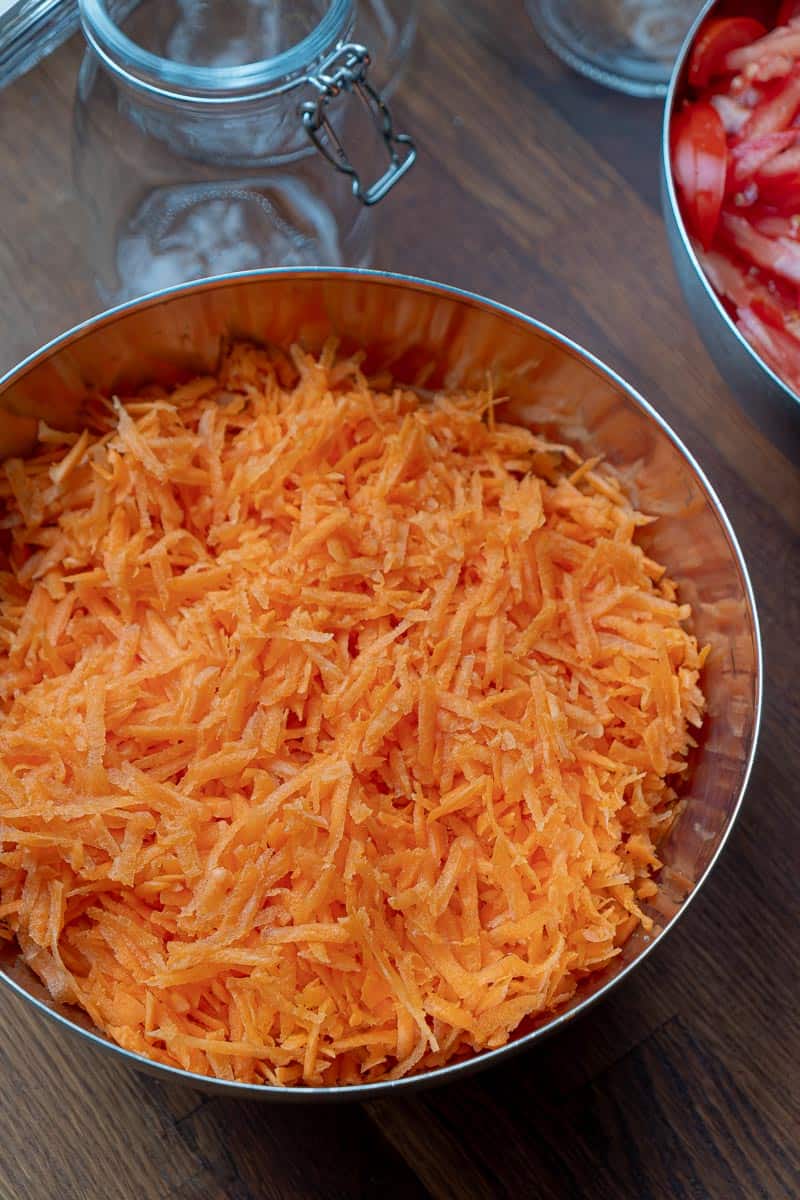
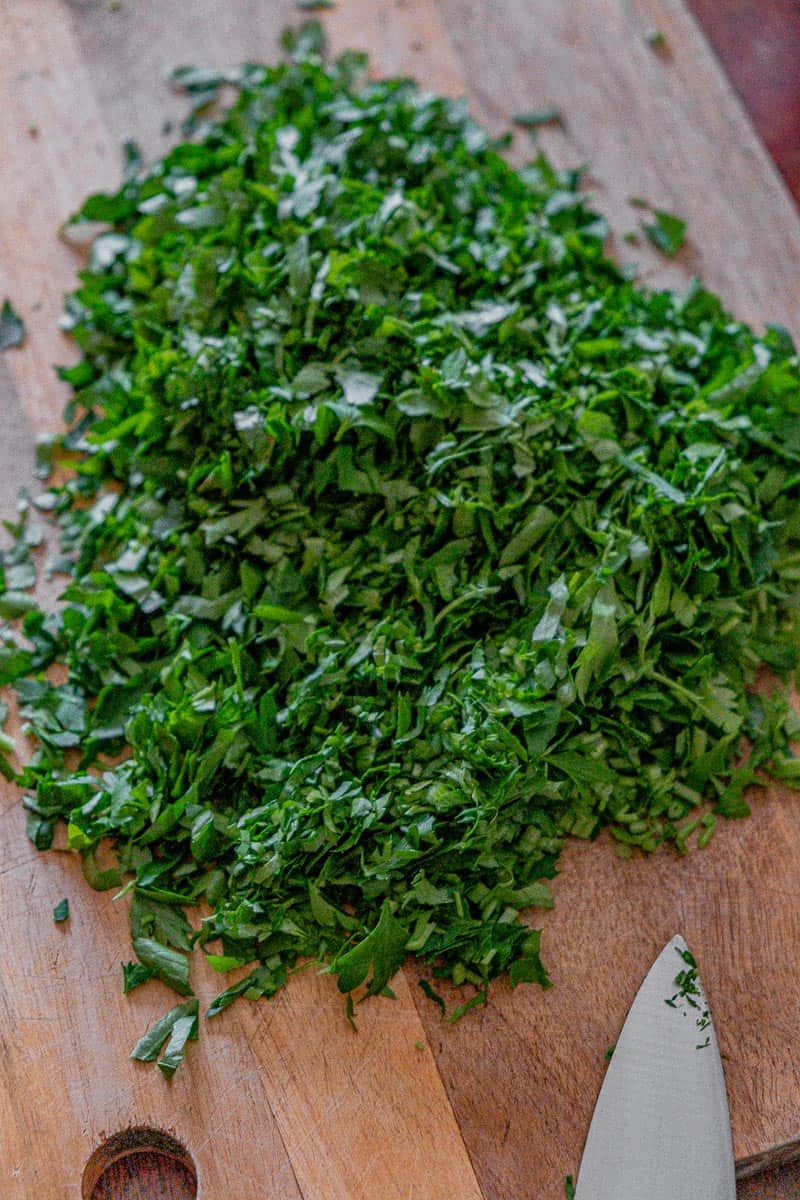
- Slice the tomatoes into thin strips.
- Cut the peppers and root vegetables into very small cubes.
- Grate the carrots.
- Remove the stems and finely dice the parsley.
Once everything is cut up, mix it all together in a large bowl.


Step 2: Calculate Salt Concentration
The only rule is that you need to add about 25 grams of salt per kg of vegetables. This represents a 2.5% salt concentration.
The recipe card has the ingredient by the number of each vegetable because in practice that's how you'll buy and prepare the ingredients. But the weight is more important that determines how much salt you will add.
Knowing the weight we used also gives you a rough idea of the ratios of each vegetable by weight.
In my case for the soup starter pictured here, we used:
- 1.2 kg tomatoes / 2.65 lb
- 800 g carrots / 1.75 lb
- 650 g celery root (celeriac) / 1.43 lb
- 520 g green pepper / 1.15 lb
- 377 g red pepper / 0.83 lb
- 250 g parsnip / 0.55 lb
- 300 g parsley / 0.66 lb
Total vegetable weight: 4,097 g (4.1 kg) / about 9.0 lb
Salt used (2.5%): 100 g salt (3.5 oz, just under ¼ cup salt).
After you calculate and add the right amount of salt to your vegetables, give them a cook mix to make sure they are evenly combined and the salt is evenly distributed.
Then the mix stays out on the countertop to ferment for 48 hours.

Step 3: Dry-Salt Ferment
It's not really dry dry, but a dry-salt ferment means we don't add any additional water.
The salt is mixed directly with the vegetables and draws out their water, which creates a self-generated brine.
What to expect with a dry-ferment at 24 hours vs 48 hours at indoor temperature
Assuming a 2.5% salt concentration and typical indoor temperatures (18-22 °C / 65-72 °F):
After 24 hours
- Early fermentation stage;
- Vegetables will have released a good amount of liquid as shown in the photo below;
- Flavor: fresh, vegetal, lightly tangy.
- Texture: still quite crisp.
- Activity: some small bubbles may start appearing; the mix will still smell fresh and vegetable maybe with a touch of sour.

After 48 hours
- Fermentation is clearly active;
- Ample brine formed in bottom of bowl;
- Flavor is noticeably tangier, more complex;
- Texture: still crisp but beginning to soften slightly (especially tomatoes and peppers).
- Activity: noticeable bubbling;
- Aroma: vegetal and slightly sour, fresh, bright (not musty or foul).
How to Store Fermented Soup Starter
Once the fermentation period is complete, pack the vegetable mixture tightly into clean jars, pressing it down so the vegetables are fully submerged in their own brine.
Seal the jars and store them in the refrigerator, a cold cellar, or another consistently cool place.
Cold storage slows fermentation and helps preserve flavor, color, and texture.
Always use clean utensils when removing portions, and ensure the remaining vegetables stay submerged to prevent spoilage.
Properly stored, fermented soup starter will keep for several months.

How to Use Fermented Soup Starter
Of course you can use it to make soups, for example chicken and vegetable soup.
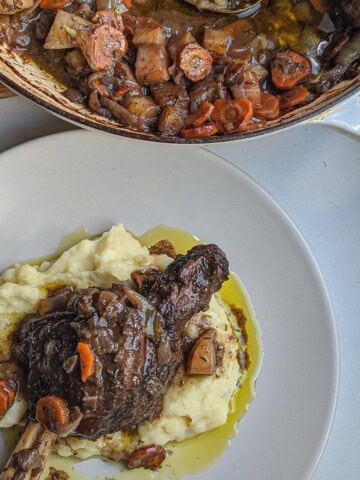
You can also add it as a flavor base to stews or rice pilaf, use half a jar to give a flavor boost to cabbage roll mix or ground meat for stuffed peppers.

Recipe

Zarzavat: Romanian Fermented Vegetable Soup Base
Ingredients
- 12 tomatoes medium-sized
- 8 carrots medium-sized
- 1 bunch flat leaf parsley large bunch, equivalent to about 2 cups finely diced (stems removed)
- 1 parsnip
- 1 celeriac
- 3 red peppers
- 3 green peppers
- 25 grams salt
Equipment
- 8 500ml jars / US pint jar (16 fl oz)
- kitchen scale necessary for proper salt concentration
Instructions
cut the vegetables
- Slice the tomatoes into thin strips.
- Cut the peppers and root vegetables into very small cubes.
- Grate the carrots.
- Remove the stems and finely dice the parsley.
salt
- Add 25 grams of salt for every kg of vegetable weight (0.88 oz or ¾-1 tablespoon salt per 2.2 lb vegetables).
- Mix well to ensure even salt distribution.
countertop ferment
- Cover lightly with a clean cloth and leave on the countertop to ferment for 48 hours. Stir every so often. After 24 hours you will notice a lot of liquid (this is the brine forming). After 48 hours there will be bubbles - this is the fermentation.
store
- Put about 450 grams (1lb) of mix into 500 ml / US pint jars to store in the fridge or in ziploc bags to store in the freezer.
Nutrition
Related Recipes
Maybe you'll also like:





Comments
No Comments