
Learning how to make lard at home gives you access to a depth and flavor-enhancing cooking addition that has a lot of applications. Making lard is simple. All you need is some pork belly fat and a bit of patience.
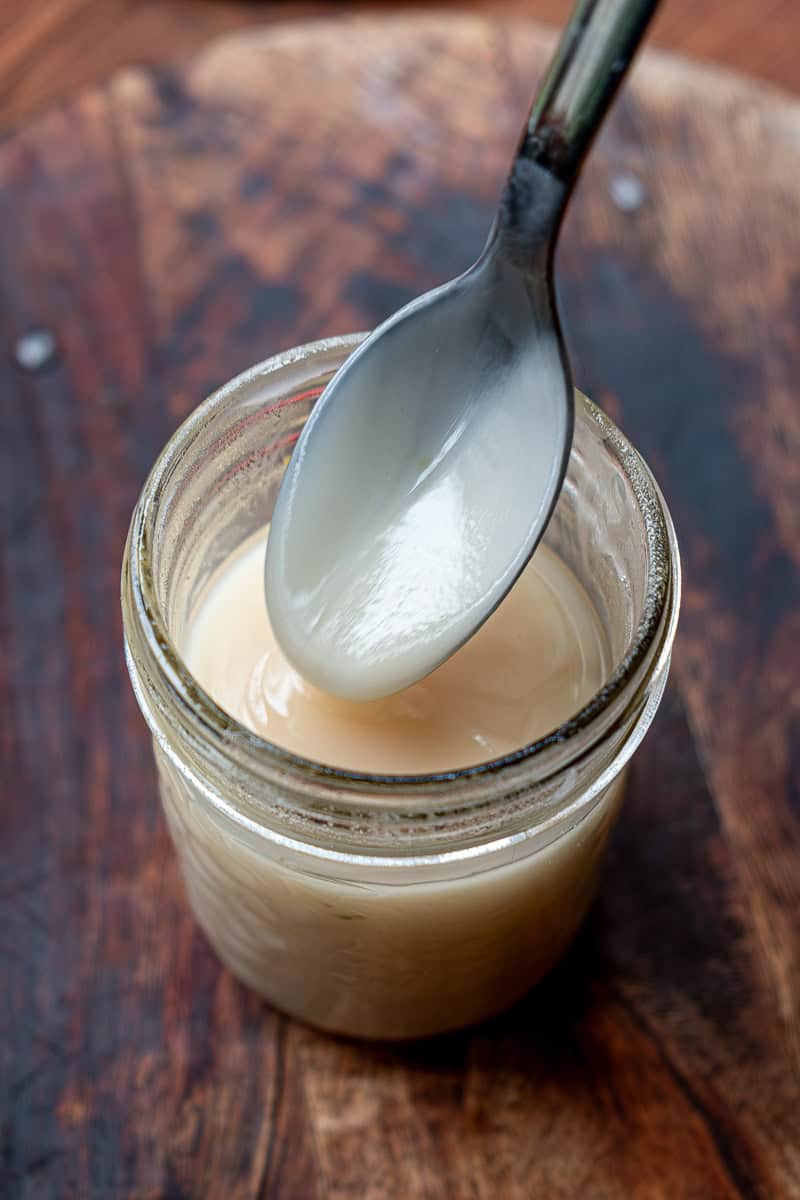
In a lot of countries lard is a primary cooking fat, used extensively for all sorts of cooking applications. Lard is valued for the depth of flavor it imparts when used as a cooking fat in savory dishes like stews, as well as its properties for baking (tender crumb all around and deeper flavor in savory bakes) and frying (deeper flavor and high smoke point).
From my own Romanian heritage, lard is a foundational cooking fat. Known as untură, it was traditionally rendered during the annual pig slaughter and used year-round for everything from sautéing onions to making pastries.
Nowadays lard is most often purchased directly from a butcher or (also common) rendered at home from purchased pork fat. See the section below on How to Use Lard for recipes and suggestions.
Making your own lard at home can be more cost effective than buying from a butcher but more importantly, gives you more control over the type of lard you make, depending of course on how you want to use it.
Table of contents
Types of Lard
Lard is basically the rendered fat of a pig, similar to how rendered beef fat is called tallow and rendered poultry fat is called schmaltz.
Lard can be categorized based on how the fat is rendered (frying verses boiling) and also where the fat comes from.
Ways to Render Fat into Lard
Boiling (wet-rendered lard)
- Fat is diced, covered with water (250-350 ml or 1-1.5 cups per kg/lb of fat), and simmered until the fat renders (more water is added to keep the level constant); after cooking the lard is separated and strained (takes about 1.5-2.5 hours total, including cooling).
- Produces high quality pure white lard great for baking sweet baked goods like pie and tart crust.
- Cleanest taste but most time consuming and hands-on method
Frying (dry-rendered lard)
- Fat is diced, then cooked in a pot on the stove over medium-low heat until it renders, producing lard and cracklings (takes about 45-75 minutes).
- Produces lard with small bits of browned fat / meat - not pure white but highly flavorful and great for savory cooking. Can be strained in cheesecloth to make it more pure.
- Fastest method
Slow cooking (slow dry rendered lard)
- Fat is diced and cooked uncovered on very low heat in a slow cooker or low oven until fully rendered, then strained (takes about 3-5 hours).
- Middle way: Produces a pure lard with very little browning.
- Good for sweet baked or savory cooking.
- Time consuming but mostly hands-off.
Types of Lard Based on Fat Source
Leaf lard
- From fat around the kidneys
- Mild, neutral, very white
- Best for baking and pastry
Back fat lard (fatback)
- From fat under the skin along the back
- Light pork flavor, firm texture
- Best all-purpose lard for cooking and savory baking
Belly lard
- From pork belly
- Richer, more pork-forward flavor
- Best for frying and rustic dishes
Mixed fat / trimmings lard
- From assorted pork fat scraps
- Stronger, variable flavor
- Traditional household lard; best for everyday cooking and flavoring dishes
So you can see if your goal is to make lard for sweet bakes, then leaf lard rendered through boiling is your best bet.
Otherwise, if your use cases are more related to everyday cooking then you can decide the properties you want and the amount of time and effort you can invest.
This post mostly focused on dry-rendering (fastest method) pork belly fat (most readily available fat).
There's also a parallel method offered for wet-rendered lard.
Lard Ingredients
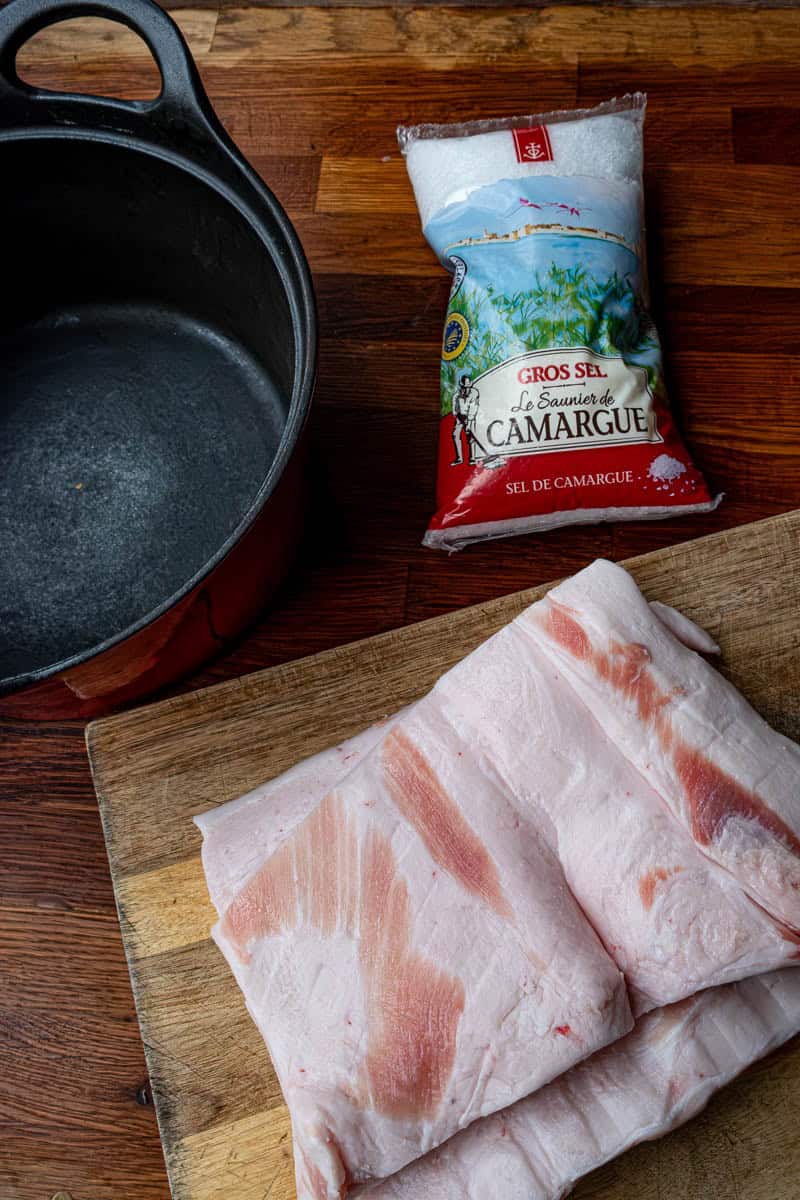
Pork belly fat: Pork belly fat is readily available and a good option for producing flavorful lard. It also produces cracklings as a by-product which make a great snack.
Salt (optional): If you intend to also make and keep the cracklings then you'll need to use.some salt. If not then salt is not needed.
Methods for How to Make Lard
There are three main ways to render lard at home: dry rendering, wet rendering, and slow rendering, each defined by how much heat and moisture are used and how quickly the fat is cooked.
- Dry rendering is the fastest and produces the most flavorful lard along with cracklings;
- Wet rendering takes longer, using water to create the cleanest, whitest lard ideal for baking, and;
- Slow rendering sits between the two, trading speed for a mostly hands-off process and a lighter, more neutral result.
Homemade Lard Dry-Rendering Method (Frying)
This section outlines how to make lard by frying pork fat until it's rendered into lard and cracklings.
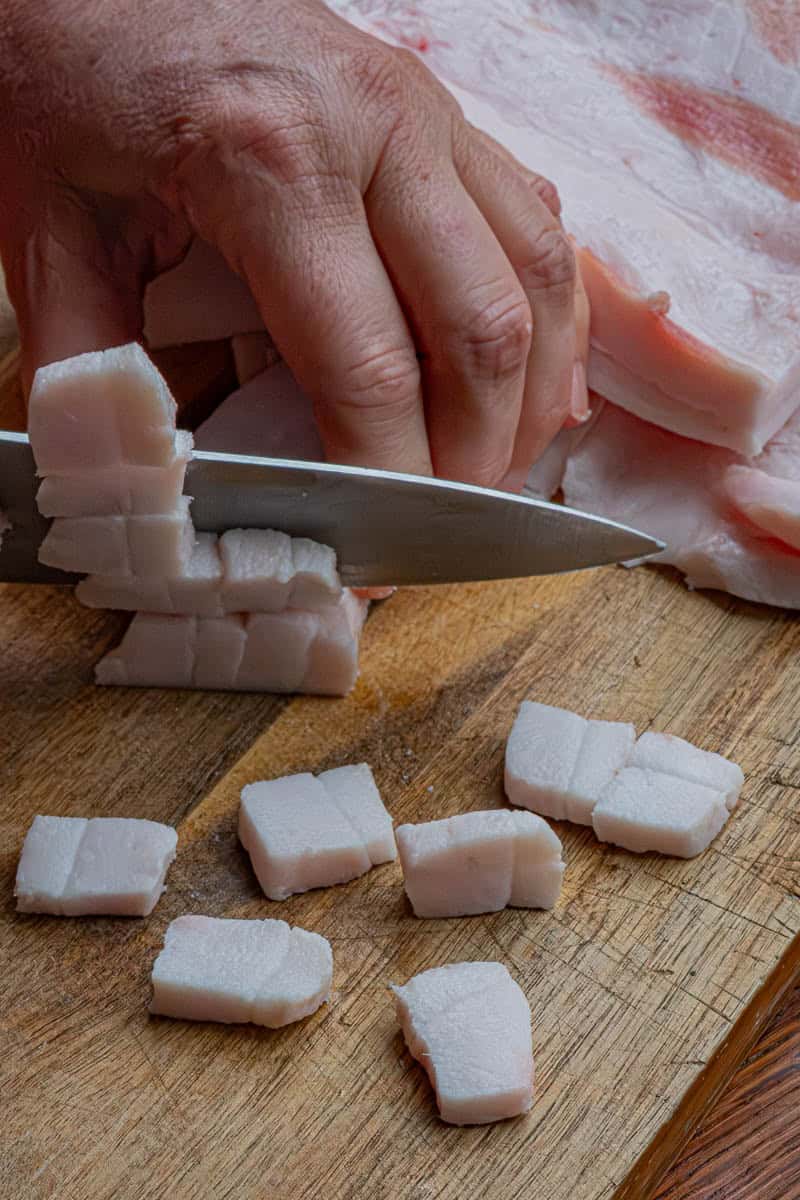
Start by cutting the pork belly fat into small cubes about 2-3 cm / ¾-1 in. Put the cubed pork fat in a heavy bottom pan like a cast iron dutch oven.
If you also want cracklings, be sure to salt at the beginning (use 1 teaspoon of salt per kg / 2lbs of fat). Salt should go in at the beginning because as the water evaporates out, it melts the salt into the fat and distributes it evenly.
If added too late, salt just collects at the bottom of the pan in the lard.
If you only want the lard, you can skip the salt.
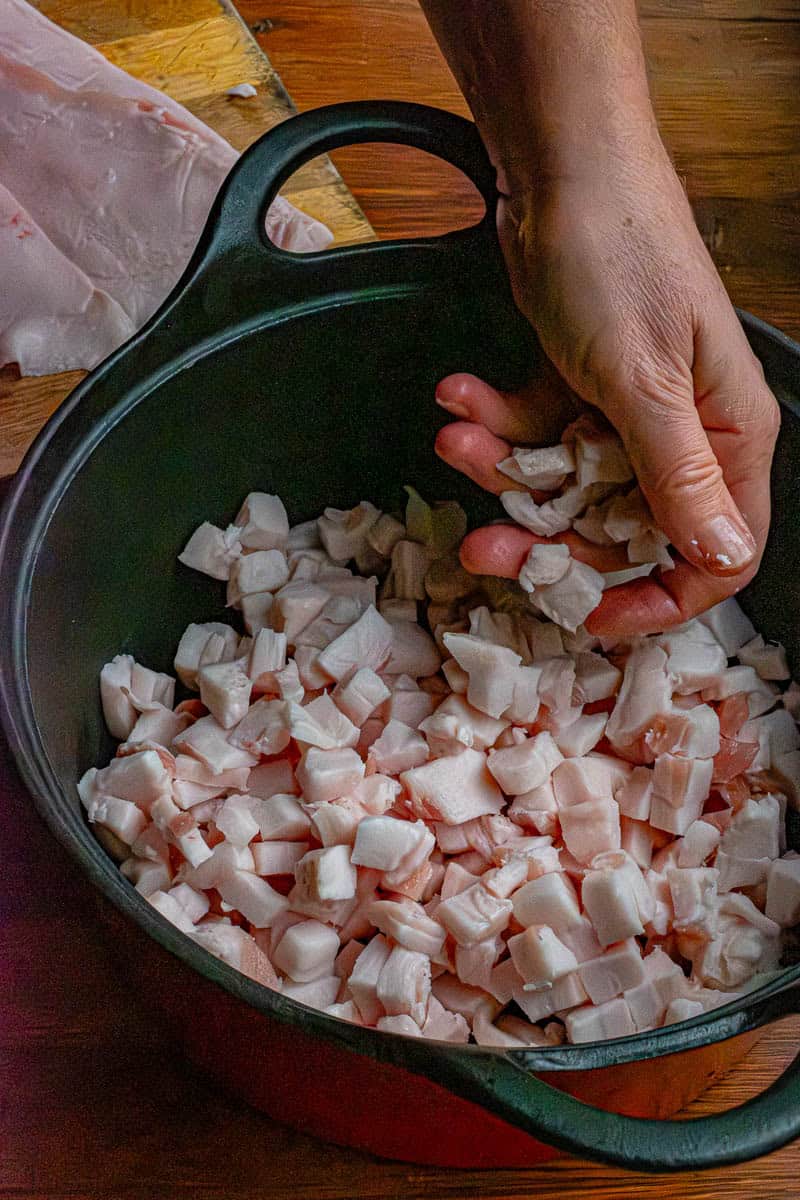
Stir frequently as the fat can stick in the beginning. The fat cubes will change from pink to beige opaque.
Once all the pink is gone you can stir less frequently and reduce heat to low. Then keep it low and slow to render the lard out of the fat.
The whole process should take maybe 40 minutes but can take up to an hour.
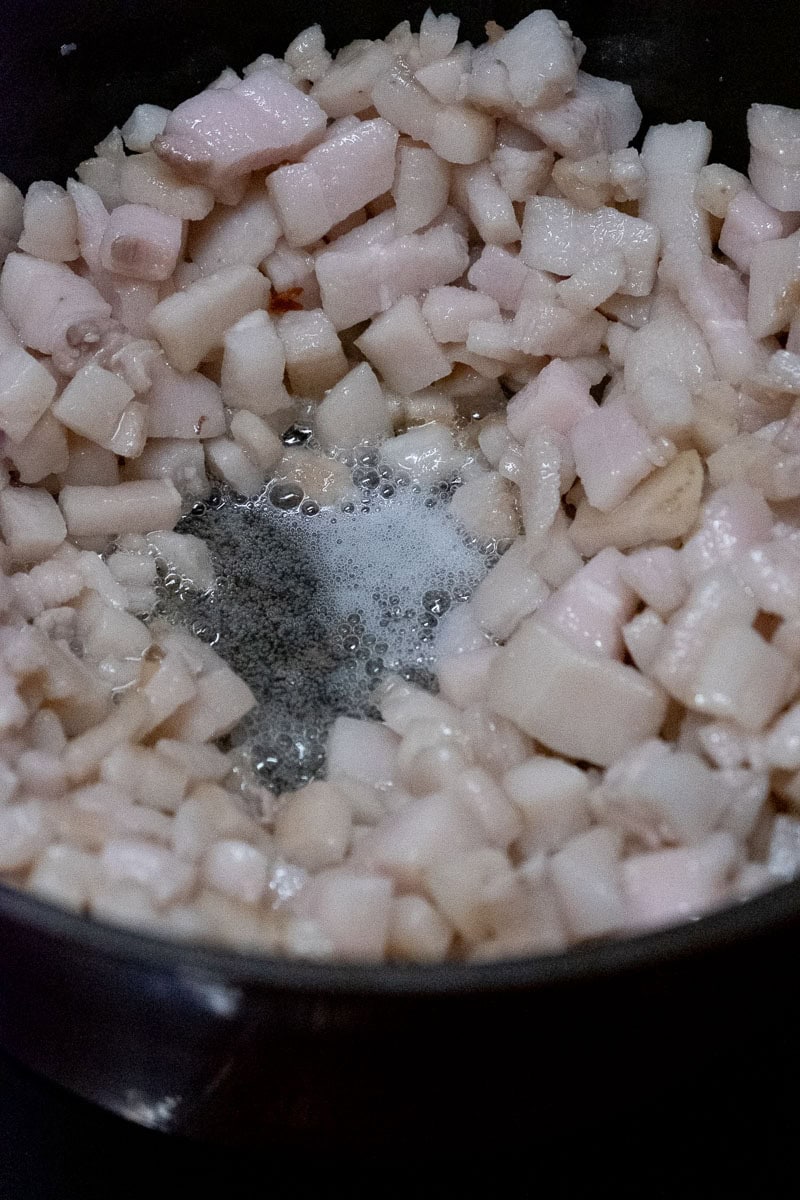
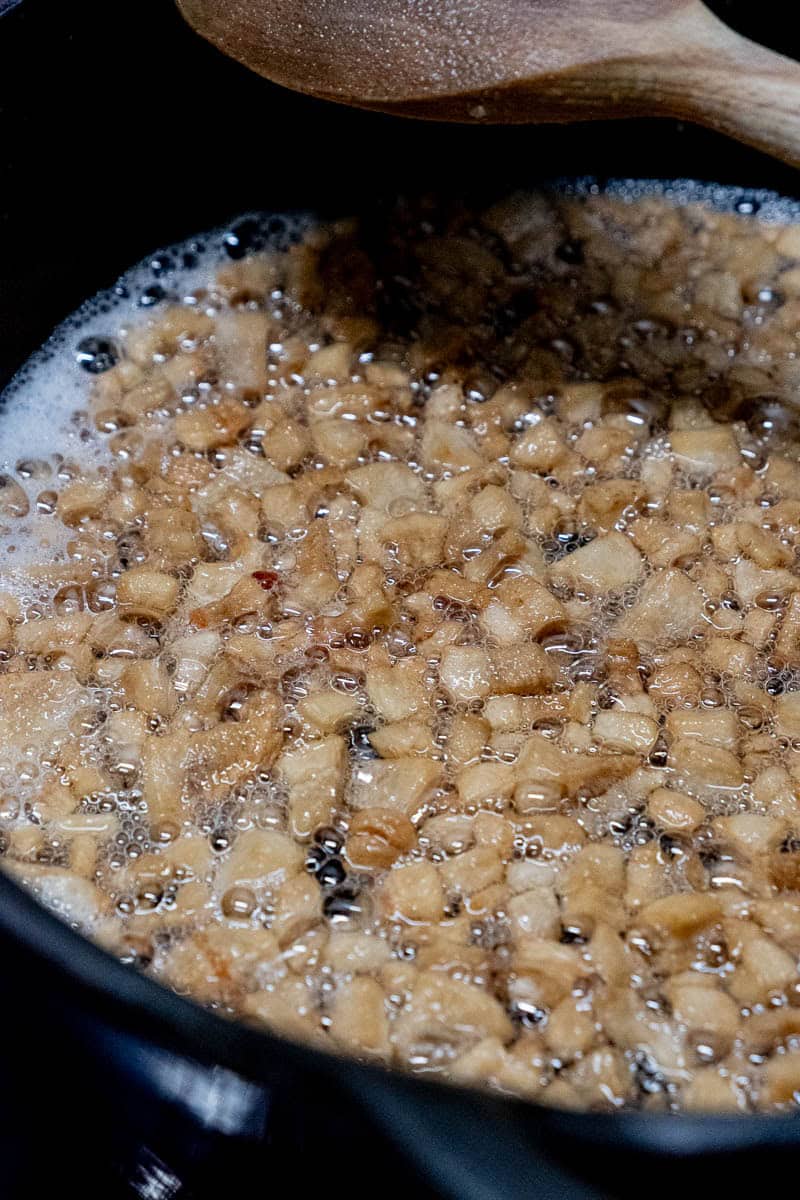
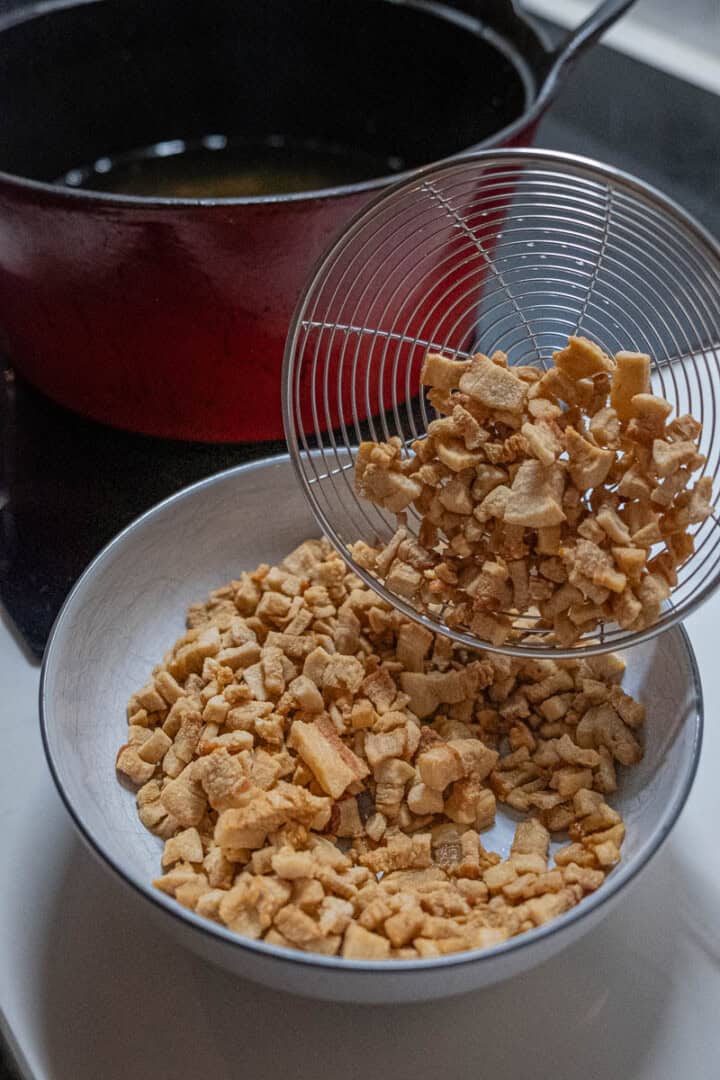
Once the fat is evenly rendered and golden then turn off the heat and immediately scoop out the cracklings using a slotted spoon.
No cracklings, no problem
Cracklings make a delicious snack on their own but if you don't care for them then they can be pressed while still hot to extract a bit more usable lard.
Do so by pressing them with the back of a spoon into a metal sieve or squeezing them with a cheesecloth.
How to Purify Dry-Rendered Lard
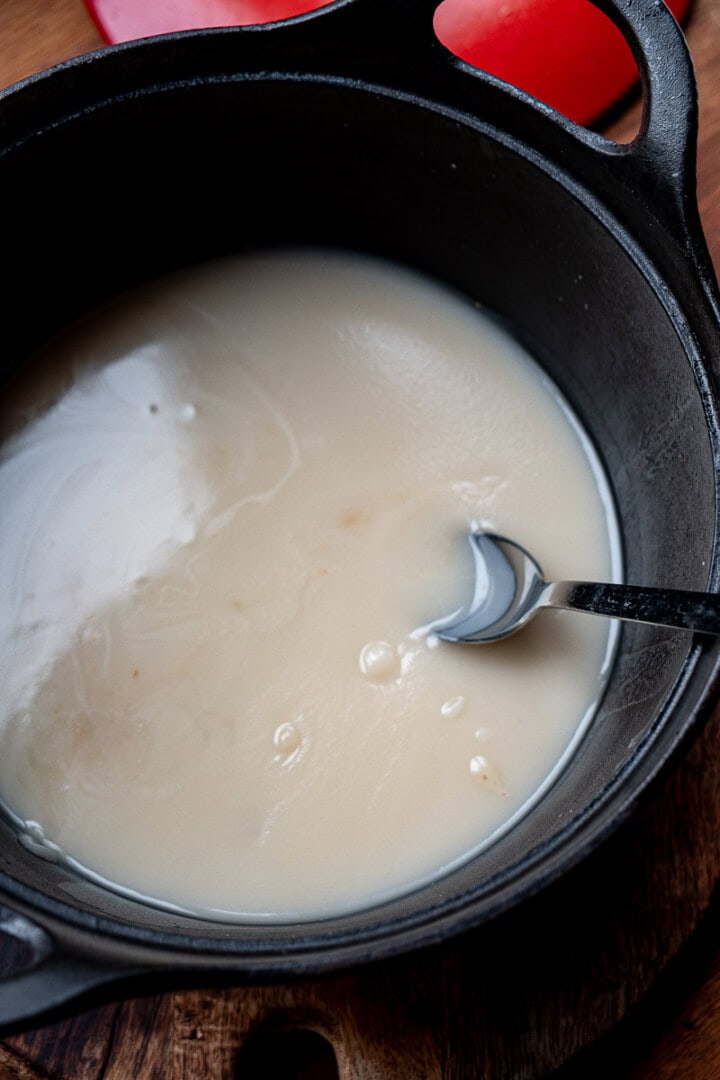
The lard produced from frying pork fat will be highly flavored and could be tinged with a bit of gold tones.
To make it a bit more pure (more white and less pork flavor) you can simply squeeze it through a cheesecloth. This will give you some modest clarification of the colored solids.
For even more pure lard, you can clarify dry-rendered lard by re-melting it with water:
- Gently simmer the lard with 1-2 cups of water so residual proteins, salts, and browned solids are absorbed into the water;
- Cool completely and lift off the solidified fat;
The result is a cleaner, lighter, more neutral lard, with most impurities left behind in the discarded water.
Homemade Lard Wet-Rendering Method (boiling)
Rendering lard using the wet method makes the purest form of lard, especially if you start with leaf lard. This is the best lard for baking savory or sweet. It can be substituted 1:1 in any recipe that calls for shortening.
To make wet-rendered lard, have the butcher grind pork fat, or process it yourself while very cold (food processor or finely chopped).
Add the fat to a Dutch oven on the stovetop or an electric crockpot over very low heat with about 250-350 ml / 1-1½ cups water per 1 kg / 2 lb fat.
Cook on low for several hours, stirring occasionally and replenishing water as needed, until the fat is fully rendered.
Strain the liquid lard and water into a bowl and chill until the fat solidifies.
Remove the hardened lard, discard the water, and scrape off any discolored underside.
Return the lard to a clean crockpot, add the same amount of fresh water and salt, and simmer on low for about 1 hour. This second step removes any residual impurities from the lard.
Strain again, chill, and once solid, remove and scrape the underside again if needed.
Store the lard in chunks, or gently melt and pour into jars, keeping all water out.
Homemade Lard Slow Cooker Rendering Method
Slow cooker rendering is the most hands-off way to make lard and sits between dry and wet rendering in terms of purity and flavor.
It produces a clean, lightly flavored lard with very little browning, making it suitable for both savory cooking and baking.
- Dice pork fat into 2-3 cm / ¾-1 in cubes.
- Add the fat to a slow cooker set to LOW (approx. 90-100°C / 195-210°F), uncovered.
- Cook for 3-5 hours, stirring every 30-45 minutes, until the fat has fully rendered and only pale, lightly cooked solids remain (these can be removed following the wet-rendering purification method above).
- Strain the hot lard through a fine sieve or cheesecloth into clean jars.
- Cool completely before sealing.
Oven alternative:
- Place diced fat in an uncovered, oven-safe pot.
- Cook at 120°C / 250°F for 3-5 hours, stirring occasionally, then strain and cool as above.
How to Use Lard
Lard is used year-round in Romanian cuisine for frying onions, starting stews, cooking beans and cabbage dishes like Romanian Sauerkraut Casserole (Varză à la Cluj), enriching pastries, and as a simple spread on bread with salt or onion.
Virtually any savory stew recipe can use lard, especially if it contains pork or bacon which results in a synergistic flavor boost. The following recipes are great examples:
- Smoky Romanian Bean Stew (Fasole cu Afumătură)
- Sarmale: Traditional Romanian Cabbage Rolls
- Romanian Style Pork Paprikash with Dumplings (Papricaș de Porc cu Găluște)
Lard can also be used in a 1:1 swap in recipes that call for shortening or butter, such as:
- Tender and flaky pie crusts (can produce flakier results than butter since it's all fat), especially good for savory recipes like Leek Tarte Tatin with Ham & Cheese, Tourtière: French Canadian Meat Pie or Smoked Fish Pie in Shortcrust Pastry - pure lard can be used for sweet pies like Raspberry Almond Tart.
- Biscuits (American-style) and scones (gives a lighter, softer, and more tender crumb plus very fluffy interior)
- Tender shortbread cookies like Romanian crescent cookies (cornulețe cu untură) and Spanish mantecados
- Savory pastries (empanadas, hand pies like Jamaican Beef Patties, enriched breads like Romanian pogăci and Hungarian tepertős pogácsa)
- Frying (where shortening is called for)
Recipe
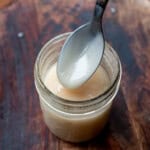
How to Make Lard
Ingredients
- 1 kg pork belly fat about 2lbs
- 1 teaspoon salt optional if also making cracklings
- 300 ml water 1.5 cups - use more as needed (only for wet-rendering method)
Instructions
- Cut the pork belly into 2-3 cm / ¾-1 in cubes. (For wet rendering, finely chop or grind instead for faster, cleaner rendering.)
dry-rendering method (frying)
- Add diced fat (and salt, if using) to a heavy-bottomed pot.
- Cook uncovered over medium-low heat, stirring frequently at first. Once fat has turned beige, reduce heat to low and keep stirring regularly until remaining fat pieces (cracklings) are significantly reduced and golden.
- Remove cracklings from lard (press hot cracklings for more lard if desired) and strain hot lard then pour into clean jars.
wet-rendering method (boiling)
- Add chopped/ground fat and 300ml (1.5 cups) water to a pot over very low heat.
- Gently simmer, maintaining water level, until fully rendered, 1.5-2.5 hours.
- Strain and cool then (for extra purity) re-melt with fresh water - strain, and chill again.
slow cooker wet-rendering method
- Add diced fat to a slow cooker (low) or uncovered pot in a 120°C / 250°F oven.
- Stir occasionally until fully rendered with minimal browning, 3-5 hours.
- Strain hot lard and pour into clean jars.
Comments
No Comments