
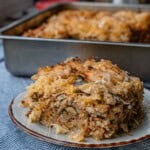
Varză à la Cluj is a Transylvanian layered casserole of sauerkraut, ground meat, rice, onions and seasonings, slow-baked until aromatic and tender. Think of it like traditional Romanian cabbage rolls, just deconstructed for all the flavor in less time.
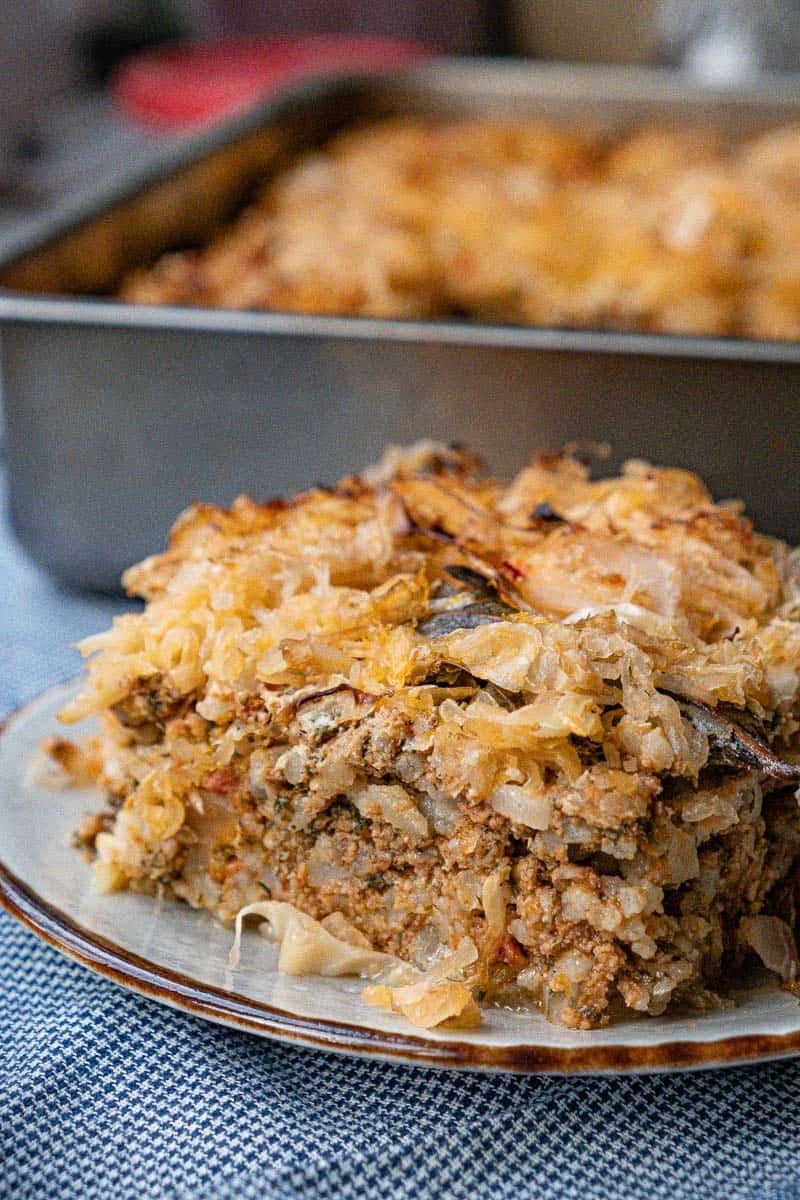
Varză à la Cluj is a layered sauerkraut and ground meat casserole named after its origin in the city of Cluj, Romania's second most populous city and the unofficial capital of the historical Transylvanian region.
Varză à la Cluj strikes me as a bit of a oddity when considered in relation to overall Romanian culinary sensibilities.
Food traditions, like the cultures and languages that convey them, are innately adaptive. Some more than others. On the scale of flexibility and evolution of cuisine, Romania tends to rank low.
It happens often when discussing the finer points of recipes with other Romanians, they'll say „Nu se pune (ingredientul anume) la (mâncarea anume)." or "No, you don't use (xyz ingredient) for (xyz dish)".
Examples:
„Nu se pune unt la mămăligă." (You don't put butter in mămăligă)
„Nu se smântână la mujdei." (You don't put sour cream in garlic sauce).
I find it so funny because this is despite the fact that, taking a wider look at the cuisine, we do in fact do that. We change things, we adapt, we slowly tweak recipes. We just don't like to admit it.
This is why I find varză à la Cluj so fascinating. The fact that a recipe that changes the fundamental structure of our most beloved staple of the culinary canon, our national dish...sarmale.
The fact we as a nation would accept this as an uncontested recipe is just...unexpected. Totally contrary to the status quo. Totally amazing.
And this is not some new fangled modern fusion thing. Food historians pin the origin of varză à la Cluj to the Austro-Hungarian period, roughly 1880-1930.
Factors include growing urbanism (need for efficiency - city folk ain't got no time to roll cabbage rolls) and Austro-Hungarian introduction of baked, layered dishes (gratins and the like).
So anyway, this humble sauerkraut cabbage roll isn't just a dish. It's a symbol of overcoming (slowly) the stranglehold of culinary prescriptivism. Or...being such an outlier, is it actually just the opposite?
Something to ponder while you enjoy these lush mouthfuls of tender braised sauerkraut and rich ground meat with rice.
I had never had this dish before my mother in law from Moldova taught me how to make it. It's really just like eating cabbage rolls but with a fraction of the work.
Great for a weeknight and great for packed lunches. It's even sort of a one pot meal in that it all cooks up in one pot (though you do need to precook the rice before baking so..not strictly one pot).
Ingredients
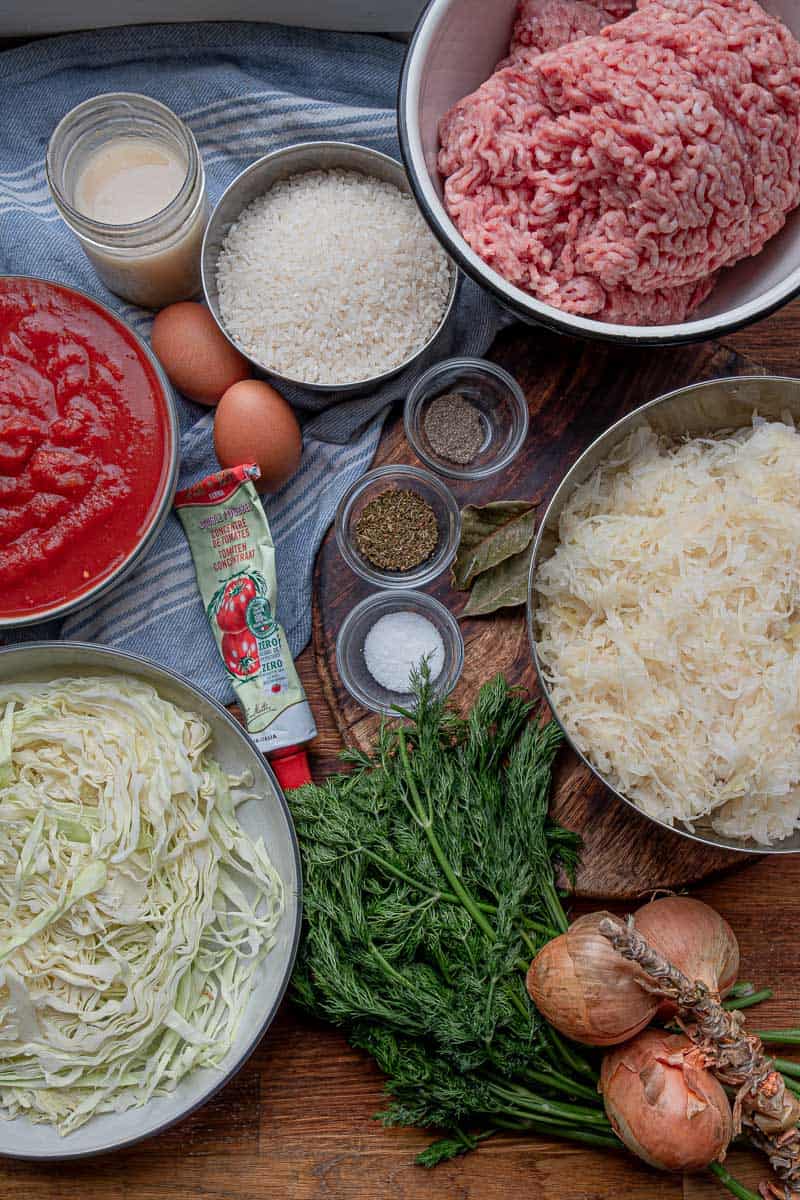
- Ground meat (50/50 pork and beef, not lean): A 50/50 mix of pork and beef combines the best qualities of both meats. Pork is fattier and juicier while beef brings more structure and depth. You can also use just one type or even sub. ground chicken or turkey.
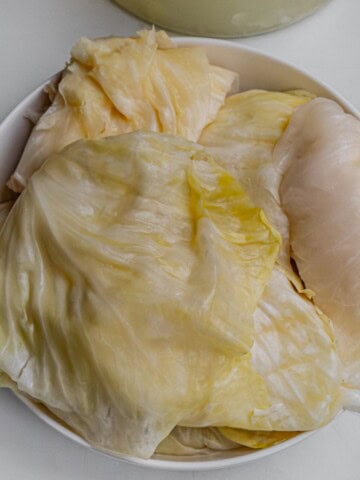
- Sauerkraut: Brings acidity, salinity, and fermented depth; light soaking tempers sharpness while preserving tang and complexity that contrasts with the rich meat and fat.
- Fresh white cabbage: Softens during baking and adds a sweet and soft balance to the sharper sauerkraut.
- Yellow onions: Adds aromatic and sweet depth/umami.
- Short-grain rice (e.g., arborio): Acts as a binder and filler; absorbs fat and juices, helping the meat layer hold together while staying creamy due to the higher starch content.
- Lard (or vegetable oil): Lard is traditional in Romania for dishes like these and I happened to have some homemade lard. If you don't have lard then vegetable oil can also be substituted. Don't be scared by the amount of fat in the recipe - sauerkraut needs a lot of fat to braise properly. Without it the cabbage and kraut just dry out.
- Eggs: Binds the meat and rice mixture; help the center layer set into a cohesive, sliceable structure.
- Diced tomatoes: Provide moisture, acidity, and mild sweetness.
- Tomato paste: Concentrated tomato flavor and umami.
- Water: Water cooks the rice in the casserole and also helps tenderize the cabbage kraut mixture.
- Fresh dill: Dill is a regional addition in cabbage rolls. It adds a sweet herbal element.
- Summer savory (cimbru): Defining herbal flavor of cabbage rolls.
- Black pepper: Warm spice note and depth.
- Bay leaves: Add a savory floral aroma.
- Salt: Salt is needed to season the meat and rice mixture. Finding the right amount can be tricky due to sauerkraut being variably salty. Adjust salt according to your tastes or instinct.
Equipment
You'll need a large shallow roasting dish, ideally with a lid or otherwise aluminum foil to cover.
A good size is about 20cm by 30cm and 12cm deep / 8 × 12 inches, and 5 inches deep.
Instructions
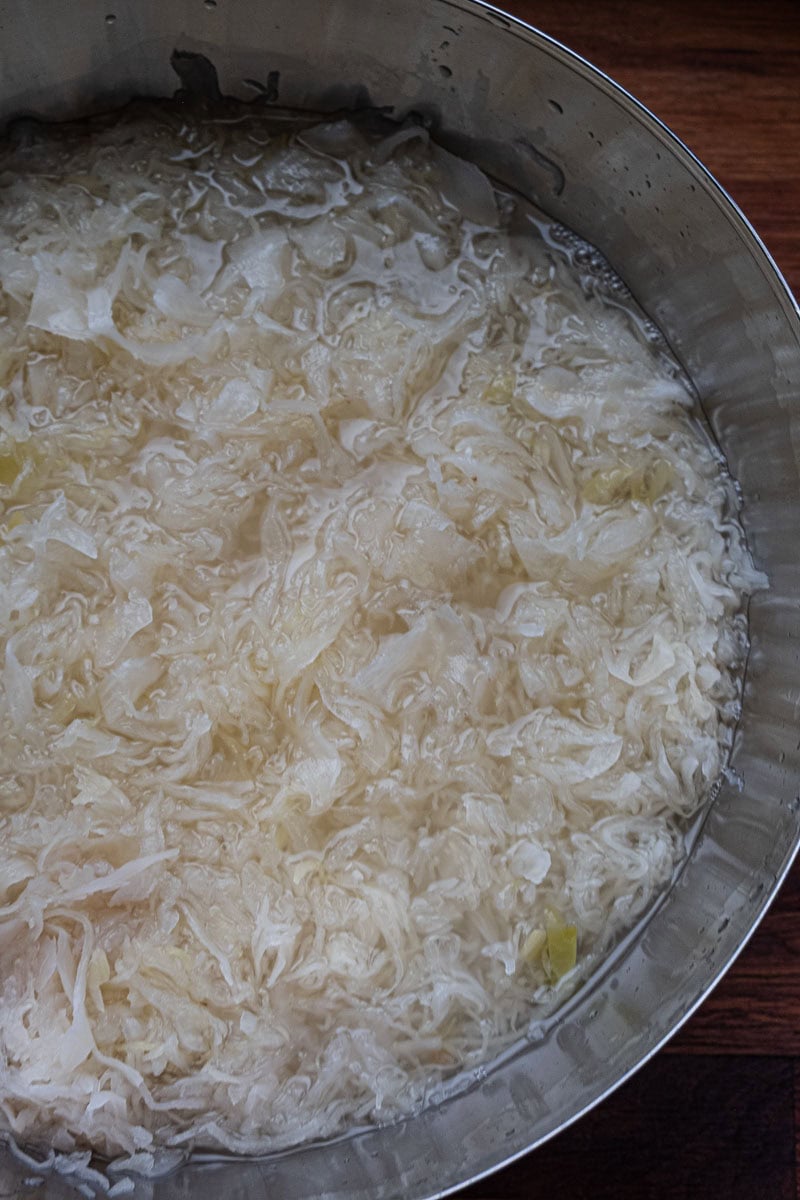
Start by soaking the sauerkraut in water while you prepare the rest of the filling. Kraut is quite salty as is and it can make for a too salty or too acidic final dish if not tempered with some soaking.
It only needs to soak while you prepare the filling and then just drain or squeeze out all excess water.
Prep vegetables
Once you have the sauerkraut soaking, prep the remaining vegetables:
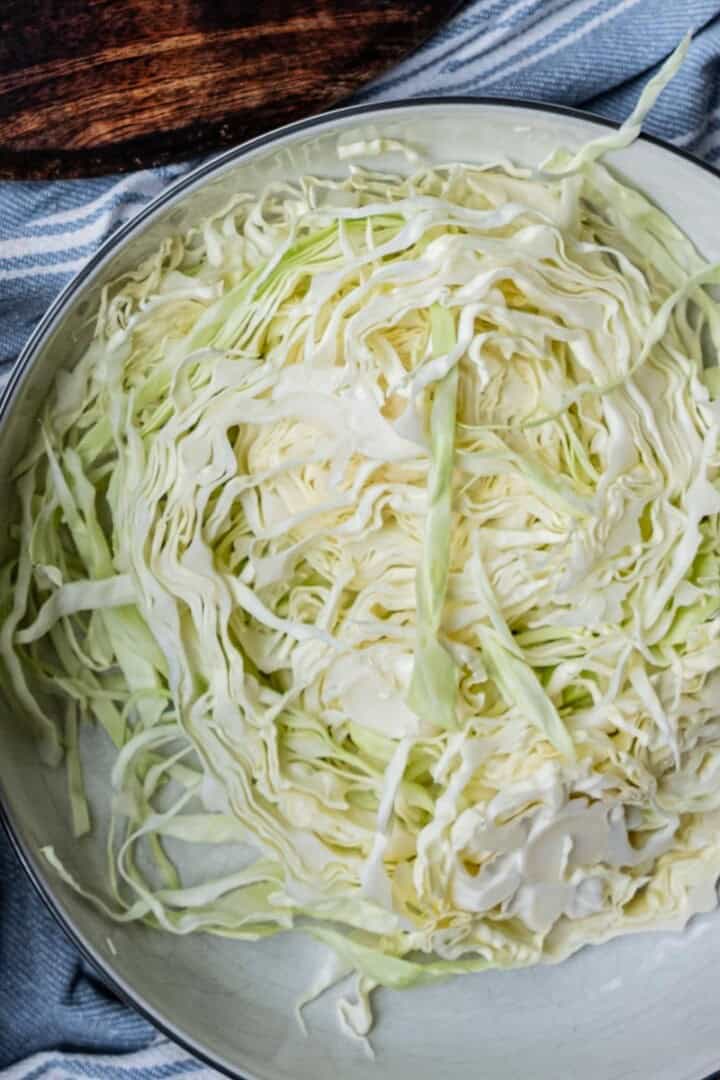
- Finely shred the fresh cabbage;
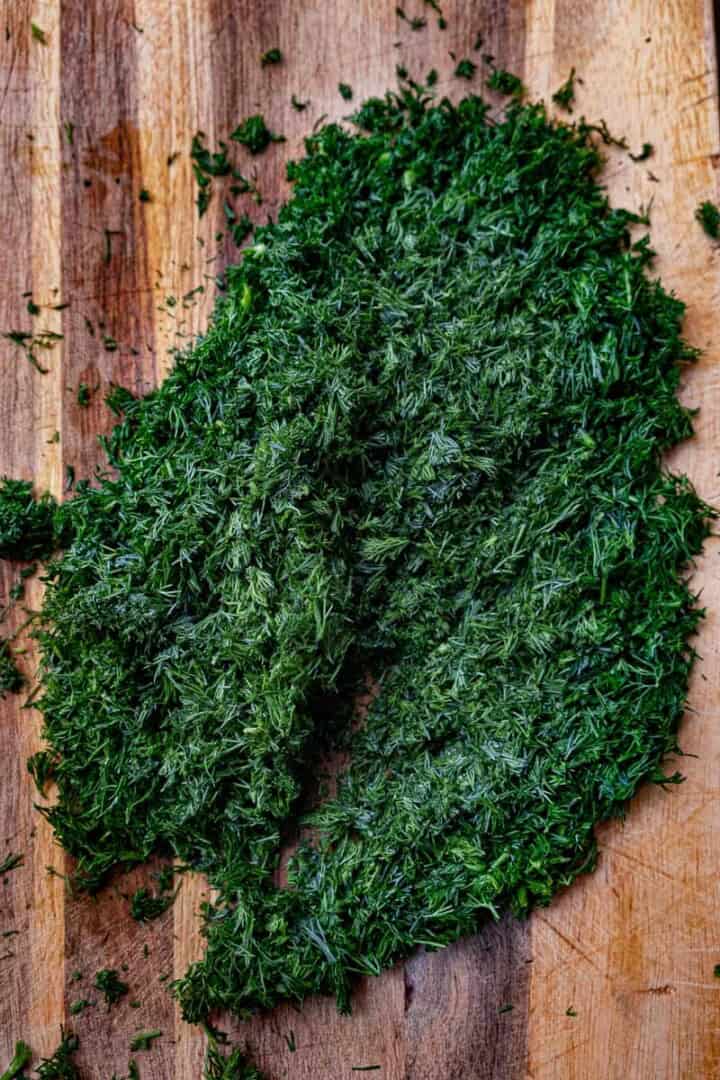
- Finely chop the fresh dill;
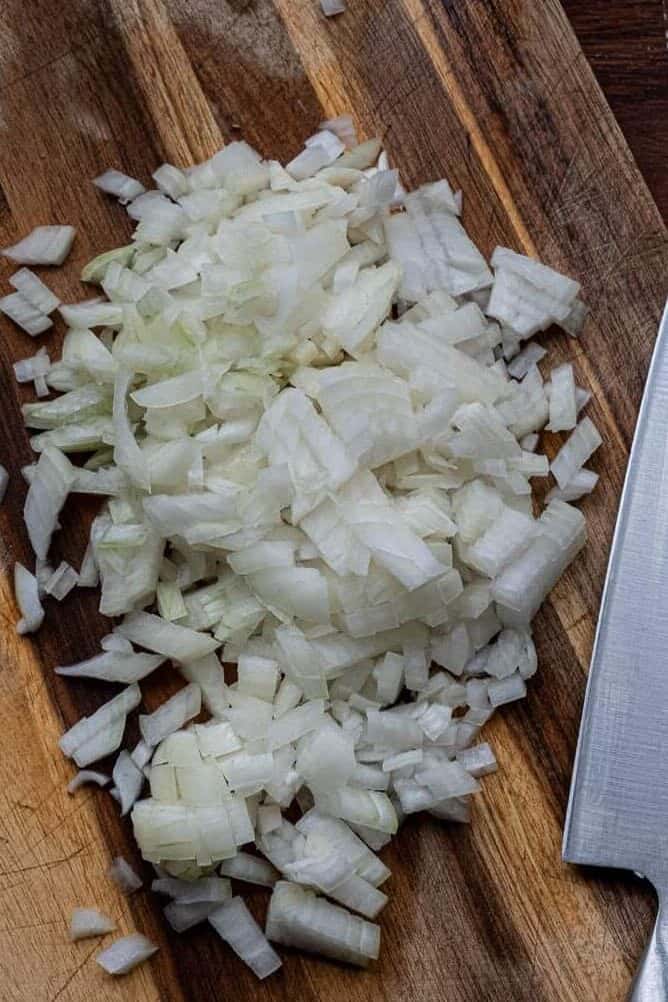
- Finely dice the yellow onion.
Precook rice mixture
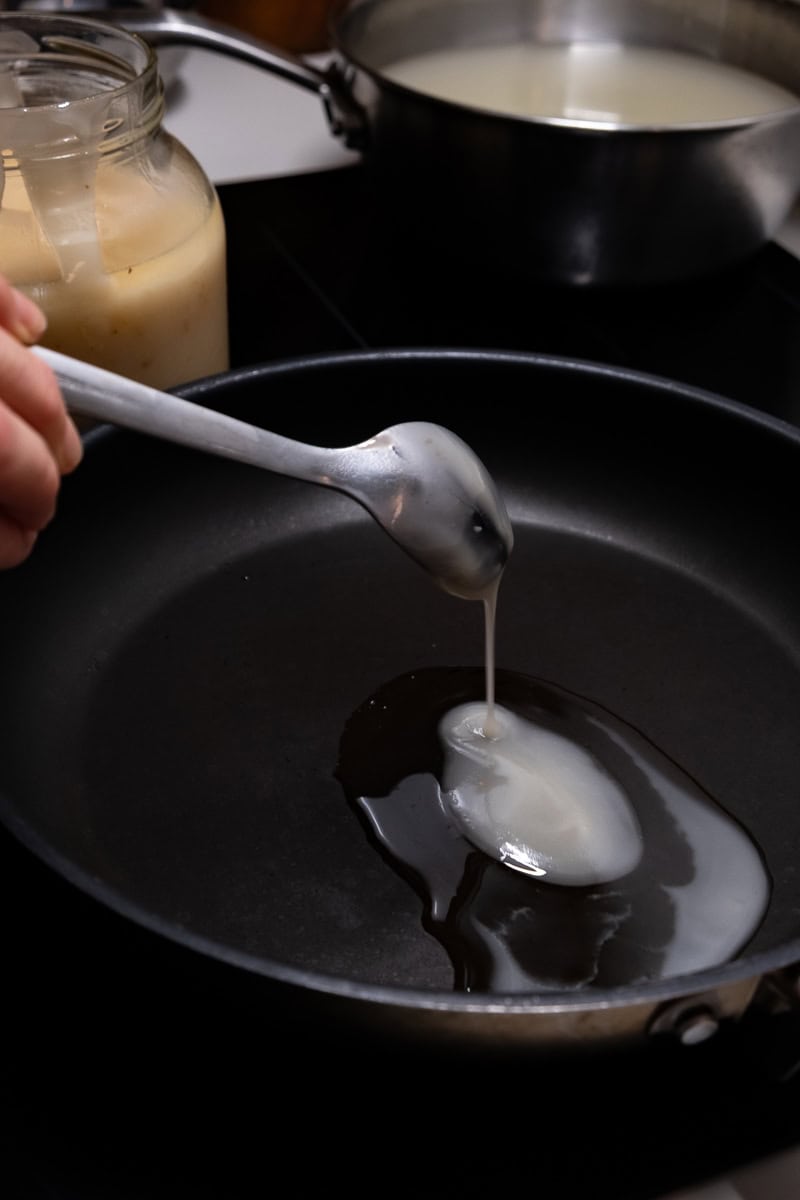
Add 2-3 tablespoons of lard or vegetable oil to a large skillet and heat over medium heat.
Sauté the onion until translucent and aromatic. Add the tomato paste, rice and 1 teaspoon salt then sauté a few more minutes while stirring to combine evenly and warm through.
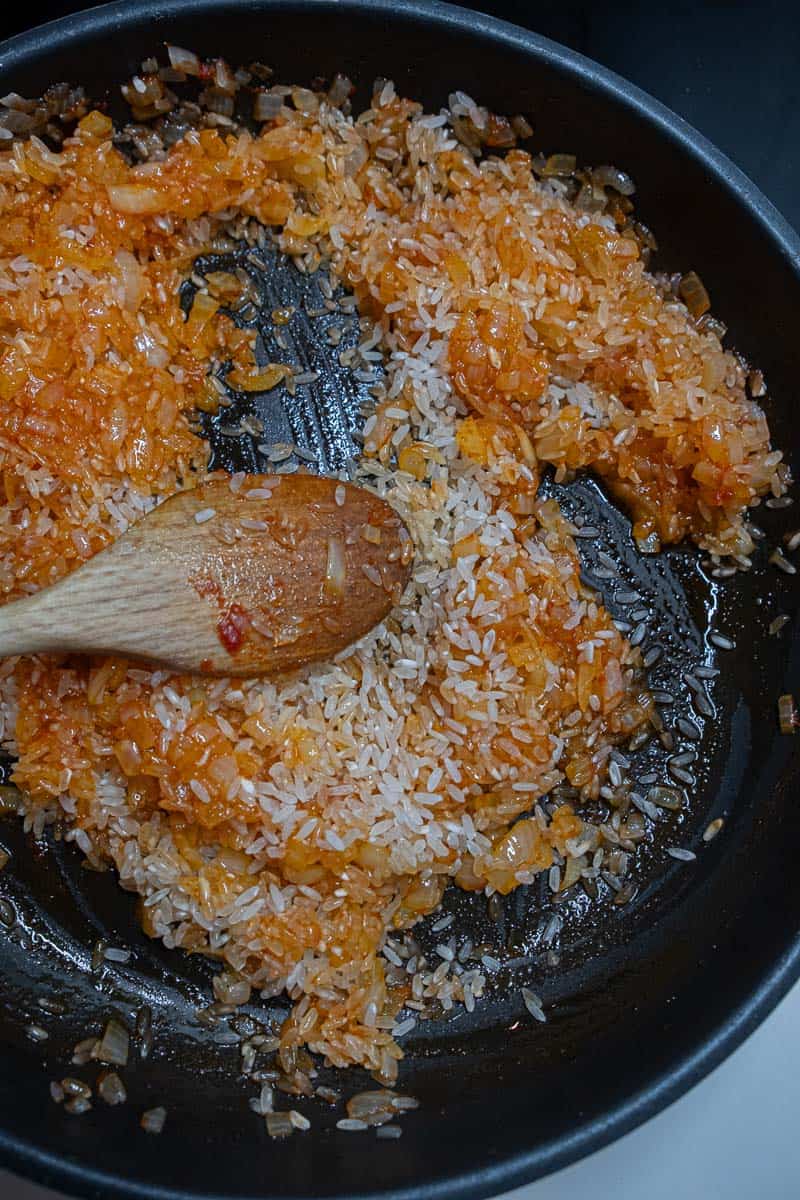
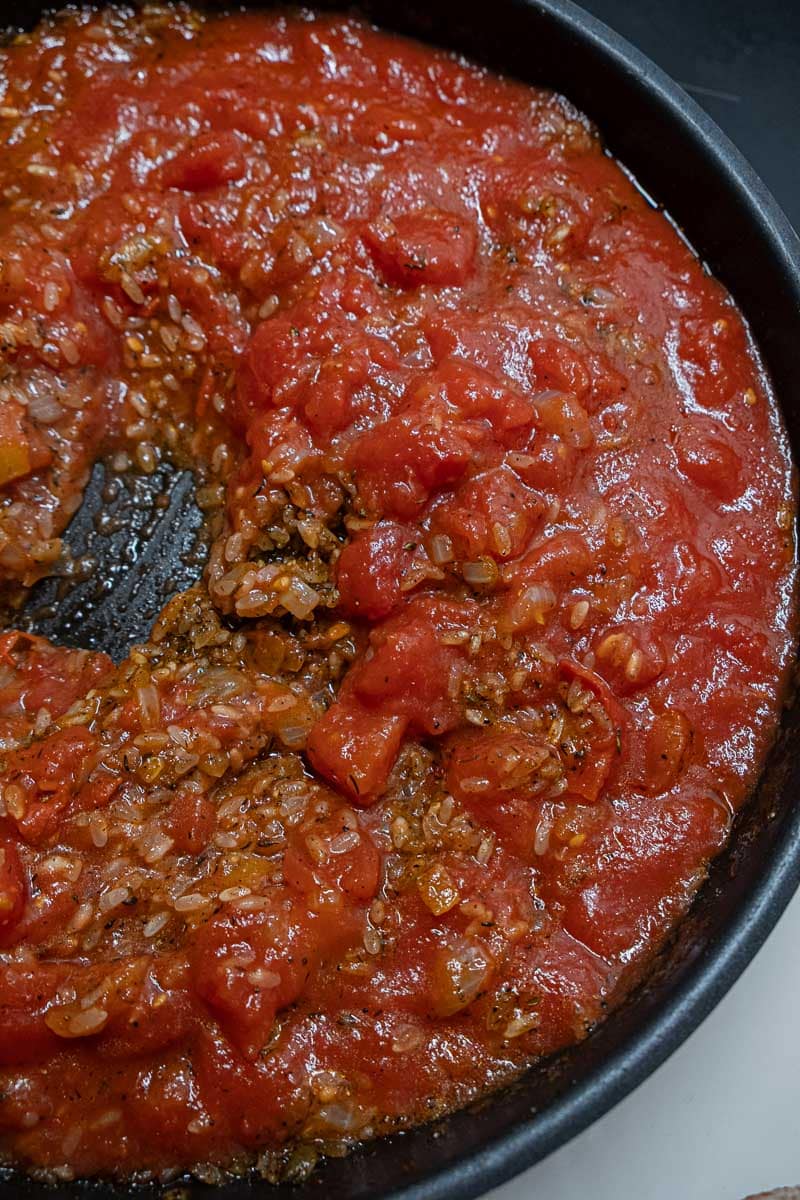
Reserve a half cup (150ml) of the diced tomato then pour the rest over the rice mix along with a cup (250ml) water.
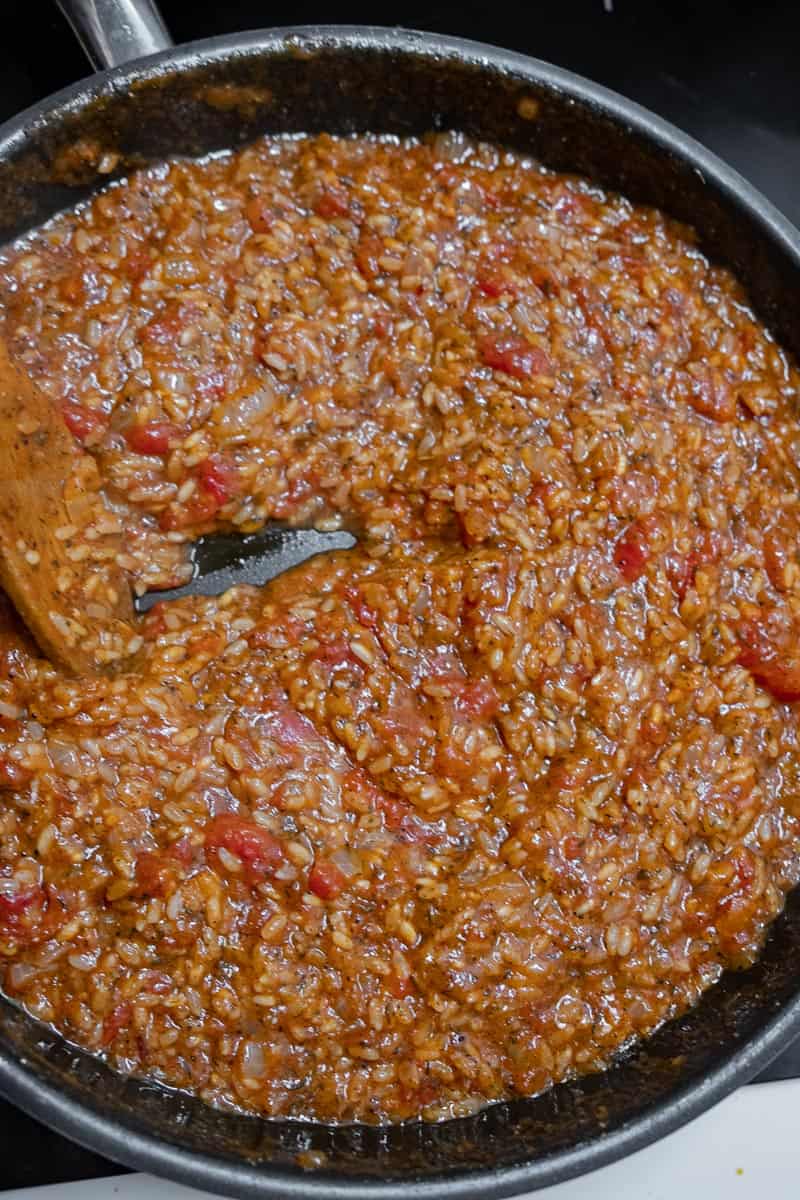
Reduce temperature to medium-low, cover and cook 8-10 minutes until the rice has absorbed the water.
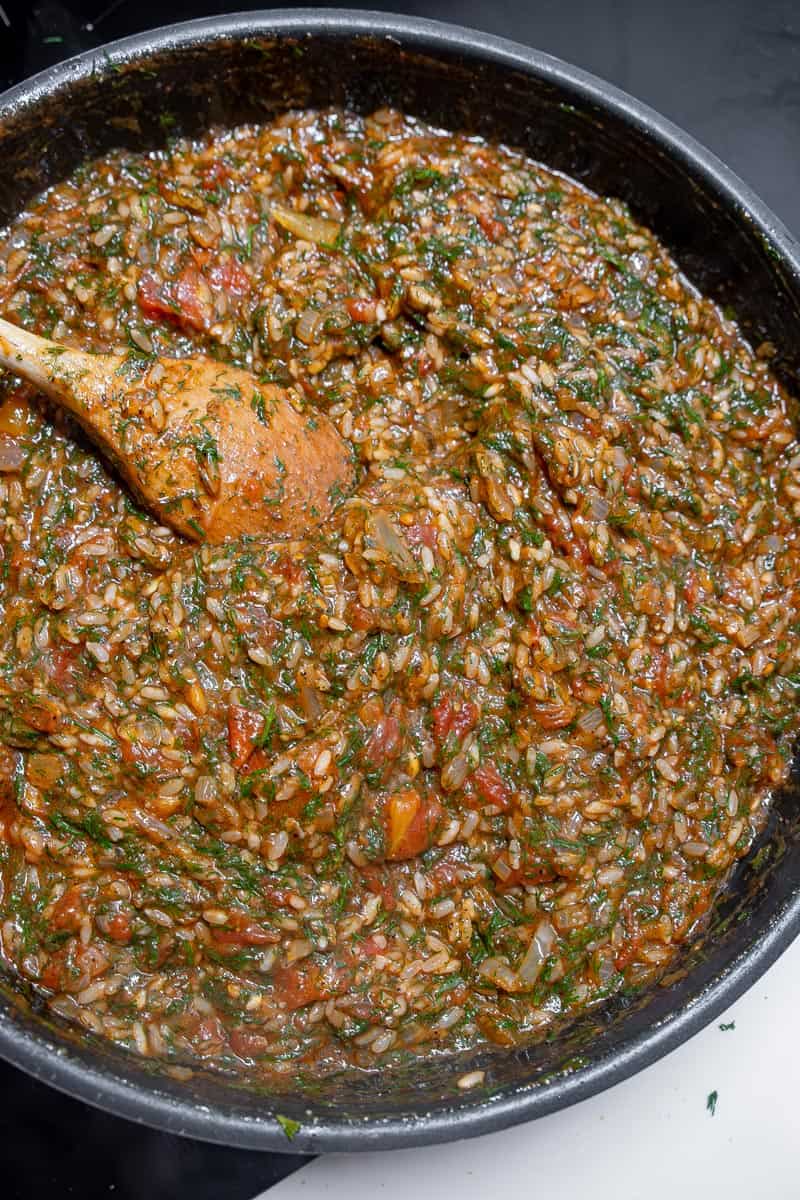
Turn off heat, stir in fresh chopped dill and then set aside to cool.
Preheat the oven
Start preheating the oven to 175 °C / 350 °F while you finish up the rest of the prep.
Prepare sauerkraut and cabbage mix
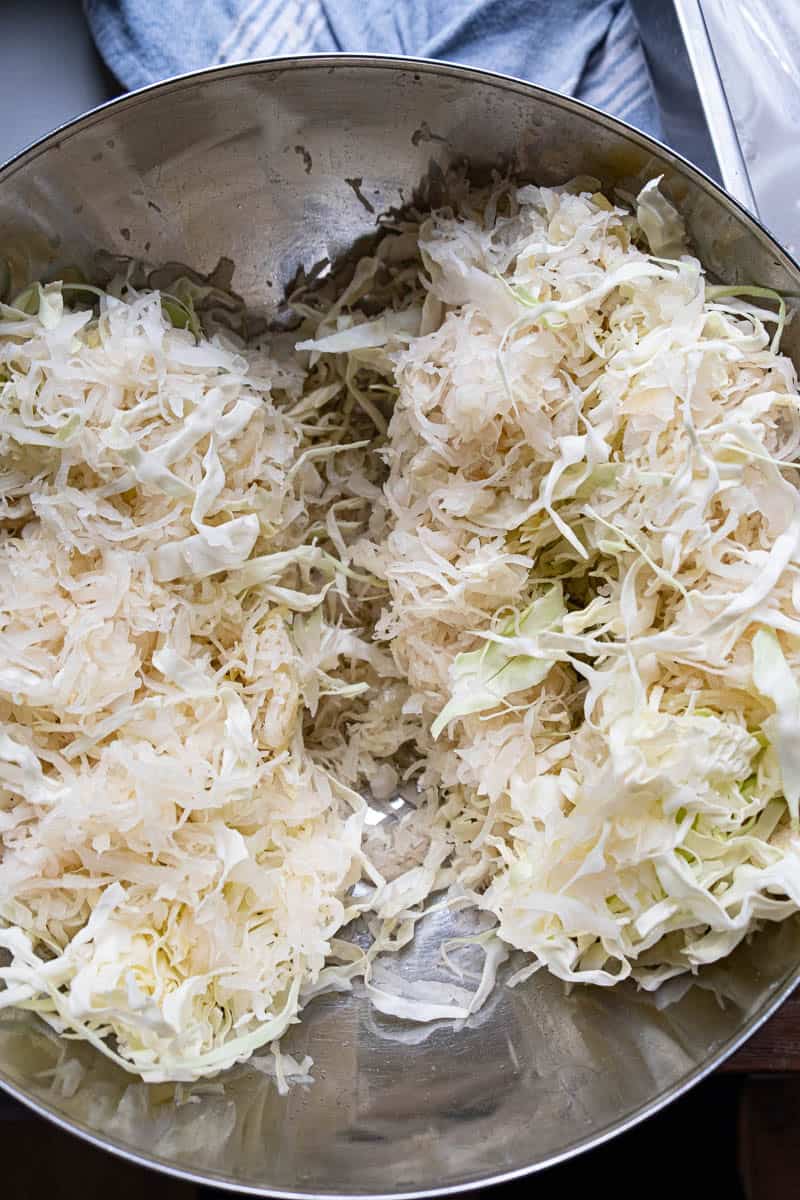
In a large bowl combine the drained sauerkraut with the shredded fresh cabbage.
Spoon in about 6 tablespoons of lard or vegetable oil and use your hands to mix, ensuring even coating. Again, don't be afraid of the fat it's necessary for a proper braise.
You ay even need to add more lard or oil to ensure the cabbage is well coated in oil.
Once it's evenly coated, for ease you can divide the cabbage kraut mix into 2 even parts in the bowl and set aside.
Prepare meat mixture
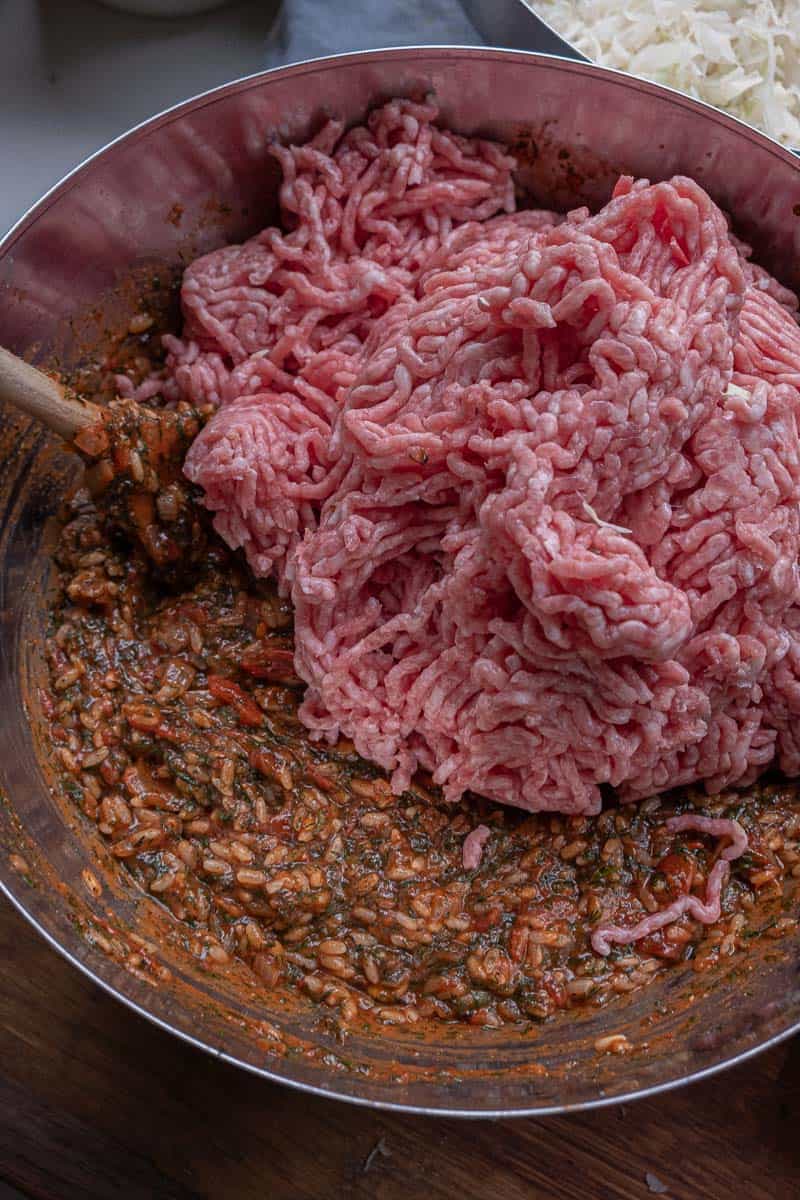
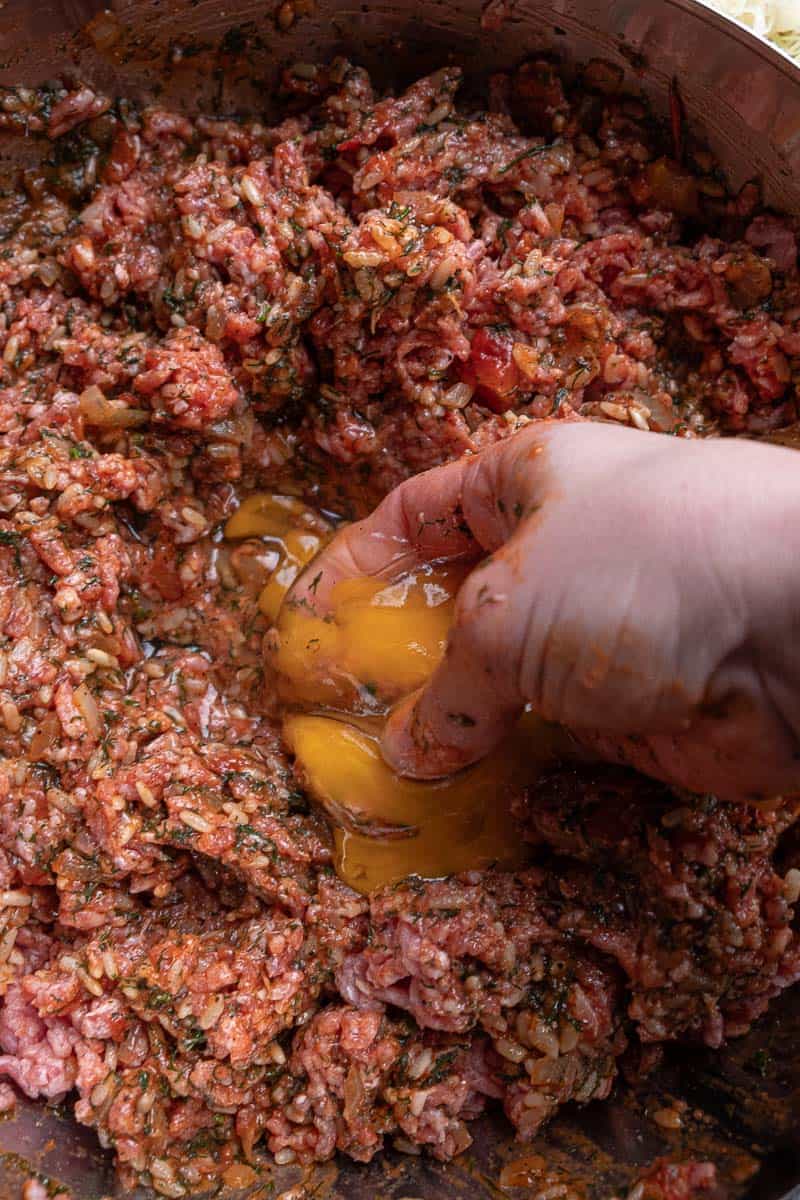
Once the precooked rice tomato mix is cool, add it to a large bowl along with the ground meat, and eggs.
Evenly sprinkle in 1 teaspoon salt, all of the black pepper and all of the summer savory. Mix well until evenly combined.
Layer the casserole
Take one part of the cabbage mix and layer it along the bottom of your roasting dish.
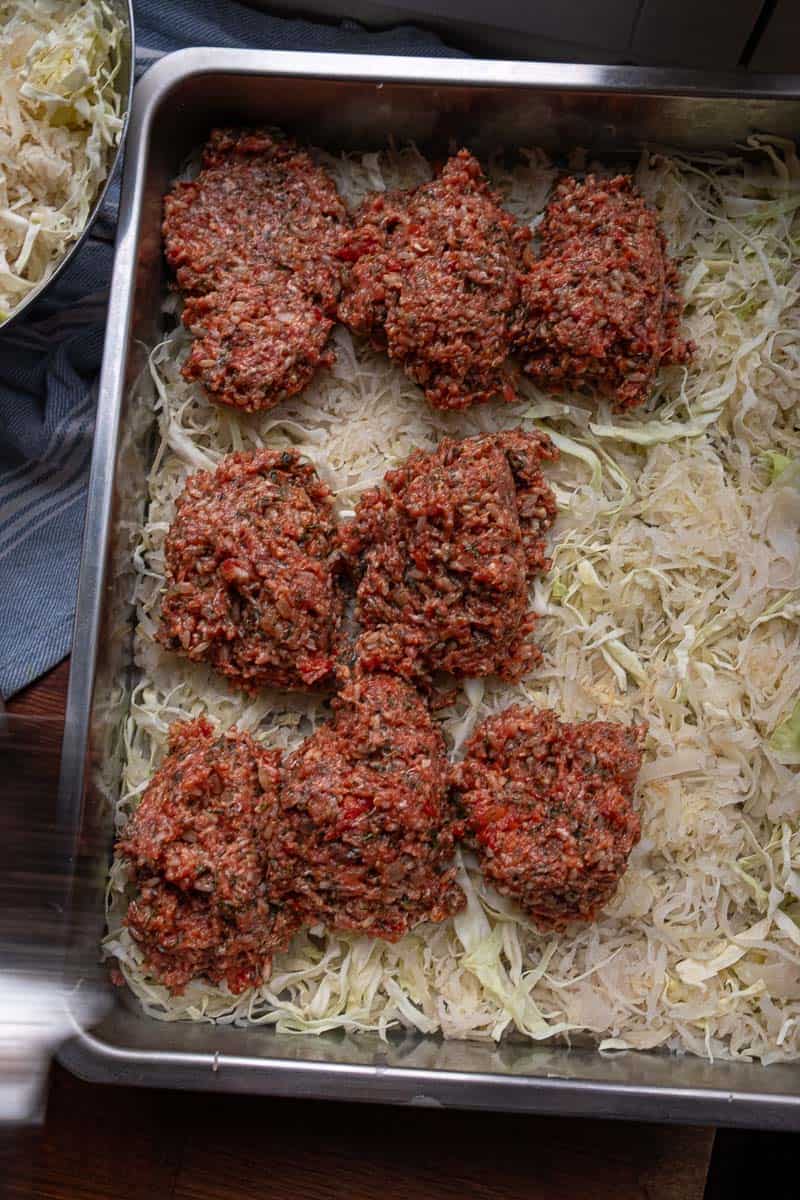
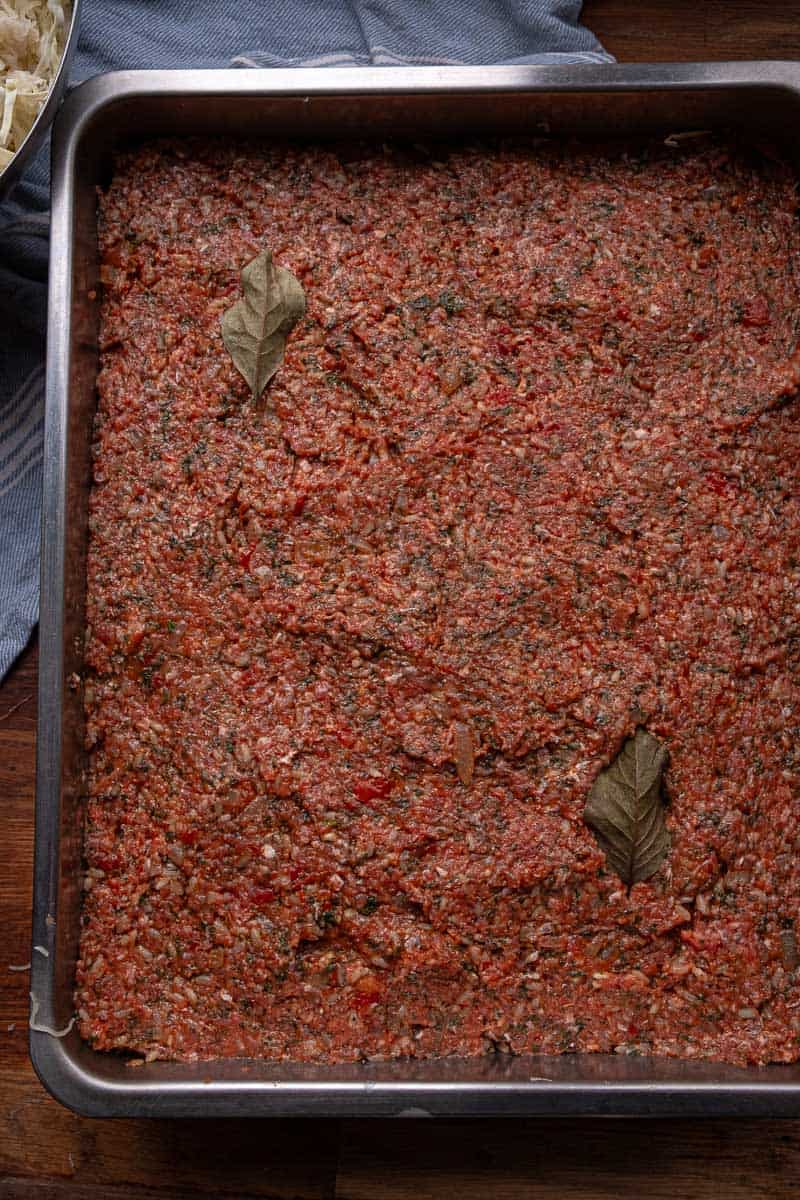
Add the meat mixture as another layer in the middle and top with bay leaves.
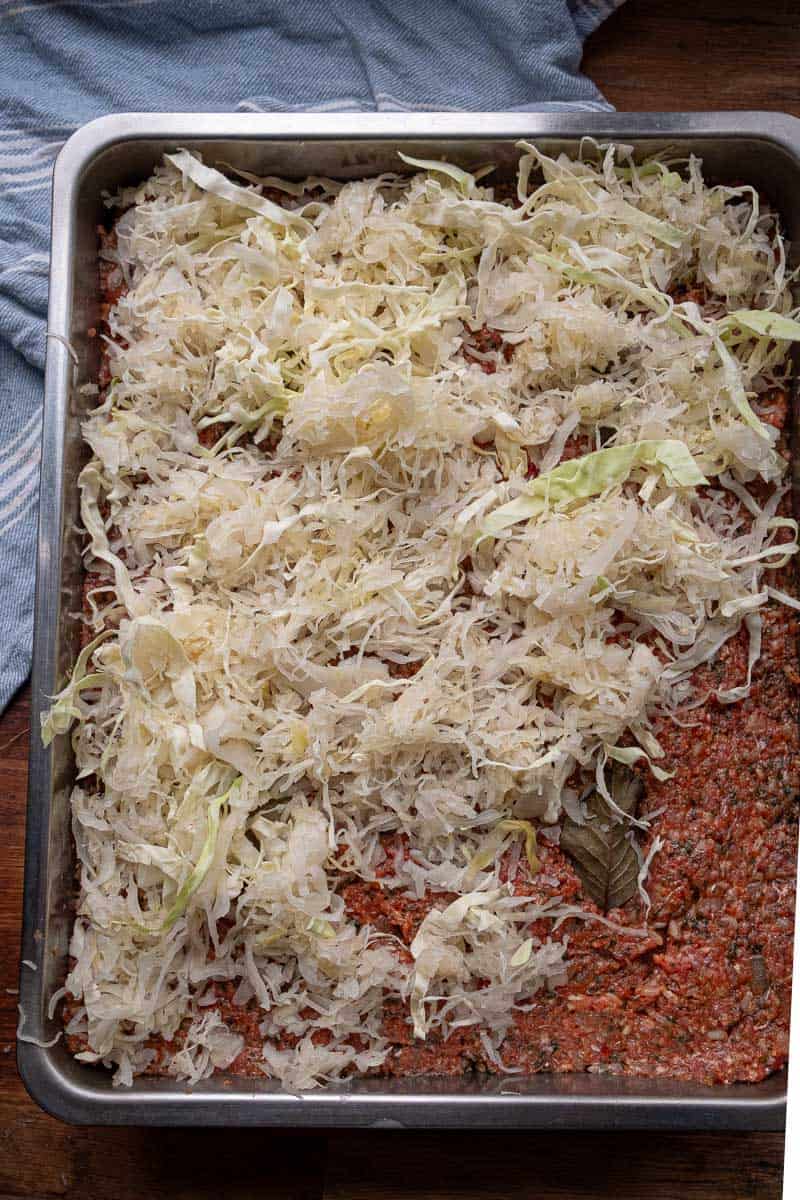
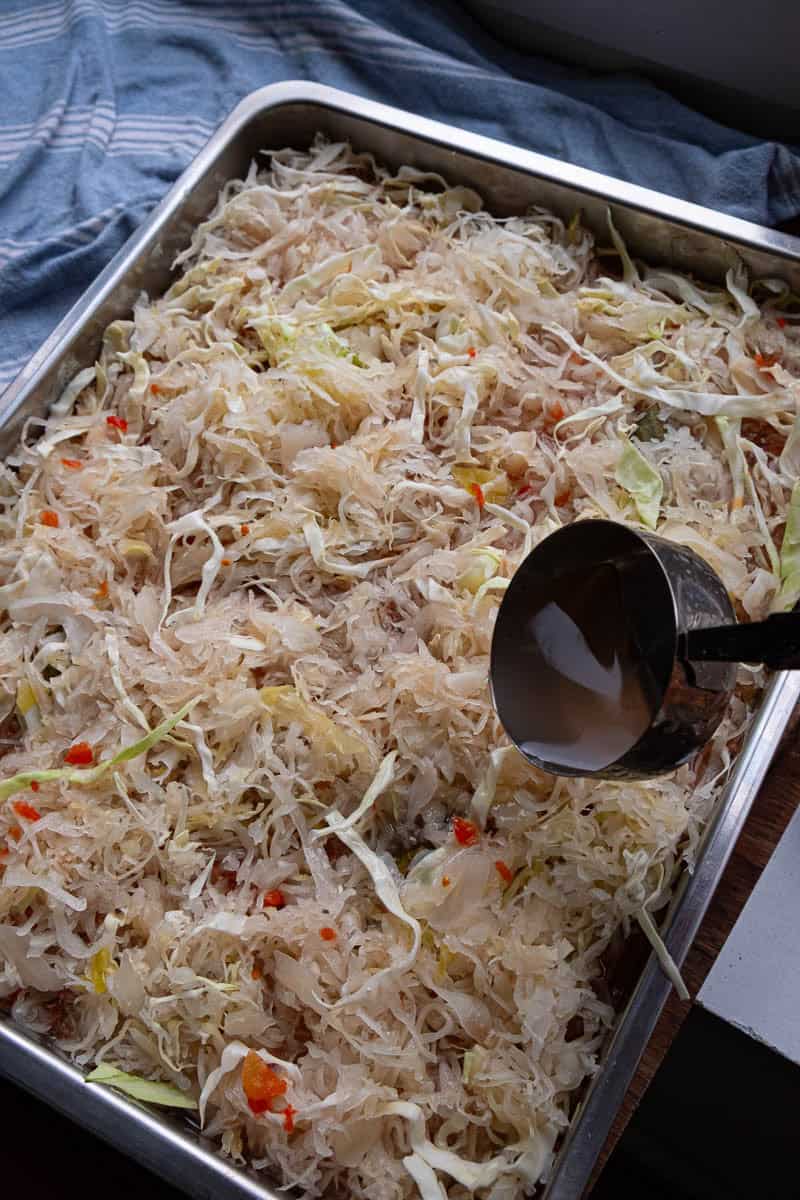
Layer remaining cabbage on top then mix the reserved diced tomato with another cup (250ml) of water and pour it evenly over the top.
Bake
Cover tightly (lid or foil is fine) and bake about 1.5 hours or until the cabbage is very tender / wilted.
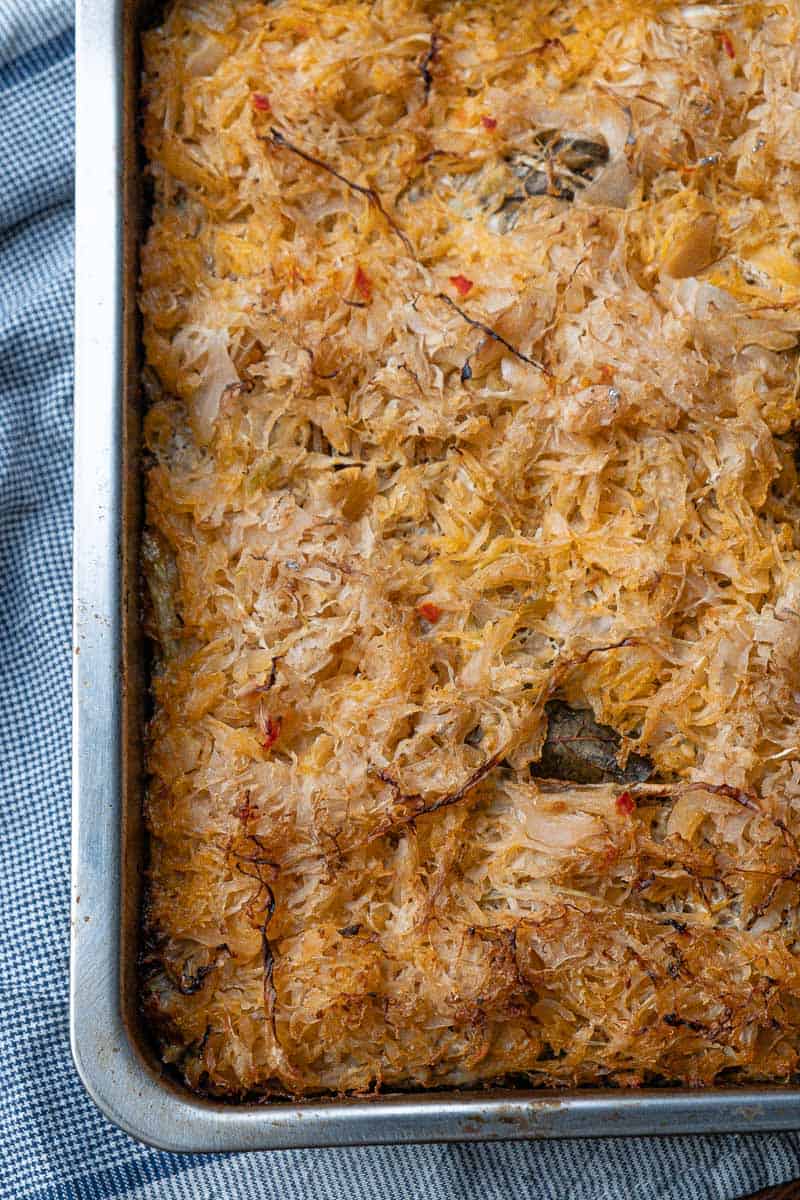
Uncover and continue baking another 30 minutes until lightly golden brown.
Serving Suggestion
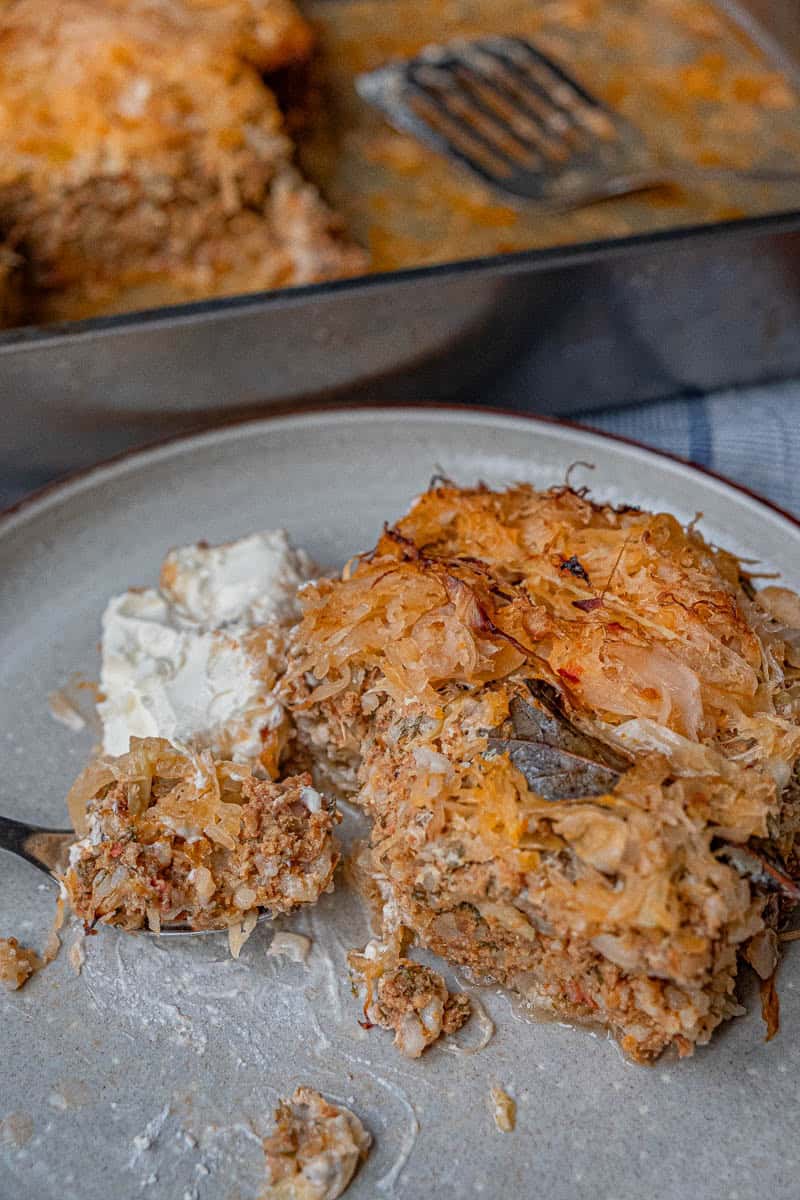
Serve warm with sour cream and crusty bread or mămăligă (Romanian polenta).
Recipe
Romanian Sauerkraut Casserole (Varză à la Cluj)
Ingredients
- 500 grams ground pork about a lb, not lean
- 500 grams ground beef about a lb, not lean
- 500 grams sauerkraut about a lb
- 2 cups white cabbage fresh - not sauerkraut
- 2 large yellow onions
- 200 grams short grain rice (arborio etc.) 1 cup
- 200 ml lard about 0.8 cup melted, or sub. vegetable oil
- 2 eggs
- 1 can diced tomato standard small can about 410-415 g / 14.5 oz
- 3 tablespoon tomato paste
- 500 ml water 2 cups
- 1 bunch fresh dill
- 2 tablespoons summer savory a.k.a. cimbru
- 1 tablespoon black pepper
- 4 bay leaves
- 2 teaspoons salt or more to taste
Equipment
- large shallow roasting pan Approximately: 20cm by 30cm and 12cm deep / 8 × 12 inches, and 5 inches deep.
Instructions
- Soak sauerkraut: Put the sauerkraut in a bowl and cover with water. Set aside while you prepare the filling.
- Prep vegetables: Finely shred the white cabbage and finely chop the fresh dill then set both aside. Finely dice the onion.
- Precook rice: Heat a few tablespoons of lard or vegetable oil in a large skillet over medium heat. Add the finely diced onion and sauté until translucent and aromatic.
- Add the tomato paste, rice and 1 teaspoon salt then sauté a few more minutes while stirring to combine evenly and warm through.
- Reserve a half cup (150ml) of the diced tomato then pour the rest over the rice mix along with a cup (250ml) water.
- Reduce temperature to medium-low, cover and cook 8-10 minutes until the rice has absorbed the water. Then turn off heat and set aside to cool.
- Preheat oven: Preheat oven to 175 °C / 350 °F.
- Prepare kraut and cabbage mix: Drain the sauerkraut and then squeeze out all excess water. In a large bowl combine the kraut with the shredded fresh cabbage.
- Spoon in about 6 tablespoons of lard or vegetable oil and use your hands to mix, ensuring even coating. Add more as needed to ensure the cabbage is well coated in oil. Finally, divide the cabbage kraut mix into 2 even parts in the bowl and set aside.
- Prepare meat mixture: Once the precooked rice tomato mix is cool, add it to a large bowl along with the chopped fresh dill, ground meat, and eggs.
- Evenly sprinkle in 1 teaspoon salt, all of the black pepper and all of the summer savory. Mix well until evenly combined.
- Layer the casserole: Take one part of the cabbage mix and layer it along the bottom of your roasting dish. Add the meat mixture as another layer in the middle and top with bay leaves. Layer remaining cabbage on top.
- Mix the reserved diced tomato with another cup (250ml) of water and pour it evenly over the top.
- Bake: Cover tightly (lid or foil is fine) and bake about 1.5 hours or until the cabbage is very tender / wilted. Uncover and continue baking another 30 minutes until lightly golden brown.
- Serve: Serve warm with sour cream and crusty bread or mămăligă (Romanian polenta).
Comments
No Comments