
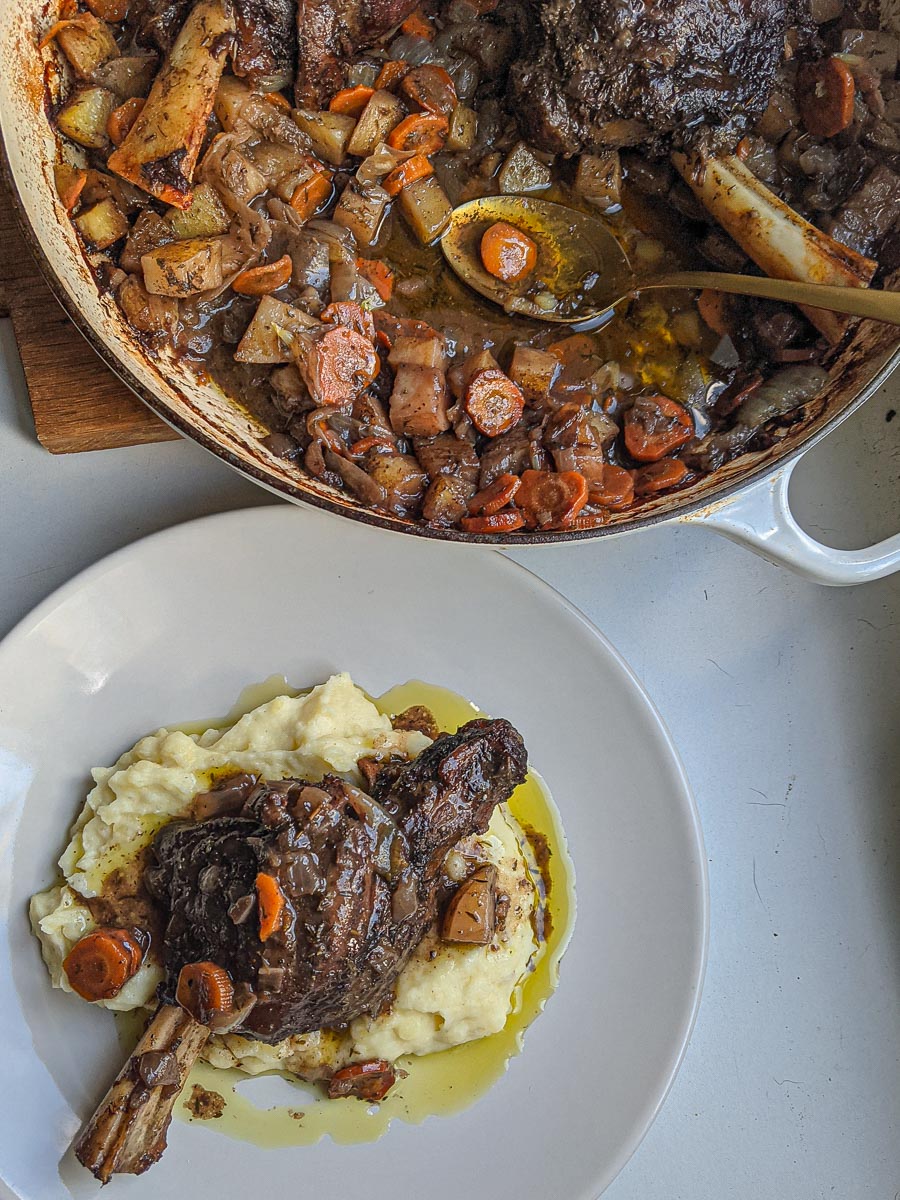
As far as strict definitions go, braising is a cooking method characterized by low and slow cooking in a covered pot with minimal liquid.
But the real magic of braising is the specific balance of wet and dry cooking that it achieves.
I like to think of a braise as the best of both worlds between roasting and stewing. It's sort of the mullet of cooking methods - rich liquid stew on the bottom, roast on top.
The benefit is that braised foods are moist and tender from low and slow cooking in liquid, but they are also wildly flavorful because dry heat also circulates.
Dry heat results in browning (for meat) or caramelization (for vegetables), which promotes development of all kinds of new flavor compounds on the surface.
This post is all about braising - how to do it, what you can braise, and the characteristics of the braising pan that makes the whole thing easier to pull off.
Table of contents
What's the Difference Between a Braise and a Stew?
So what is a braise and how is it different from a stew? Maybe you've been braising this whole time and didn't know it.
A stew is somewhat more flexible concept. Most of us just know a stew is a whole bunch of stuff in a pot with some water (not too much) that cooks down.
Usually cooking a stew is low and slow, until all the flavors meld together and you have a rich, sort of soupy but mostly thick mixture that's perfect for spooning over a rich carby side like mashed potatoes.
A stew is forgiving. It doesn't require a lot of technical skill to execute (though certainly technique can make for better stews).
But then what's a braise and how is it different?
According to Larousse Gastronomique and Harold McGee's On Food and Cooking, a braise is characterized by the following:
- Long and slow cooking;
- A large single cut of meat as opposed to cubes (though a braise can also be vegetables or even beans);
- Minimal amount of liquid, if any (none for watery vegetables for example).
And in addition to the above, from my own experience I would add to this list:
- A braise is generally built around one lead ingredient (one 'star of the show');
- A braise needs a wide and relatively shallow pan, not a deep pot (more on why below).
The Magic of Braising: Wet vs Dry Heat
These characteristics come together to produce a very specific balance of wet and dry heat that isn't achieved by adjacent methods like stewing and roasting.
According to Larousse, braising is classified as a wet cooking method (like boiling, steaming, stewing etc.). Wet cooking is good for moisture retention and tenderness.
But braising is intentionally restrained on liquid, which amplifies the effect of dry heat. Dry heat is the only way to achieve browning i.e. caramelization (for vegetables) or the Maillard reaction (for proteins).
Browning is not just color. Browning reactions:
- Create new flavor compounds.
- New flavor compounds contribute more complexity.
- Complexity is richness on the palate and just makes food taste better.
Even partial browning adds depth that wet heat alone cannot create.
At extremely high temperatures, around 170°C, sugar molecules begin to darken in color… generating hundreds of new compounds, producing abundant new flavors. This is caramelization.
- Samin Nosrat, Salt, Fat, Acid, Heat
While the chemical changes caused by moderate heat modify or intensify flavors that are intrinsic to a food, the browning reactions produce new flavors...
- Harold McGee, On Food and Cooking: The Science and Lore of the Kitchen
How Do You Braise?
The key elements of a braise are:
- Braising pan;
- Lead ingredient;
- Braising liquid;
- The combined work of time and temperature.
1: The Braising Pan
Certain characteristics support the specific wet-dry heat balance that makes for a well-executed braise.
A good braising pan or braiser:
- Is wide and not too deep with sloped edges so hot air can circulate and wet condensation is less likely to drip back onto the food;
- Has a well-fitting lid so you can control temperature and moisture better;
- Is made of a good heat-retaining material, ideally cast-iron.
All of these qualities together support the specific coordination between wet and dry heat that characterizes a good braise. Moisture from the bottom, and dry roast from the top - combining in perfect balance in the middle. Learn more about the characteristics of a braiser.
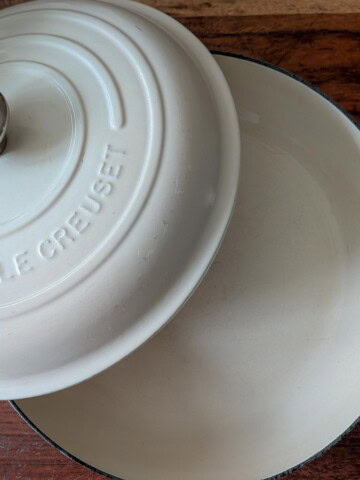
I use a Le Creuset 3.5 quart / 3.5 liter braiser for braising. You can find less expensive braising pans or improvise a braising pan with other kitchen equipment.
You can also achieve a braise in a pressure cooker or slow cooker, see below the section on time and temperature for average indications for different types of braises in different types of equipment.
2. The Lead Ingredient: What Can You Braise?
Braising is a good cooking method not only for meat but also for vegetables and beans.
The process (temperature and timing) looks a little different for each because of intrinsic water content in vegetables, cooking time for beans and the transformation of collagen into gelatin in meats.
Braising Meat
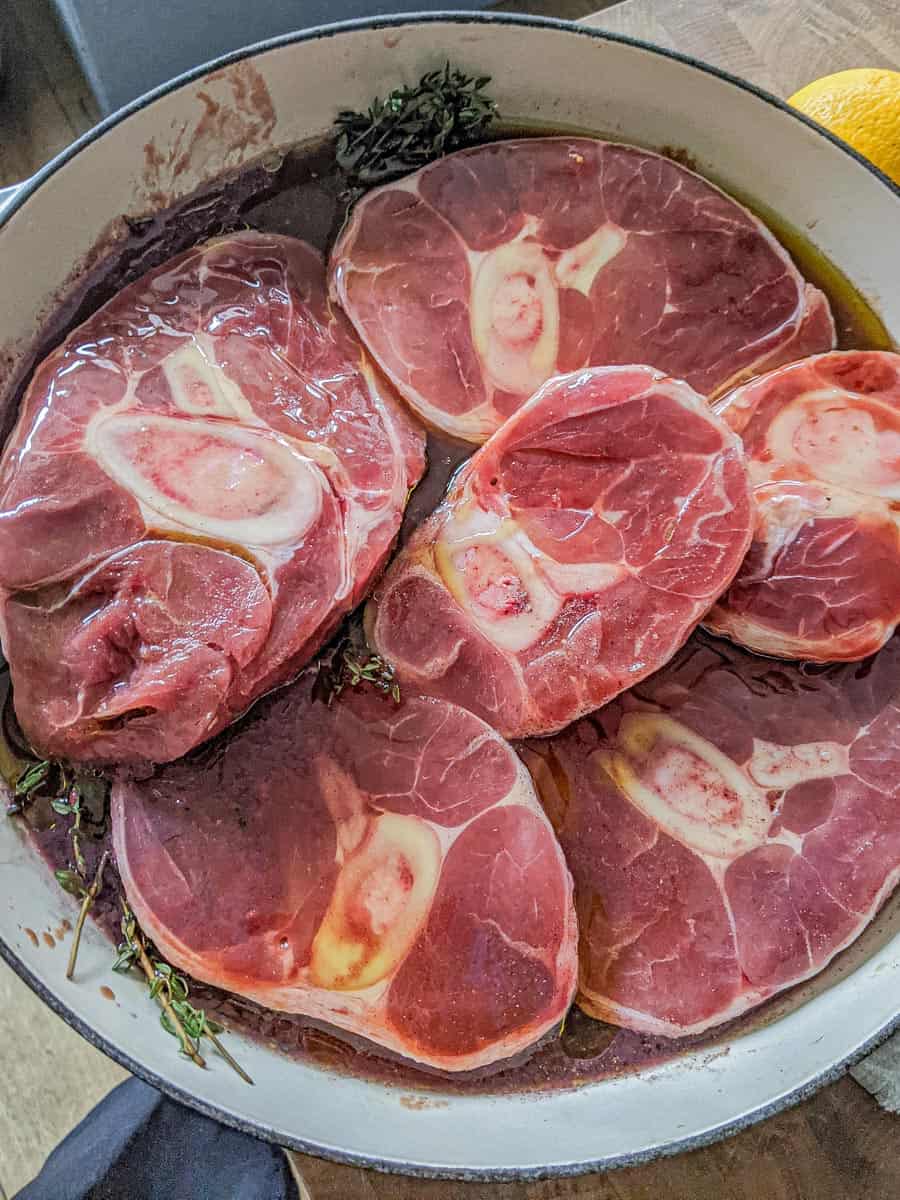
When it comes to meat, braising is a good method for tough cuts. Tough cuts come from the most heavily used muscles in an animal: the shoulder (chuck in beef, shoulder/butt in pork), the chest or brisket area, and the upper and lower legs (round and shank in beef, ham and hock in pork).
These cuts contain a high amount of connective tissue (collagen), which begins to dissolve into soft gelatin at around 70 °C / 160 °F and becomes silky and tender with sustained cooking over time.
A lot of different types of meat can be braised:
- Beef and Pork: Beef and pork are the most classic braising meats. Tough cuts like shoulder, belly or flank are best, as are bone-in cuts like ribs (pork ribs and beef short ribs braise beautifully), shanks and oxtail.
- Veal and lamb: Shoulder and shanks are especially good with Italian Ossobuco alla Milanese being a particularly well-known version.
- Poultry: Even poultry types and cuts that are heavily used and have a good amount of connective tissue like thighs, wings and legs. See for example chicken thighs braised in a creamy spiced tomato sauce with eggplant and chickpeas or braised turkey leg in white wine sauce as shown below.
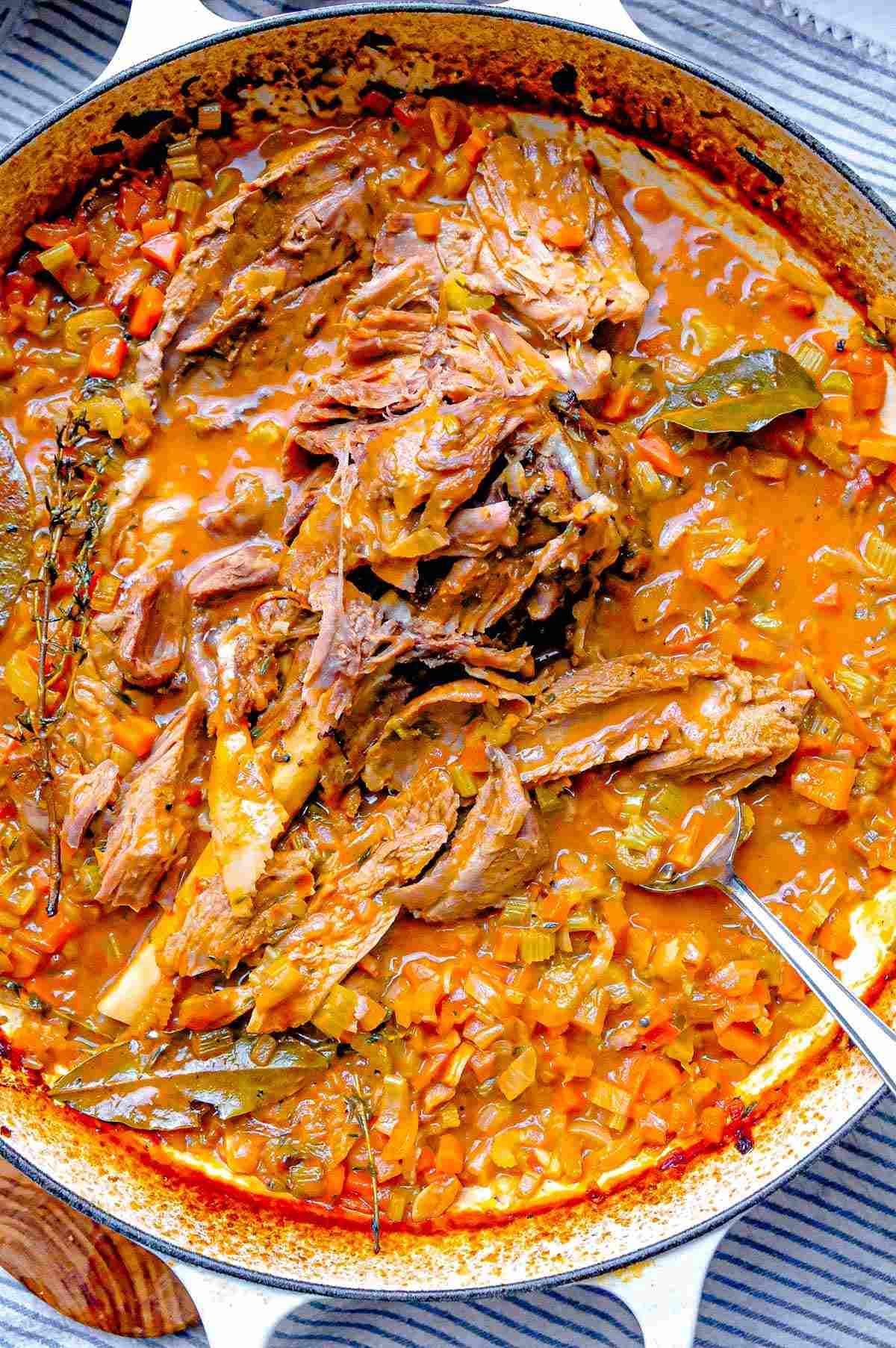
Collagen-heavy and tough cuts of pork and beef need a long, low and slow braise, usually 2-3 hours with liquid a third of the way up the meat.
More tender red meat like lamb and veal needs shorter time, as little as 1.5-2 hours.
Likewise, poultry needs significantly less time than red meat: as little as 35-45 minutes for boneless cuts but up to 1.5-2 hours for large bone-in pieces like turkey leg.
Braising Vegetables
You can braise not only many meats but also many vegetables. The best vegetables for braising are those that are firm, dense and dry enough to soften slowly without falling apart.
Vegetables like carrots, cabbage, potatoes, and cauliflower can be braised and remain distinct pieces. Even sauerkraut can be braised and in fact braising is the basic idea behind cabbage rolls and other stuffed vegetables like the stuffed onions shown below. They are cooked low and slow with minimal additional liquid.

Onions are borderline vegetables like leek, endive, fennel and others. They are watery but dense and hold up well to a braise.
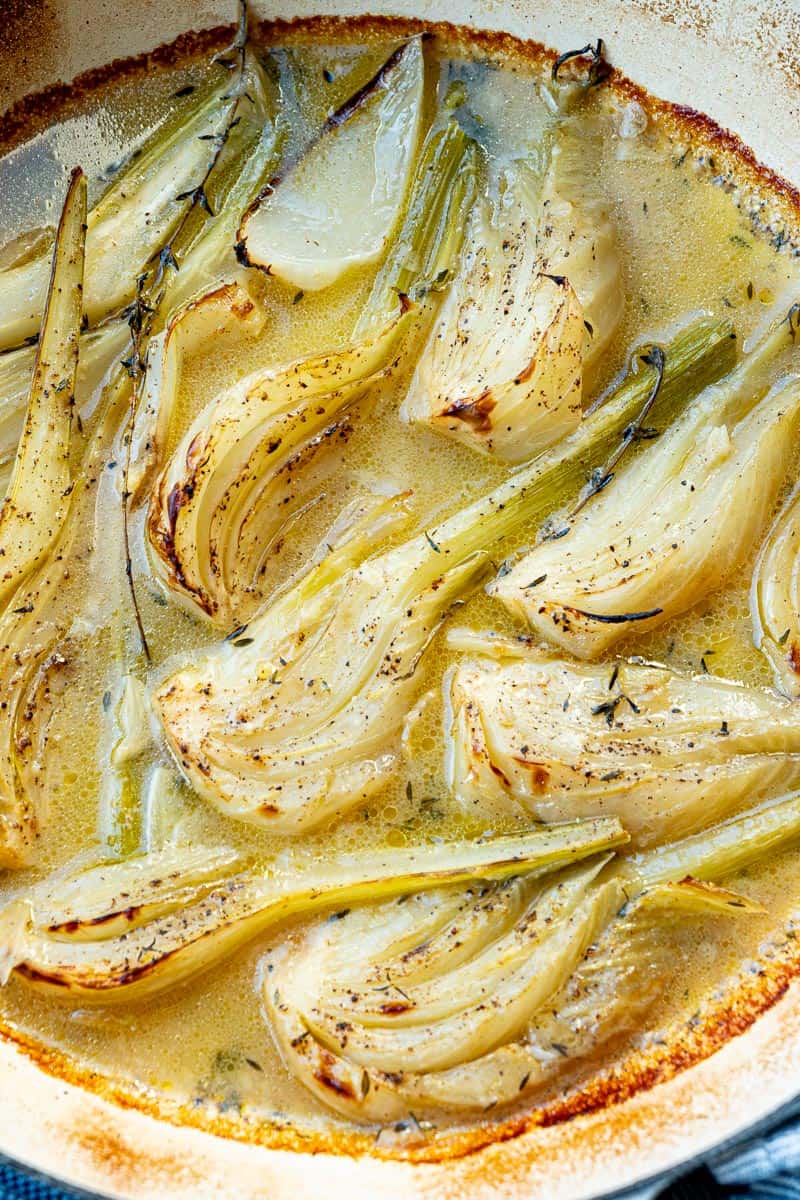
For example, endive braises beautifully, especially in a creamy base Belgian-style. Braised fennel bulb retains its shape but becomes melt-in-your-mouth fork tender.
Leeks can also be cooked low and slow until soft and tender. This is especially good when they're stuffed with ground meat and rice or rice and chickpeas.
Softer or higher water content vegetables like tomatoes and peppers aren't ideal as the lead ingredient in a braise because they gradually dissolve and turn into sort of a mush (more of a stew than a braise). You can see in the photo above the onions have held their shape while the tomatoes have shriveled up and will give way as soon as they're touched.
Braising time for vegetables depends on the vegetable type and desired result. See the linked recipes to get some ideas.
Braising Beans
Beans are especially good for braising because (after a quick soak) dry beans can cook low and slow to allow time for flavor development while also absorbing flavors as they cook.
Classic preparations are braised beans with smoked pork and braised beans and greens (for example braised veal shanks with white beans and kale or buttery slow cooked spinach and white beans).

Braising beans (from dry) will take at least 2.5-3 hours, not including pre-soak time.
Canned beans are not as good for a braise because they've already absorbed water and therefore will not absorb much more flavorful liquid so they usually are not as flavorful as braised beans from dry.
3: Braising Liquid
A key element of a braise is the braising liquid (though you can also dry braise, see more on that at the bottom of this post in the advanced tips and troubleshooting section).
As far as liquid braises go, you can technically braise in water. Of course a more flavorful liquid will make for a more flavorful braise.
The braising liquid can also be used at the end to whip up a quick pan sauce, so it helps to start with a flavorful base.
A braising liquid should provide some combination of:
- Moisture: prevents drying and allows collagen to dissolve in meat, keeps vegetables tender, cooks beans;
- Flavor: becomes the sauce - optionally can be turned into gravy;
- Acidity or sweetness (optional): balances richness.
You usually need only a small amount.
Good choices for braising liquid:
- Stock (chicken, beef or vegetable);
- Wine: red wine for beef, lamb, oxtail, short ribs and white wine for chicken, pork, veal, lighter vegetables);
- Beer or cider;
You can also make a flavorful combination that balances salty, sweet, savory etc. For example any combination of one of the above liquids or water along with small amounts of bouillon, tomato paste, soy sauce, balsamic vinegar, honey or miso.
Otherwise all the principles of making a good stew apply to making a braising liquid including using aromatics and browning.
4. Time and Temperature
Braising is best done in a braising pan which allows for the dry and wet heat balance. You can also braise in an Instant Pot or slow cooker with adjusted times for different types of braises.
Since these methods result in much wetter cooking than a braising pan, its recommended to brown meats first to add the extra flavor.
| Ingredient type | Example cuts / vegetables | Braising pan (oven) | Pressure cooker | Slow cooker |
|---|---|---|---|---|
| Beef & pork (collagen-heavy cuts) | Chuck, shoulder, belly, short ribs, shank, oxtail | 160–170 °C / 325–340 °F 2–3 hours | High pressure (~115–120 °C / 240–250 °F) 45–75 min | Low: 8–10 h High: 4–6 h |
| Veal & lamb | Shoulder, shank (e.g. ossobuco) | 160–170 °C / 325–340 °F 1.5–2 hours | High pressure 40–50 min | Low: 6–8 h High: 3–4 h |
| Poultry (bone-in) | Chicken thighs, legs, wings; turkey leg | 160–170 °C / 325–340 °F 1–2 hours | High pressure 20–35 min | Low: 4–6 h High: 2.5–3.5 h |
| Poultry (boneless) | Chicken thighs or breast (braise-style) | 160 °C / 325 °F 35–45 min | High pressure 8–12 min | Low: 2.5–3.5 h |
| Firm vegetables | Carrots, cabbage, potatoes, cauliflower | 160–170 °C / 325–340 °F 45–90 min | High pressure 5–10 min | Low: 3–5 h |
| Borderline vegetables | Leeks, onions, endive | 160–170 °C / 325–340 °F 35–75 min | High pressure 5–8 min | Low: 2.5–4 h |
| Dry beans (pre-soaked) | White beans, chickpeas, borlotti | 150–160 °C / 300–320 °F 2.5–3+ hours | High pressure 35–50 min | Low: 6–8 h |
Related
Here are more posts on cooking foundations:
Comments
No Comments