
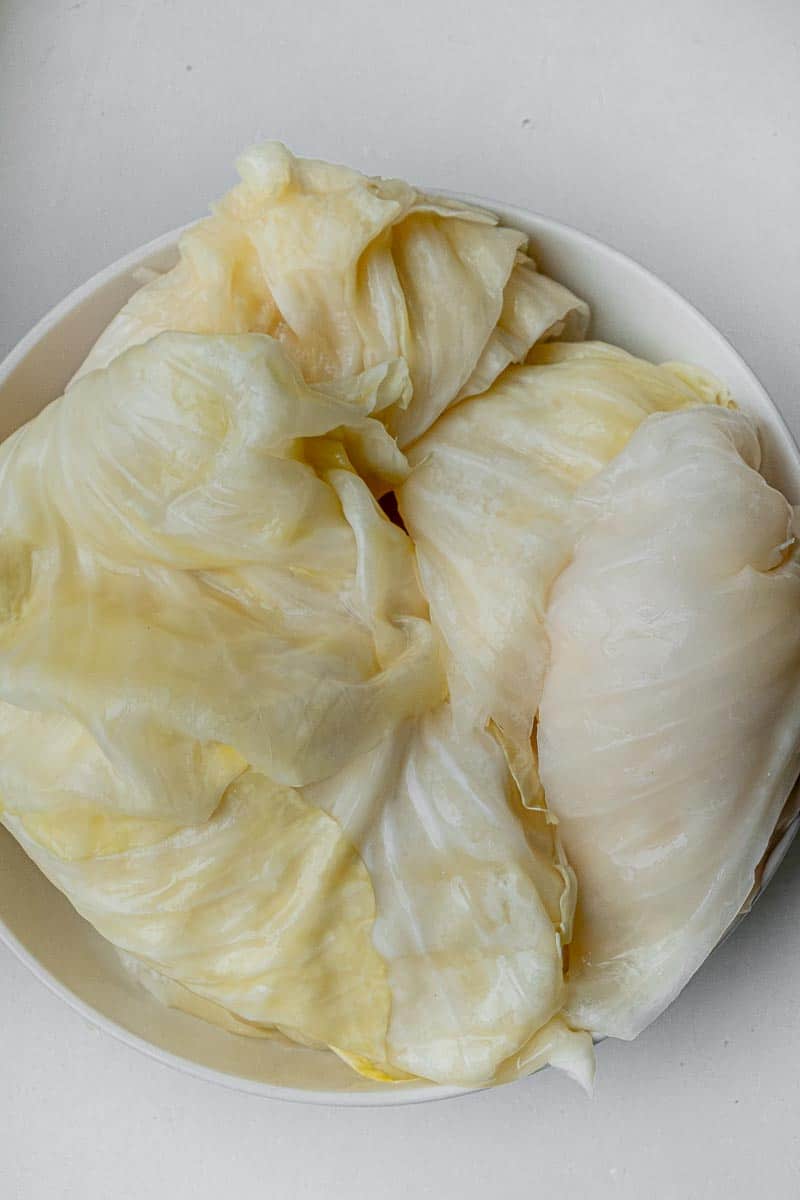
Making sauerkraut for cabbage rolls is not much different than making shredded sauerkraut. You just need the right type of cabbage and a simple salt brine to kick off lacto-fermentation.
In the Romanian fermentation tradition, fermented vegetables generally fall into three broad categories: mixed pickled vegetables (murături meaning 'pickles' broadly), sauerkraut (varză murată meaning pickled cabbage), and cucumbers (castraveți murați meaning pickled cucumbers). There are also outliers like fermented soup starter (zarzavat) but that's another story.
Sauerkraut or pickled cabbage is treated as its own category because cabbage ferments best when tightly packed and fully submerged in its own juices.
Equipment
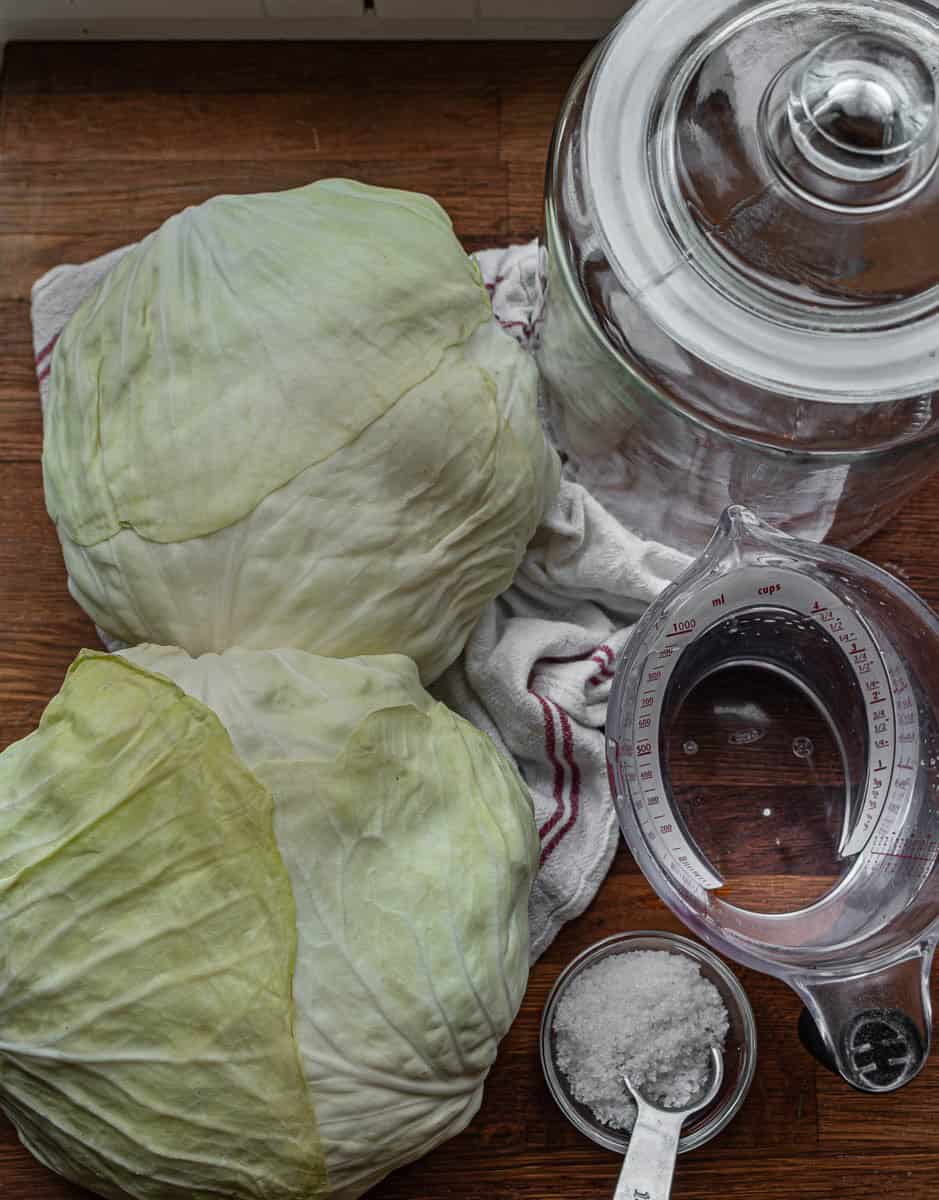
- One wide mouth fermentation jar totaling at least about 5 liters / 5.3 quarts;
- Kitchen scale (recommended for accurate salt measurement)
- Large (1 liter / 1 quart +/-) measuring cup for mixing the brine
- Sharp knife and cutting board
- Fermentation weights or small clean saucers, bowls etc. to keep sauerkraut submerged (you can improvise)
- Lids For cold-ferment, snap lids with rubber seals are good. For warm-ferment, opt for loose-fitting lids or fermentation airlocks (standard lids, lightly closed, also work)
- Cloth or tray to place under the jar in case of overflow during active fermentation
Ingredients
- Cabbage: The best cabbage for sauerkraut is cabbage with loosely layered leaves. It feels light despite it's size. If you gently squeeze it gives way because there's a lot of space between the leaves (its not tightly packed like standard cabbage leaves are). Look for large flat cabbage. You can find it as flat white cabbage or drumhead cabbage. In Romania as varză de toamnă or varză pentru murat (literally "autumn cabbage" / "cabbage for pickling").
- Salt: Use non-iodized salt such as pickling salt or pure sea salt, as iodine and anti-caking agents can interfere with fermentation.
Instructions
Step 1: Pack the Cabbage Tightly
If you have a large enough fermentation barrel for the cabbage to stay whole then (lucky you) you can put it in whole.
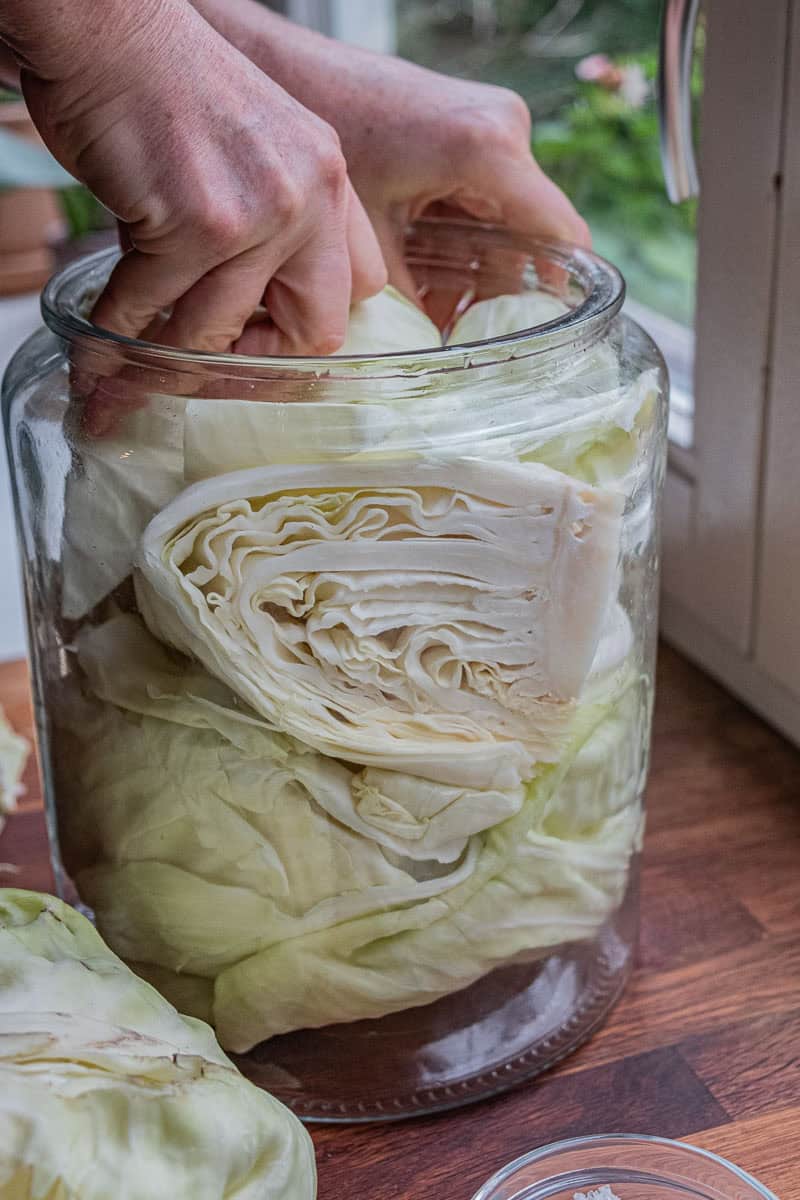
I don't have the space to devote to fermentation in my city apartment so I'm using a smaller fermentation jar that fits a few half wedges and some quarters.
The leaves are still whole and plenty large for rolling.
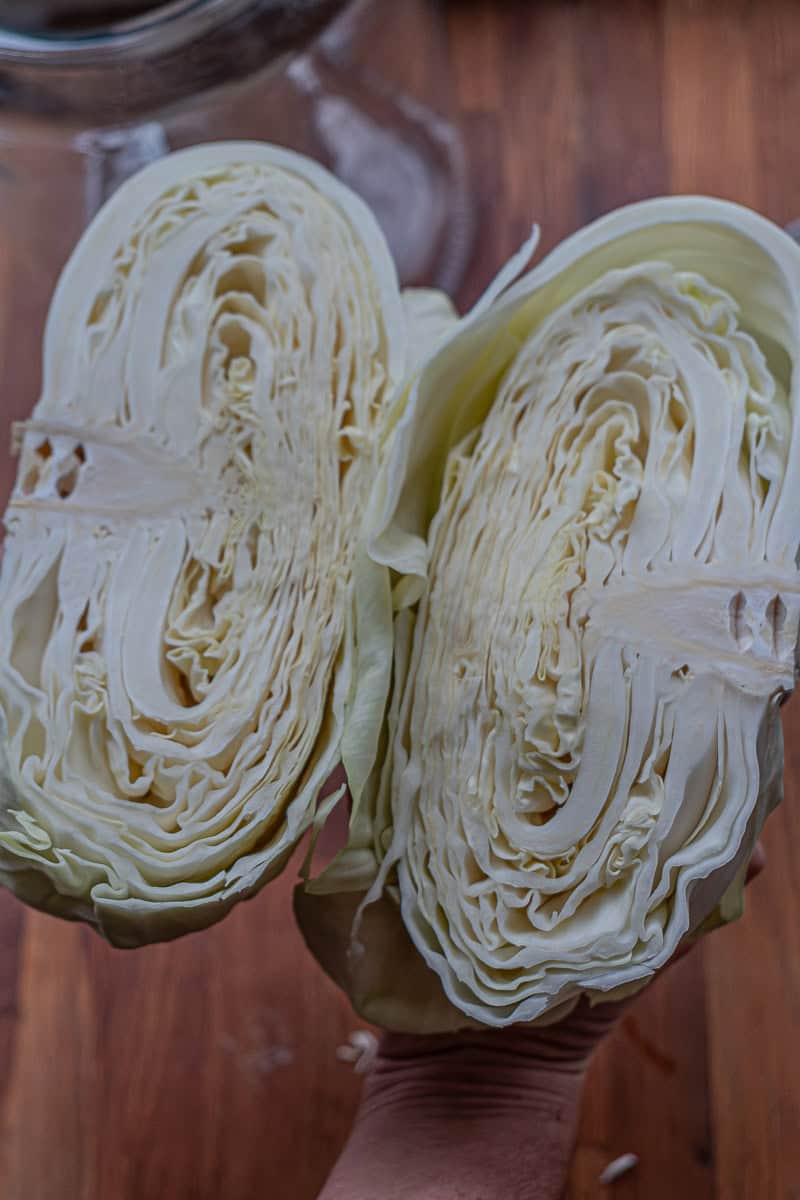
If you do need to cut your cabbage, cut it into the largest segments you can get away with.
Make sure you put them into your fermentation vessel with the cut side facing up, so the brine can fully fill up the crevices (otherwise air can become trapped between the leaves and lead to growth of undesirable organisms or spoilage).
You can play around a bit with how the cabbage wedges fit. See the best or more optimal configuration. You can always take out the pieces and try again - nothing is final until the brine is in and even then you can still adjust if you really need to.
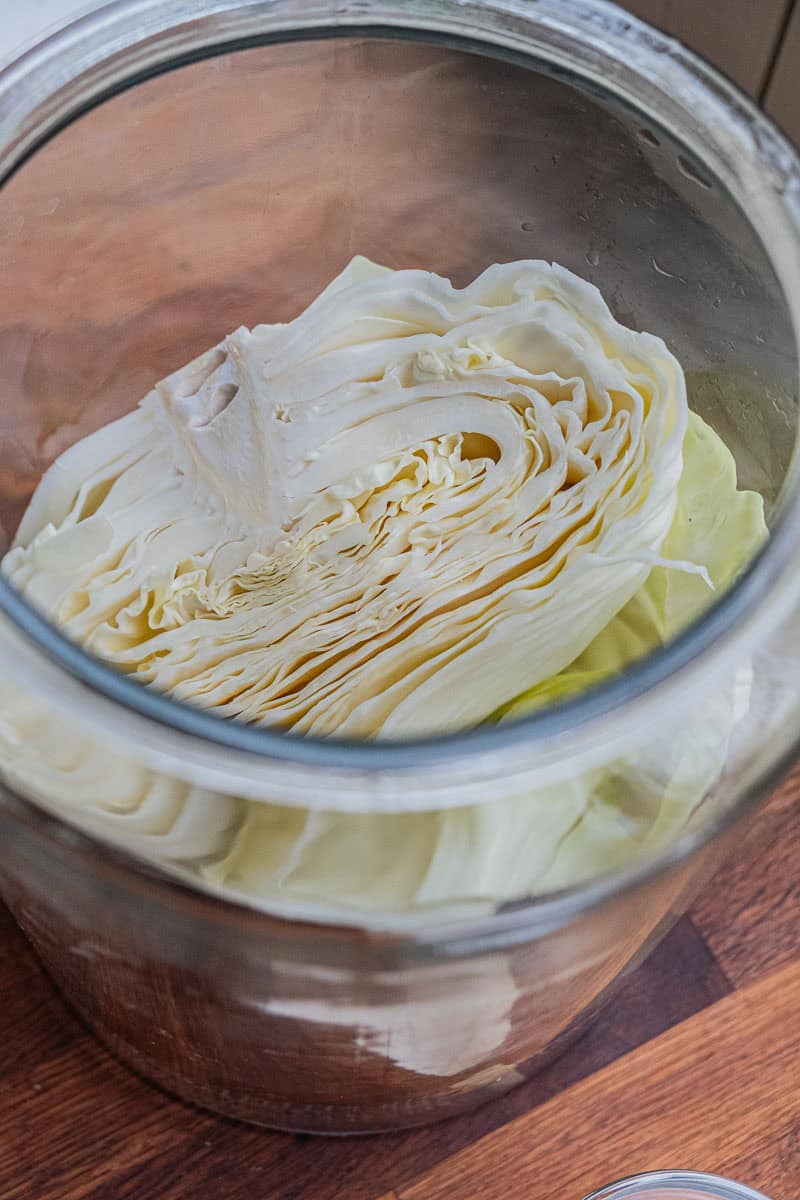
You want a quite snug fit. Don't press so hard as to break the cabbage, but press firmly and evenly to press the cabbage into the jar and fill as much of the jar with cabbage as possible.
Step 2: Make a Salt Brine
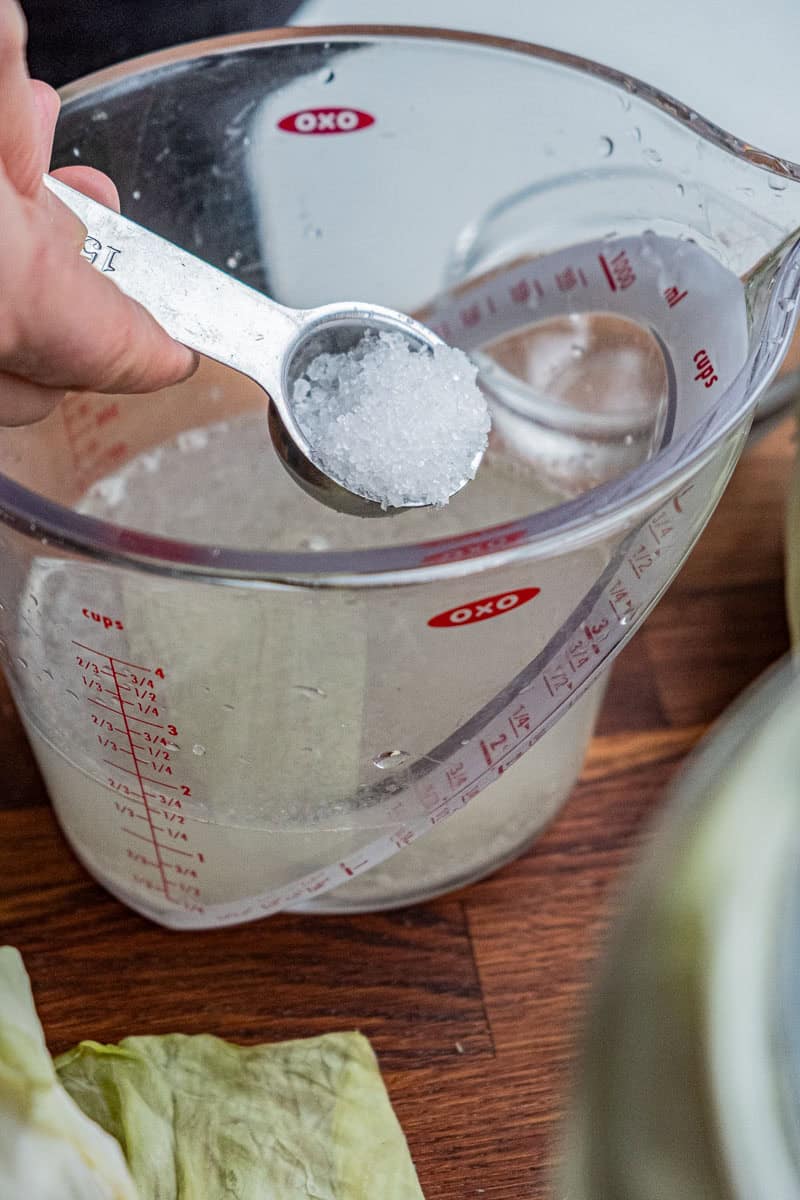
Once the cabbage is in the jar you're going to mix a salt brine.
Use non-iodized salt such as pickling salt or pure sea salt, as iodine and anti-caking agents can interfere with fermentation.
Usually a good amount for cabbage is between 2 - 2.5% salt.
A 2% salt brine is made by dissolving 20 grams of salt in 1 liter of water (approximately 0.7 ounces of salt per 4¼ cups of water).
A 2.5% salt brine is made by dissolving 25 grams of salt in 1 liter of water (approximately 0.9 ounces of salt per 4¼ cups of water).
Salt Concentration & Temperature
The precise concentration of salt depends on if you plan to ferment inside (countertop) or outside in cool or cold temperatures.
- If you're fermenting inside where it's warm, use a bit more salt - a 2.5% concentration is sufficient.
- If you're fermenting outside or in a cellar etc., use less salt - 2% is good.
It's a good idea to mix up 1 liter of brine at a time until your vessel is full (unless you're using a full on barrel, in which case you should mix up as much as your mixing vessels allow).
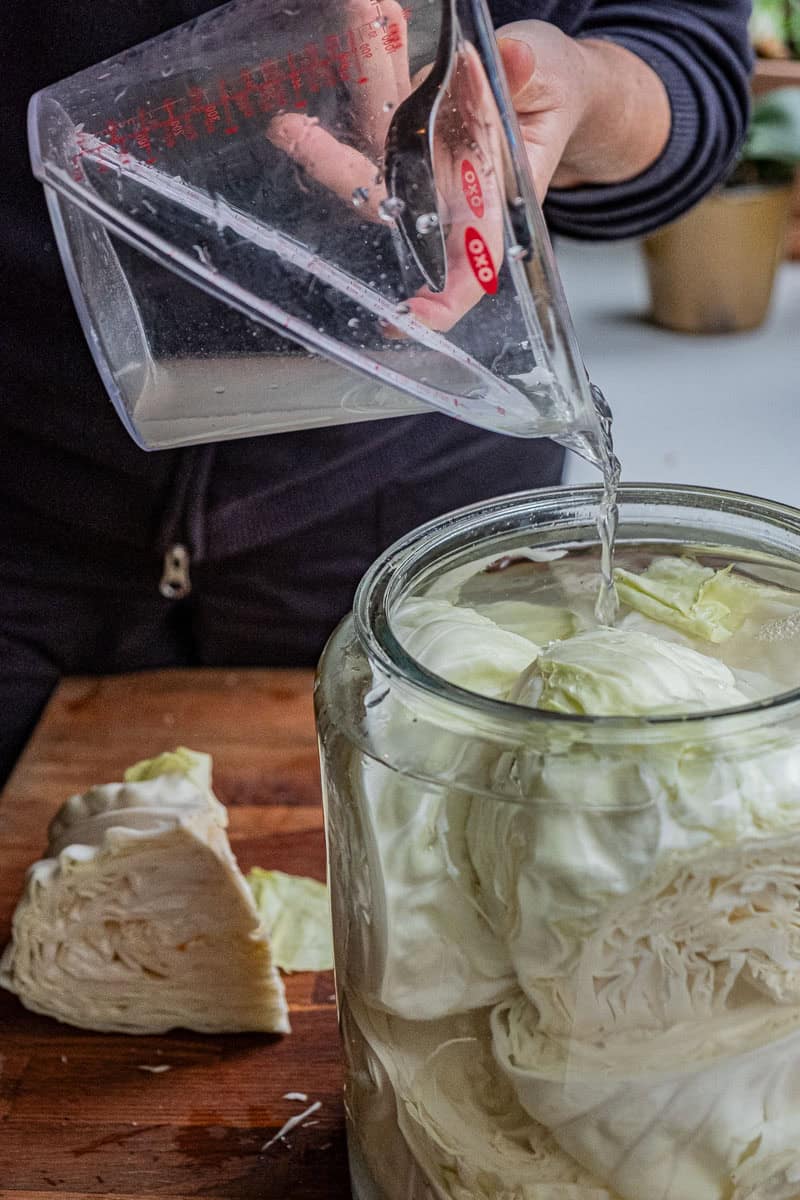
Pour the brine over the cabbage. Leave about 2-3 cm / 1 inch of headspace at the top of each jar to allow for bubbling and expansion during active fermentation.
Then (if you have it) put a fermentation weight in the jar to weigh down the cabbage and keep it submerged.
You can also DIY a fermentation weight by using a bowl or something else just make sure the bowl is right-side up and doesn't trap air / expose the cabbage to air.
And that's it. Then you basically set it and forget it.
In the first few days, the cabbage may shift or release more liquid. If any pieces rise above the brine, top up with freshly mixed brine of the same salt concentration to keep everything fully submerged.
How long does it take to make sauerkraut?
For a countertop ferment at about 18-21°C (64-70°F), you can expect the sauerkraut to be ready in 7-10 days.
For a cold-environment ferment, roughly 0-7°C (32-45°F), it can take 4-6 weeks, depending on temperature fluctuations.
And for all temperatures in between, your timelines may vary but you can get an idea from these outer limits.
In general, cold ferment increases the window during which specific flavor producing organisms are active before strong acid producers dominate.
A cold ferment produces more complex flavor. But it also takes longer so...it's a give and take.
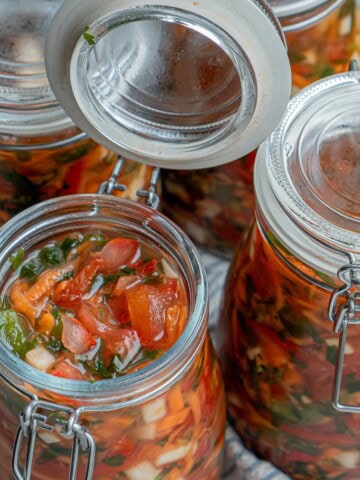
For an indoor ferment you can set up a little countertop 'fermentation station' like I've done below for sauerkraut and pickled cauliflower and carrots.

If you are fermenting at room temperature, then make sure you are not using really tightly fitting lids because the gasses can build up very rapidly and create a lot of pressure.
You can also speed up a cold-ferment by starting it inside for 24-48 hours then moving it outside.
This cabbage was fermented on the countertop for 48 hours and then moved outside to the garden in Amsterdam in late December.
During this period, temperatures ranged from −2 to about +7°C (28-45°F). The cabbage was ready in about one month.
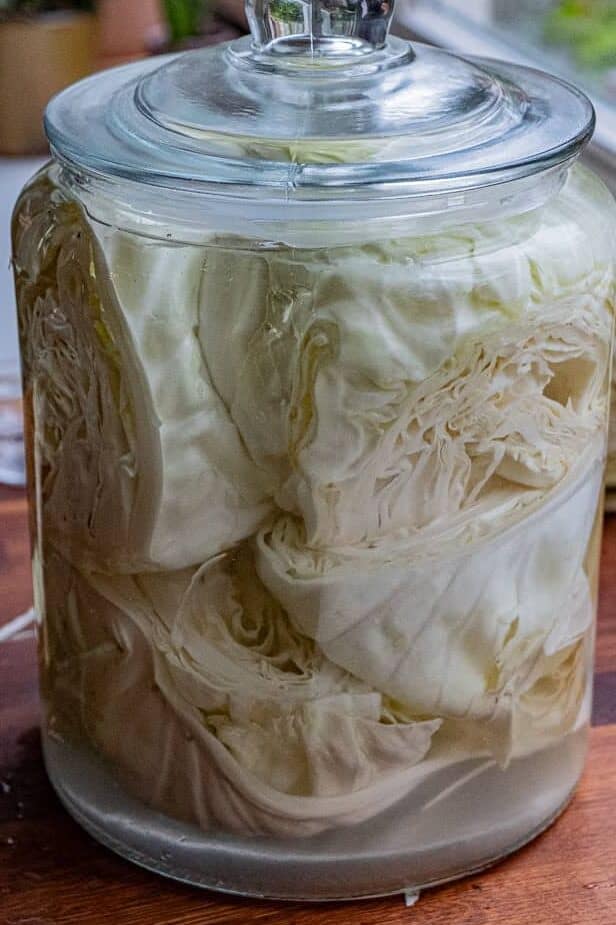
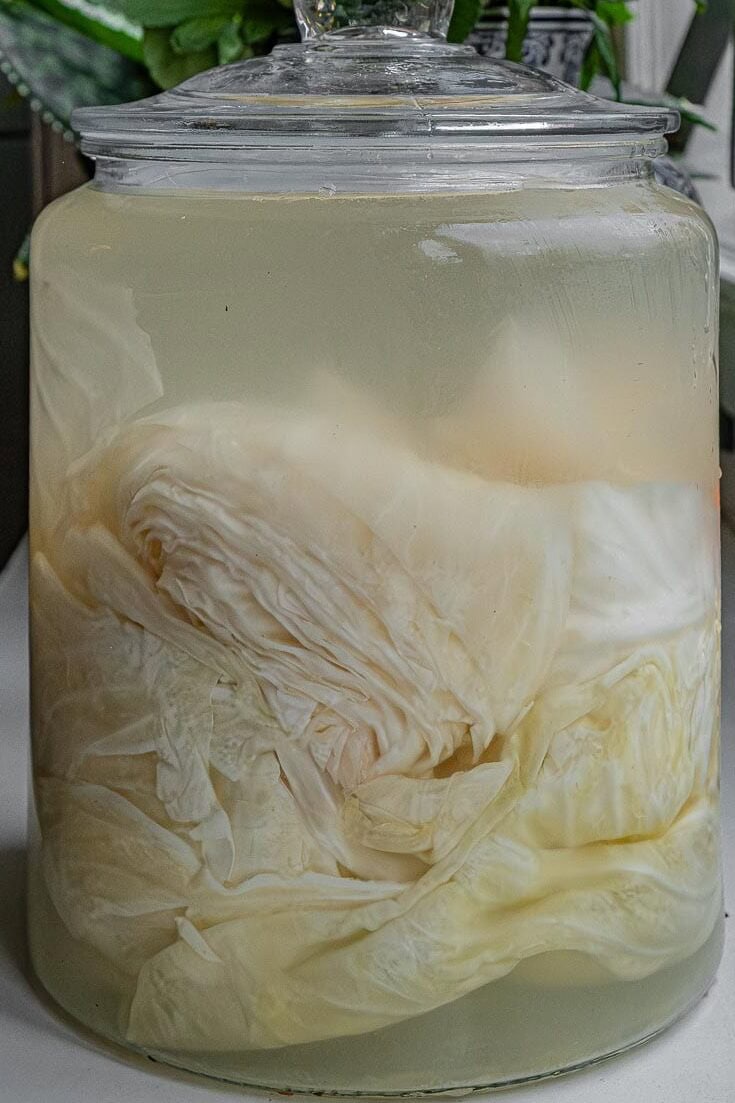
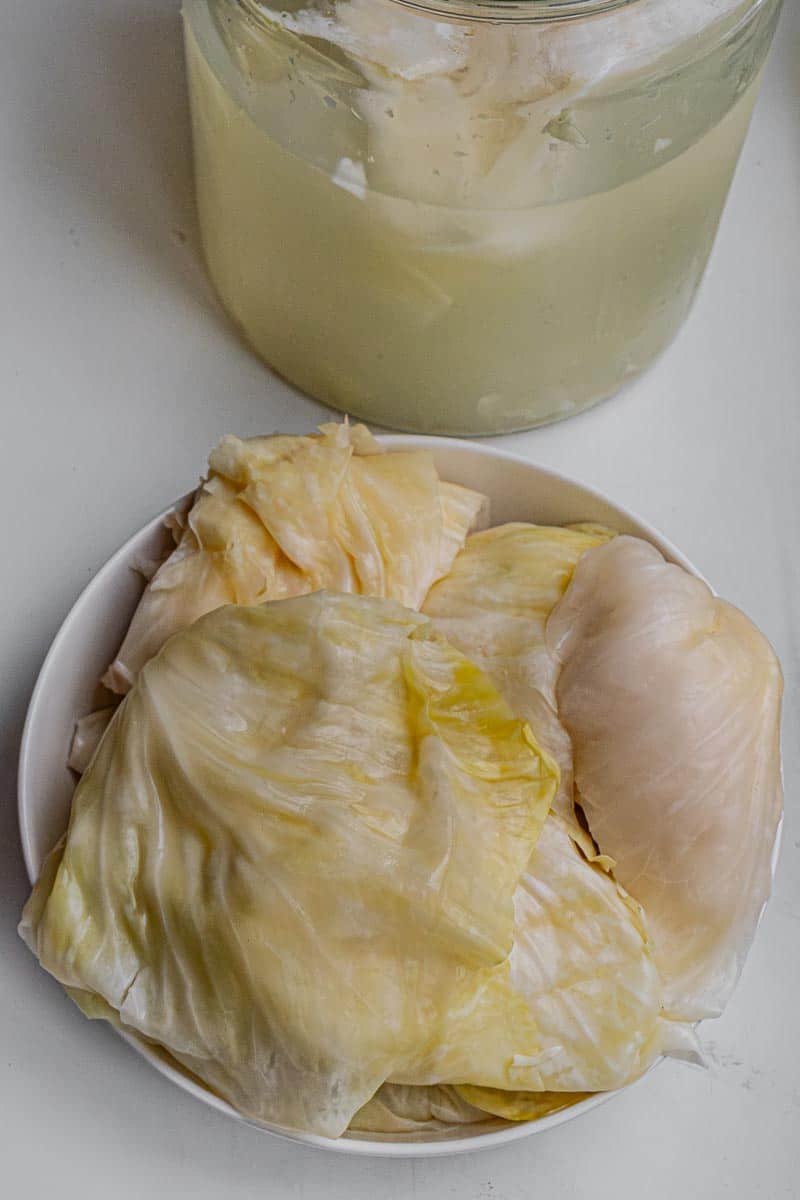
Once a good amount of time has passed you can check if your cabbage has become sauerkraut. Take some out and give it a taste.
The sauerkraut is ready when the brine has a distinctly sour taste (rather than just salty) and the cabbage is still crisp and firm but has lost it's raw bite.
How do you know if sauerkraut has gone bad?
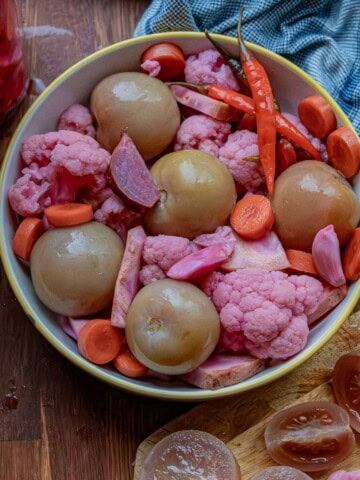
- Discoloration from air exposure: Cabbage exposed to air can become discolored (see example of discoloration on cauliflower below). This isn't necessarily a problem as long as there are no other signs of mold and the ferment smells clean and sour (not foul). Discolored pieces can be trimmed off; then make sure all cabbage is fully submerged.
- White surface film (kahm yeast): A thin white film on the surface is harmless and can be skimmed off. It may affect flavor slightly but does not make the sauerkraut unsafe.
- Fuzzy or colored mold: Fuzzy growth or mold that is green, blue, black, or pink is a sign to discard the entire batch.
- Off or rotten smell: A strong unpleasant odor (rotten, putrid, or sulfurous) rather than a clean, tangy sour smell indicates spoilage.
- Slimy texture: Cabbage that becomes slippery or slimy instead of crisp is a sign the ferment has gone bad.
- Lack of acidity: If the brine never develops a sour flavor and just tastes flat or salty (even after sufficient fermentation time), the ferment has likely failed.

Serving Suggestions
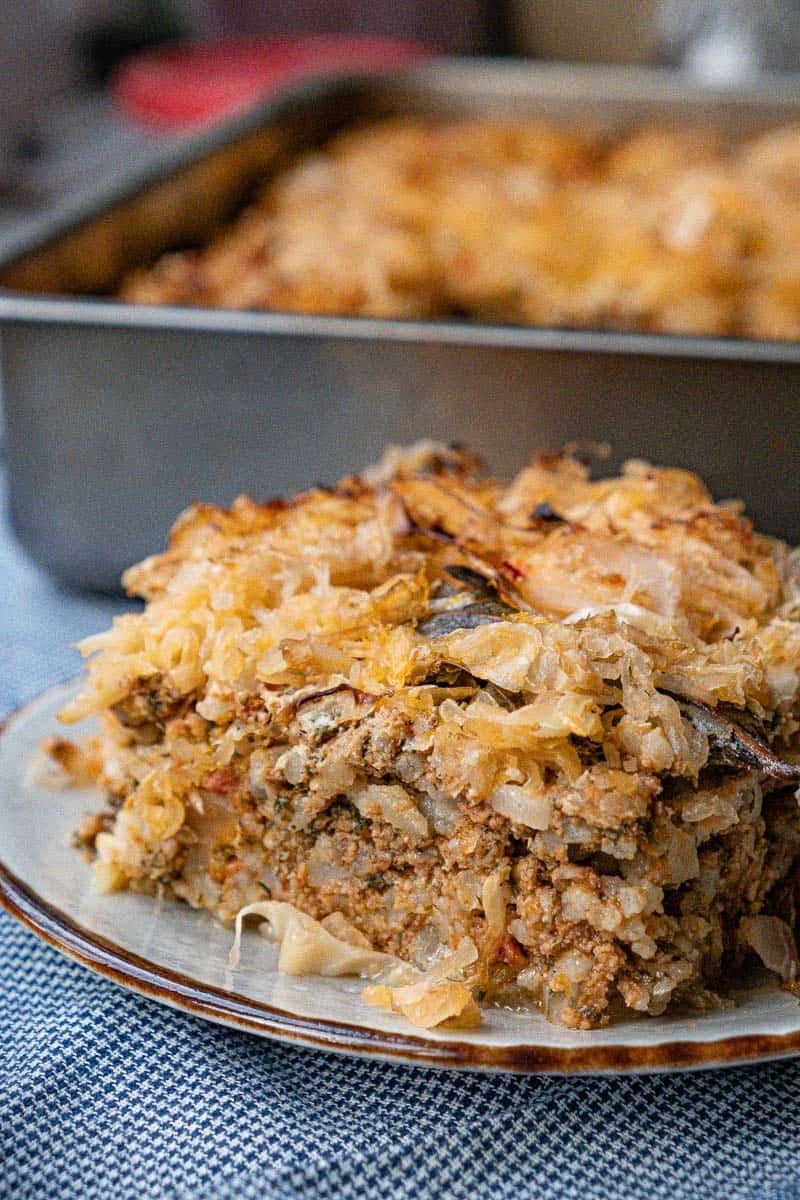
If you're looking for a way to use homemade sauerkraut besides eating it as is as a side dish or salad, then check out one of the below sauerkraut recipes:
- Sarmale: Traditional Romanian Cabbage Rolls
- Romanian Sauerkraut Casserole (Varză à la Cluj)
- Romanian Slow Roasted Caramelized Cabbage (Varză Călită)
- Cabbage Roll Soup with Rice Meatballs
You can also drink the fermentation liquid. In Romania this is the classic go-to handover remedy.

Recipe
Romanian Sauerkraut for Cabbage Rolls (Varză Murată)
Ingredients
- 2 flat white cabbage heads
- 1.5 liters water 6⅓ cups or 1.6 quarts
- 37.5 grams salt two heaping tablespoons, but weighing is recommended
Equipment
- 1 Wide-mouth jar with lid at least 5 liters (about 5.3 quarts)
- kitchen scale for calculating salt
- Large (1 liter / 1 quart +/-) measuring cup for mixing the brine
- fermentation weights or DIY weight
- cutting board and sharp knife
- kitchen towels for fermentation station
Instructions
- Pack the cabbage: Remove any damaged outer leaves. If fermenting whole, place the cabbage directly into the jar. If needed, cut into the largest wedges possible, keeping leaves intact. Pack the cabbage tightly into the jar with cut sides facing up so brine can fully penetrate. Press firmly but gently to maximize how much cabbage fits without breaking it.
- Make the brine: Prepare a salt brine based on fermentation temperature. For a warm ferment (indoor), use a 2.5% brine (25 g salt per 1 liter / about 4¼ cups water). For a cold ferment (outdoor or cellar), use a 2% brine (20 g salt per 1 liter / about 4¼ cups water). Mix the brine and pour it over the cabbage until fully submerged.
- Weight and seal: Add fermentation weights (or a clean improvised weight) to keep the cabbage completely submerged under the brine. Seal with loose lids or airlocks for warm ferments, or regular snap lids for cold ferments. Place the jar on a tray to catch any overflow.
- Ferment: - For a warm ferment, keep the jar at about 18-21°C (64-70°F) for 7-10 days. - For a cold ferment, keep it at about 0-7°C (32-45°F) for 4-6 weeks. You can also start the ferment indoors for 24-48 hours and then move it to a colder location.
- Check for doneness: The sauerkraut is ready when the brine tastes distinctly sour rather than just salty, and the cabbage is still crisp and firm but has lost its raw bite.
- Store: Once fermented to your liking, move the jar to cold storage to slow further fermentation.
Nutrition
Related Recipes
Maybe you'll also like:

Comments
No Comments