
This no-knead cozonac is a streamlined version of the classic Romanian holiday bread, just made without traditional kneading. The result is a beautifully soft and moist crumb that's far better than store-bought and so satisfying to make at home, even when time or equipment are limited.
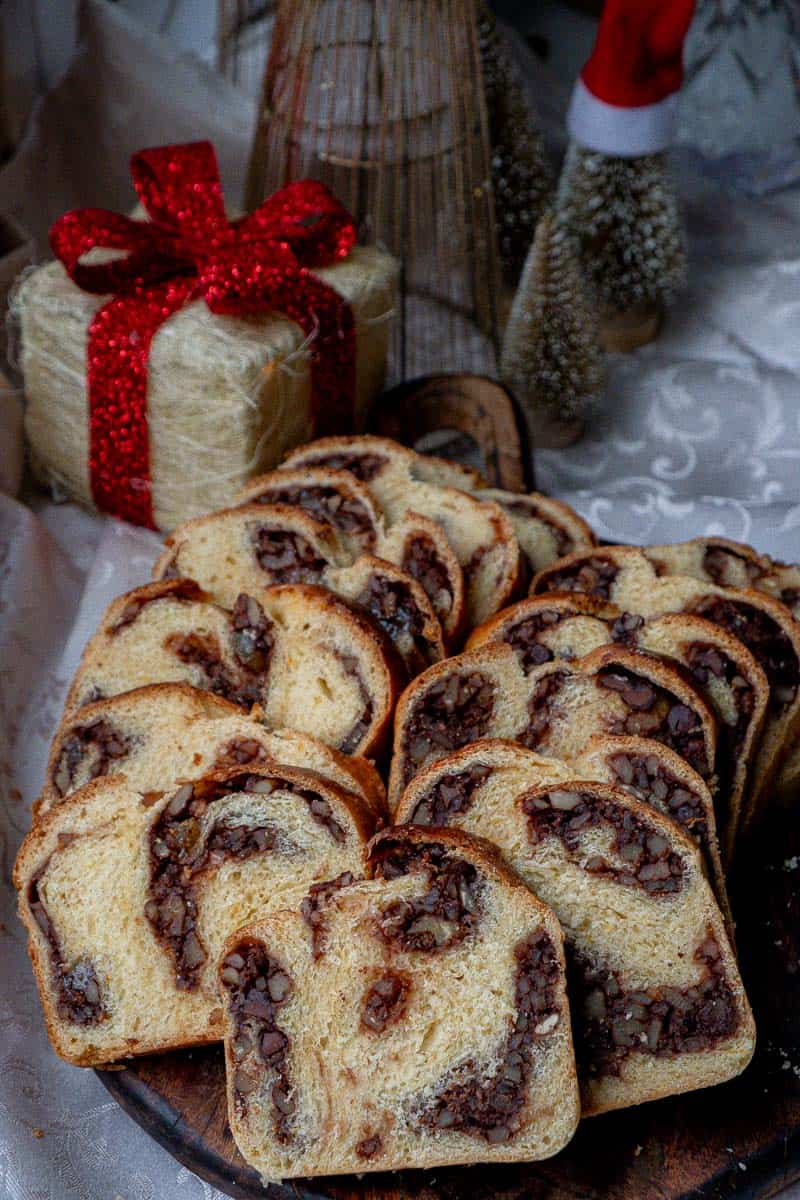
This recipe is the same base recipe as my original recipe for perfect cozonac, which was published a few years ago after many rounds of rigorous testing. It's been highly rated since then and so I used it as a jumping off point for this no-knead version.
While the ingredients are the same, I tested a no-knead method to coax out as much gluten development as possible without kneading.
The method calls for a sponge (preferment), resting periods in a warm oven and some strategic folding technique to build gluten quickly and without kneading. Instead of continuous kneading, the dough is strengthened through a series of stretch-and-folds, which makes the process much more forgiving and far less labor-intensive.
This recipe is ideal for those that don't have an electric mixer and don't want to spent a lot of time kneading.
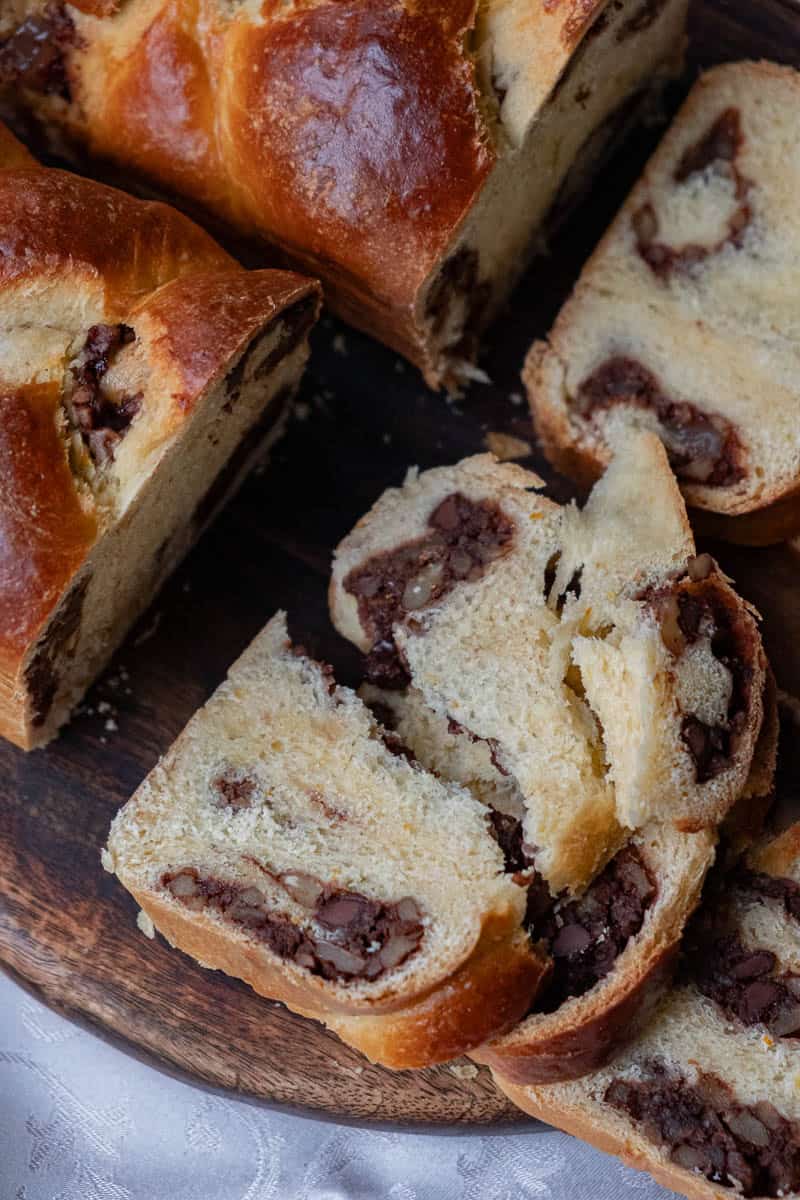
The taste is just how you would expect a traditional Romanian cozonac to taste: rich and pillowy dough lightly scented with citrus, enveloping a creamy and crunchy filling of rum-flavored cocoa and walnuts.
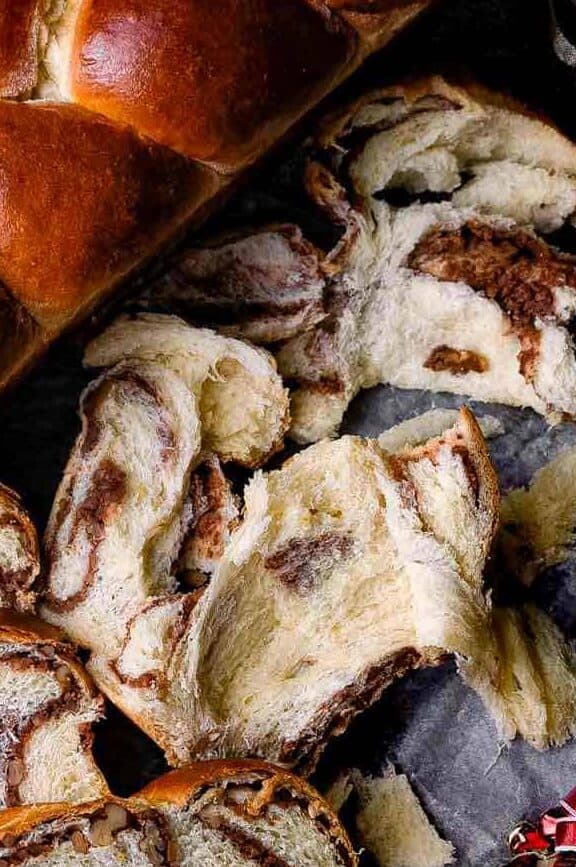
Even as a short-cut version of cozonac, it's much better than anything prepackaged. The crumb is still very moist and soft like you'd expect of any good brioche dough.
Most people won't notice, but in a side-by-side comparison you can probably tell it's somewhat denser than the original recipe. So it's great if you don't have a mixer, but if you do I still recommend the original version because the improved texture is worth the extra time spent mixing.
Quick Summary
- Same dough and filling as classic cozonac, slightly different method
- No kneading required; structure develops through rest and folds
- Pay close attention to temperatures and rest times
- Ideal if you don't own a mixer and don't want to knead
- Slightly less airy than kneaded cozonac, but still excellent
Ingredients
Dough Ingredients
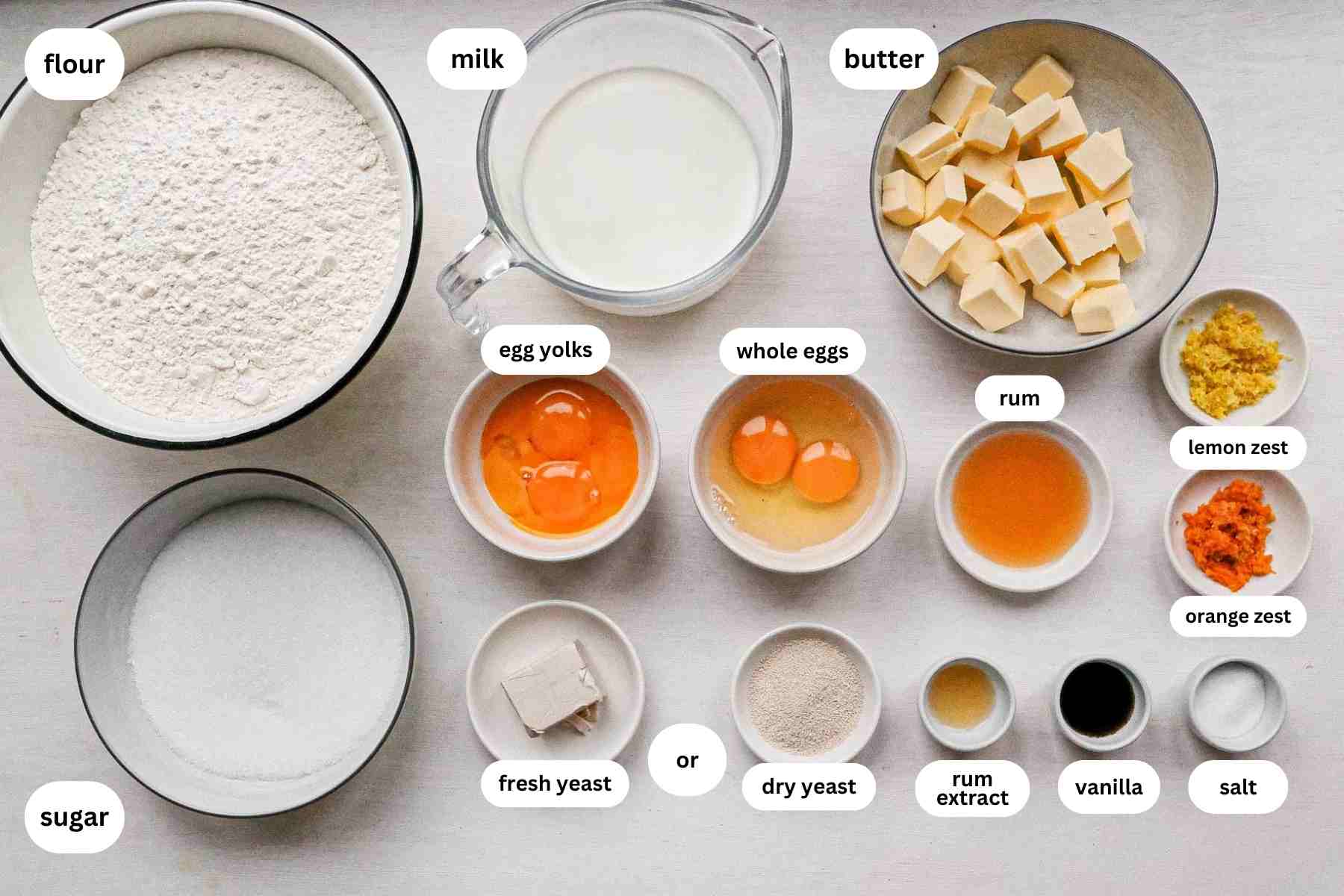
- Flour: provides structure and strength to the enriched dough. Use flour with at least 10% protein (i.e. 10 grams per 100 grams on the nutrition label). Usually bread flour is good. Don't use pastry flour.
- Milk: hydrates the dough and contributes softness
- Yeast: leavens the dough and develops flavor. You can use either dry yeast (active dry or instant) or fresh yeast for this recipe. In my testing, there is no difference in final outcome.
- Sugar: sweetens the bread and tenderizes the crumb
- Butter: adds richness and a soft, luxurious texture
- Eggs and egg yolks: enrich the dough and improve structure
- Lemon and orange zest: Lemon zest is expected in cozonac but orange zest adds another layer of flavor and warmth which I love. You can also play around with this by using zest as well as some homemade candied orange peel. One whole naval orange makes enough candied orange for a very orange forward cozonac. You can also add it to the filling if you prefer.
- Vanilla: I use Nielsen Massey vanilla bean paste but you can substitute it for vanilla extract or a whole scraped vanilla bean. If you use a vanilla bean you can soak the bean in the milk to make sure you get it all. Then use the milk as indicated.
- Rum (or rum essence): Spiced rum / rum essence is a traditional flavor of many Romanian desserts. The classic choice for rum is the Austrian spiced rum Stroh in 38 proof. The alcohol content burns off during cooking so all that's left is the flavor. For rum essence I used Coseli Romanian Rum Essence. You may be able to find this at your local Romanian supermarket (if you have one in your area). You can also use another type of rum essence. If you want to omit the spiced rum, be sure to compensate for the missing liquid with some water (not milk, which will add more protein and fat).
Filling Ingredients

- Walnuts: the base of the filling, rich and nutty
- Sugar: sweetens and softens the filling
- Milk: helps create a smooth, spreadable paste
- Egg whites: bind the filling and give it body
- Butter: adds richness and prevents dryness
- Cocoa powder: deepens flavor and color
- Rum (or rum essence): enhances the walnut-cocoa flavor
- Salt: balances sweetness and intensifies flavor
Traditional cozonac is usually made with this cocoa and walnut filling, and also very frequently with the addition of Turkish delight cut into small cubes.
For a slightly less traditional take, you can jazz up the filling by adding larger pieces of walnuts for texture, different types of nuts, chopped chocolate or chocolate chips, candied orange peel for more orange flavor, or soak a quarter cup of raisins in the rum and milk before mixing it all together for a rum raisin version.
You can also go totally off road and make your own flavor combination, like I did with this Caramelized Pear & Hazelnut Cozonac.
How to Make No Knead Cozonac
Equipment
- Warm setting on oven you can set to precisely 50 °C / 120 °F.
- Ideally oven with convection setting (fan) or otherwise you may need to add more time (see recipe card).
- 2 loaf pans (see size indications below).
- Aluminum foil for tenting during baking to prevent overbrowning.
- Parchment paper for lining pans.
- Pastry brush for eggwash.
- Food processor for cutting nuts to make filling - you can also chop them by hand see below details.
This recipe has been tested for the following loaf pan sizes:
- Small standard loaf pan measuring 25cm long by 10cm wide (internal dimensions), 8cm deep with a capacity of 1.7 liters / 7 cups. Or 9.5" long by 4" wide by 3" tall in US standard measures.
- Large standard loaf pan measuring 30cm long by 12cm wide (internal dimensions), 9cm deep with a capacity of 2.4 liters / 9.75 cups. Or 12" long by 5" wide by 4" tall.
Step 1: Warm oven
Set your oven to precisely to 50 °C / 120 °F). Be sure to be closely monitor this - the margin for error with a no-knead brioche is narrow - a bit of heat helps, too much heat has the opposite effect.
The warm oven will accelerate the gluten formation but if the oven is too hot it can expend the yeast and cause the dough to collapse and fail to rise in the oven.
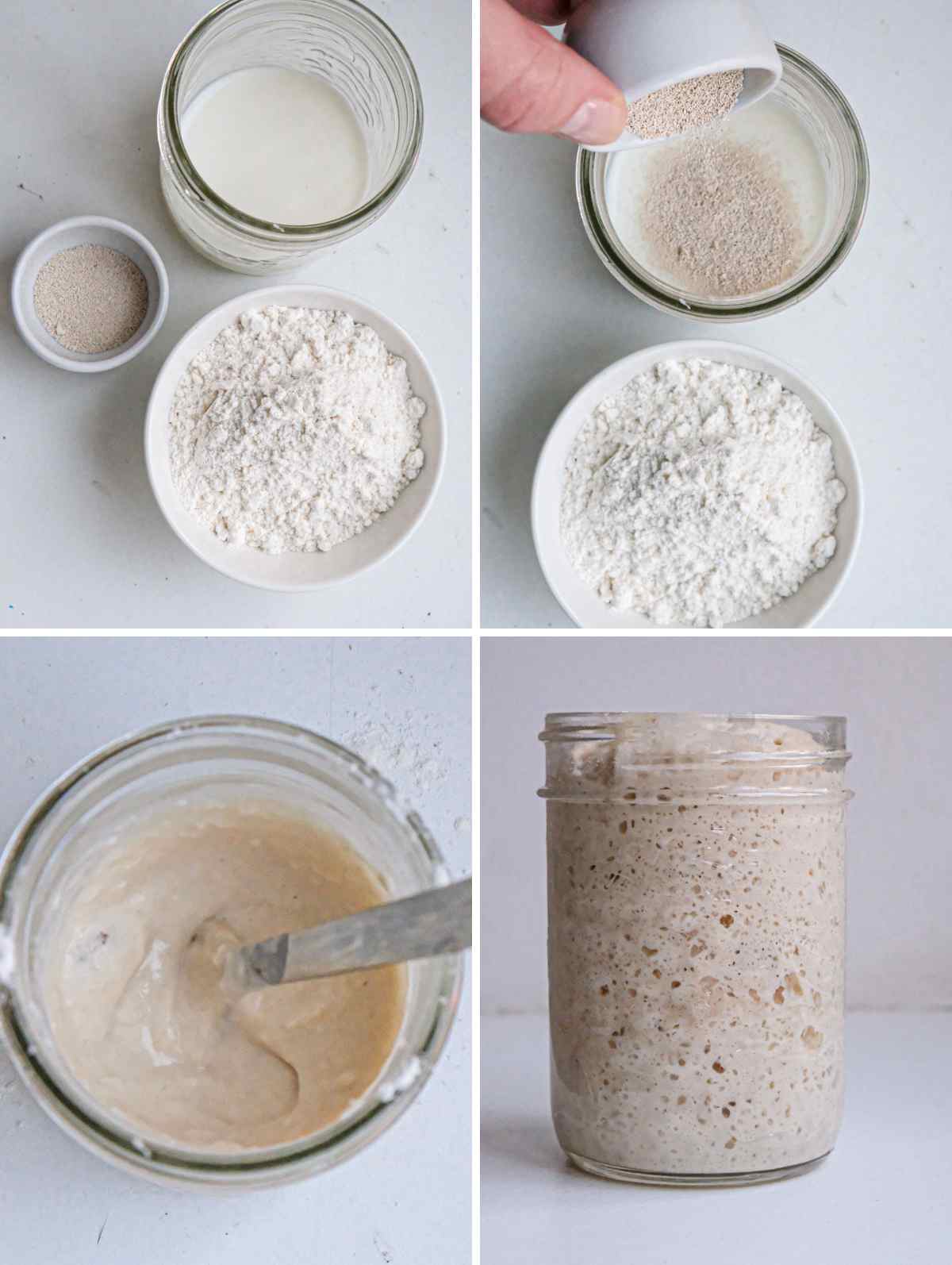
Step 2: Make the preferment (20 minutes)
You start by mixing a small part of the flour and milk with all of the yeast.
This mixture rests in a warm environment until bubbly and active (usually 15-20 minutes), which jump-starts fermentation and improving flavor and structure later on.
Step 3: Mix ingredients wet with wet and dry with dry
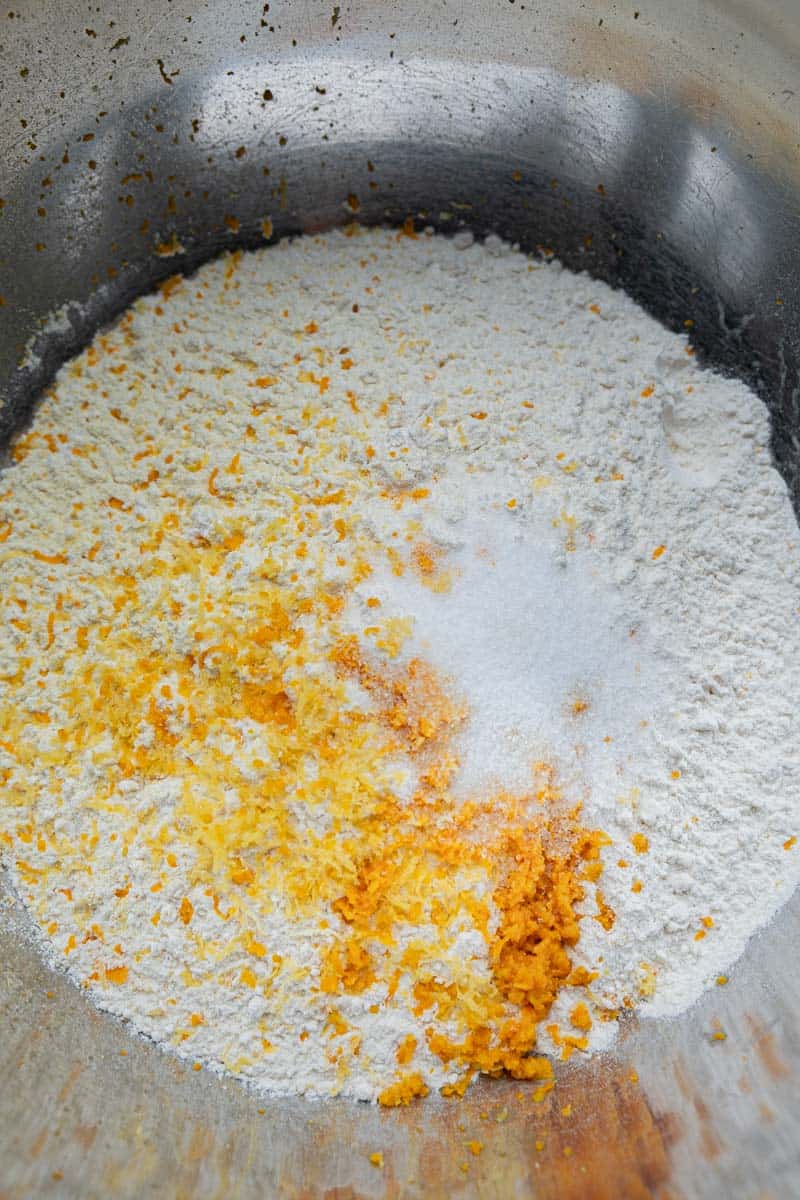
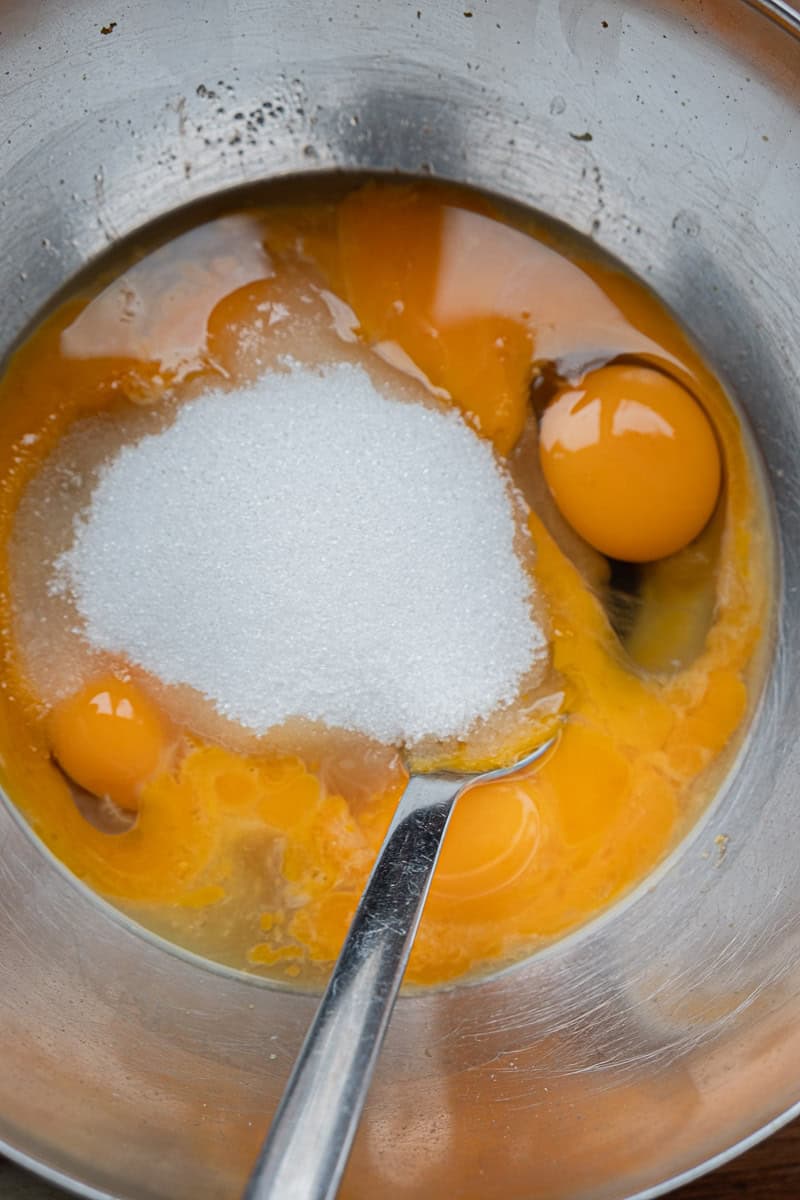
While the preferment is rising, mix wet with wet and dry with dry ingredients.
Mix the flour and salt in a large bowl. I like to also add the zests to the dry ingredients but it's up to you whether you add them to wet or dry.
On another medium bowl whisk together the eggs with melted butter, sugar, vanilla, rum and rum essence.
Step 4: Mix it all together
Once the preferment is ready, add it along with the wet ingredients to the large bowl containing the dry ingredients.
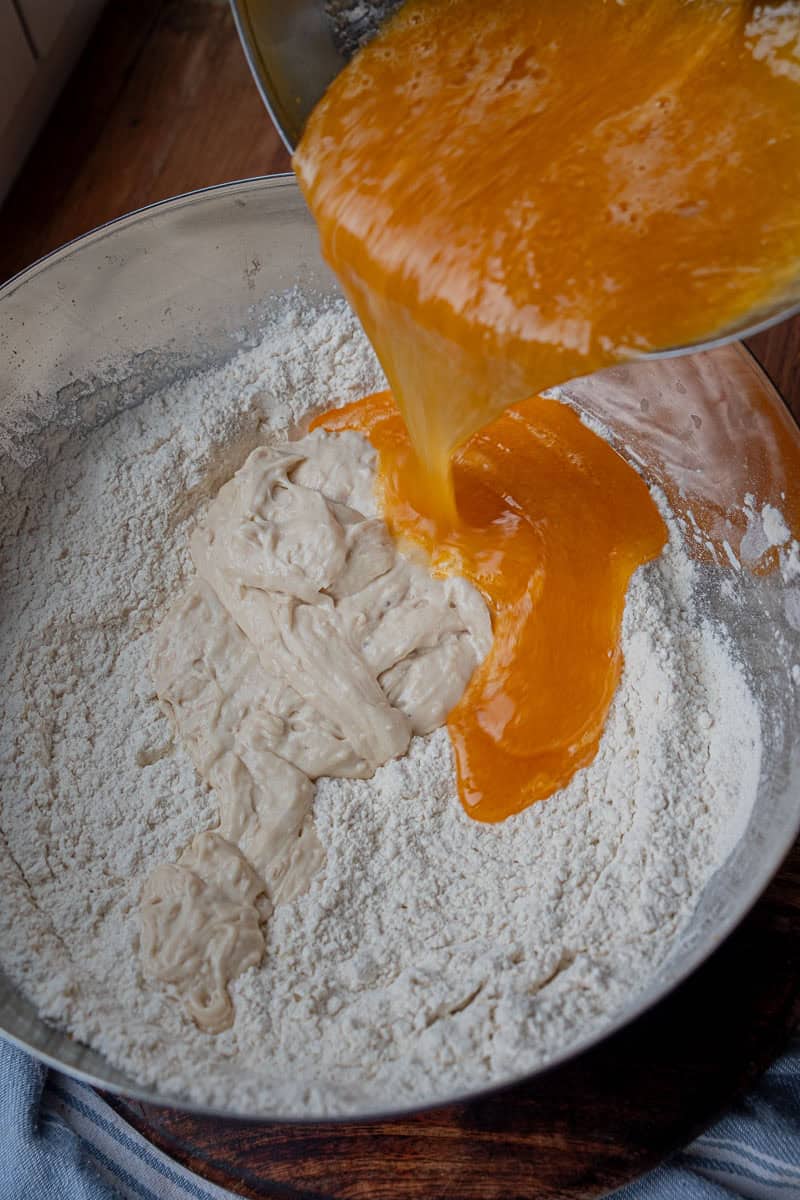
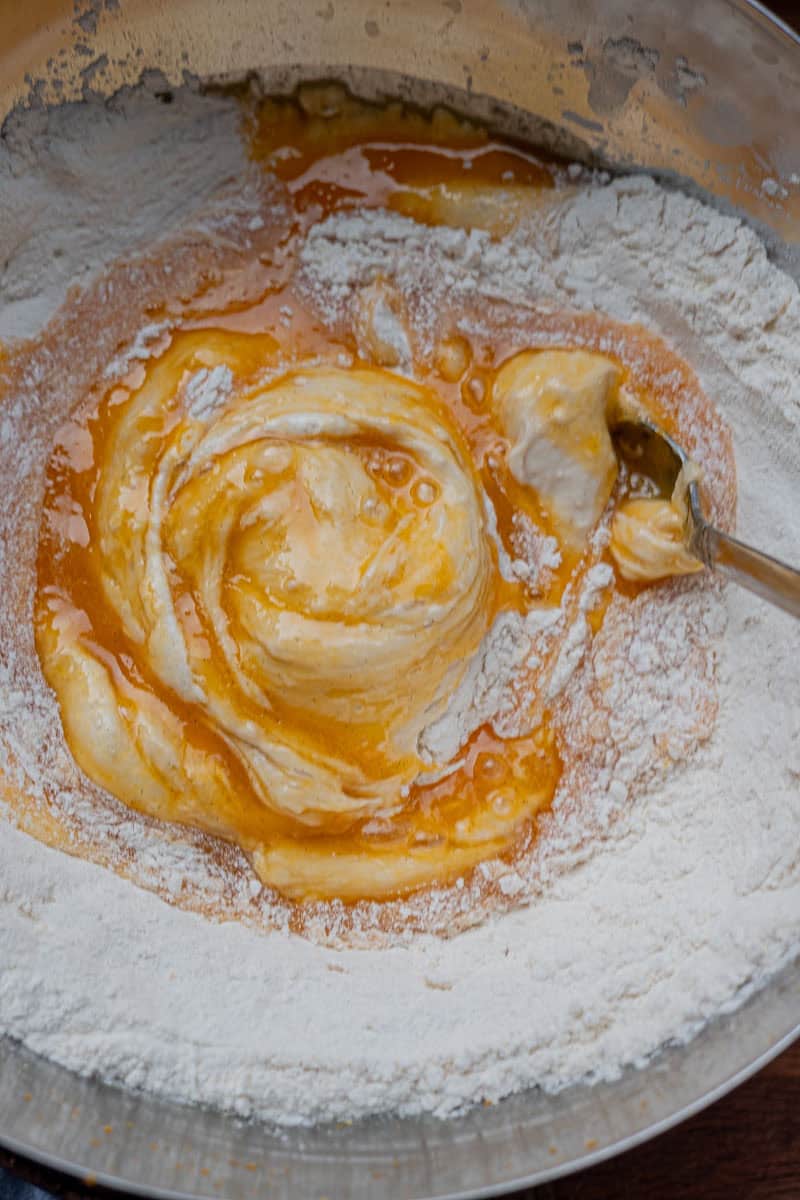
Mix first with a spoon until the liquid is incorporated and then with your hands until all the flour is absorbed and a smooth ball forms.
Step 5: Warm rest + stretch & folds (70 minutes)
Once you have a smooth ball of dough, you're going to rest it in the warm oven for 20 minutes. After 20 minutes it will be noticeably fuller.
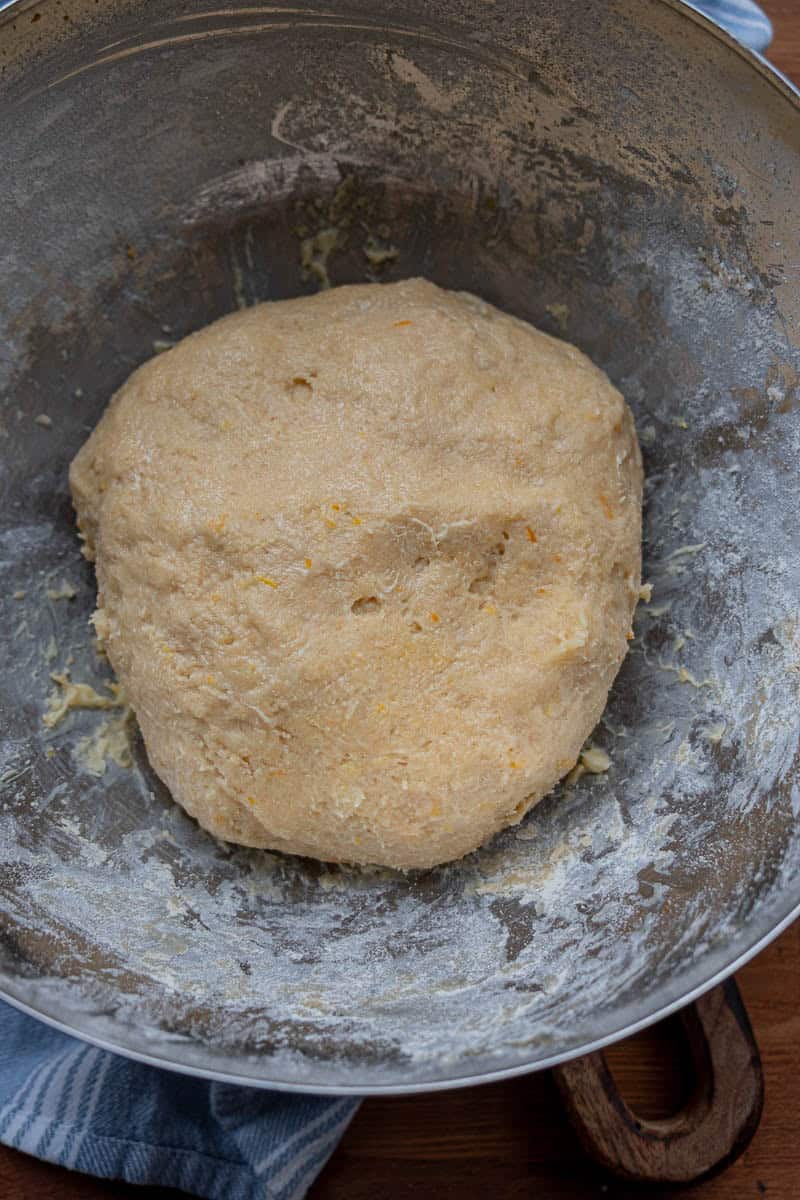
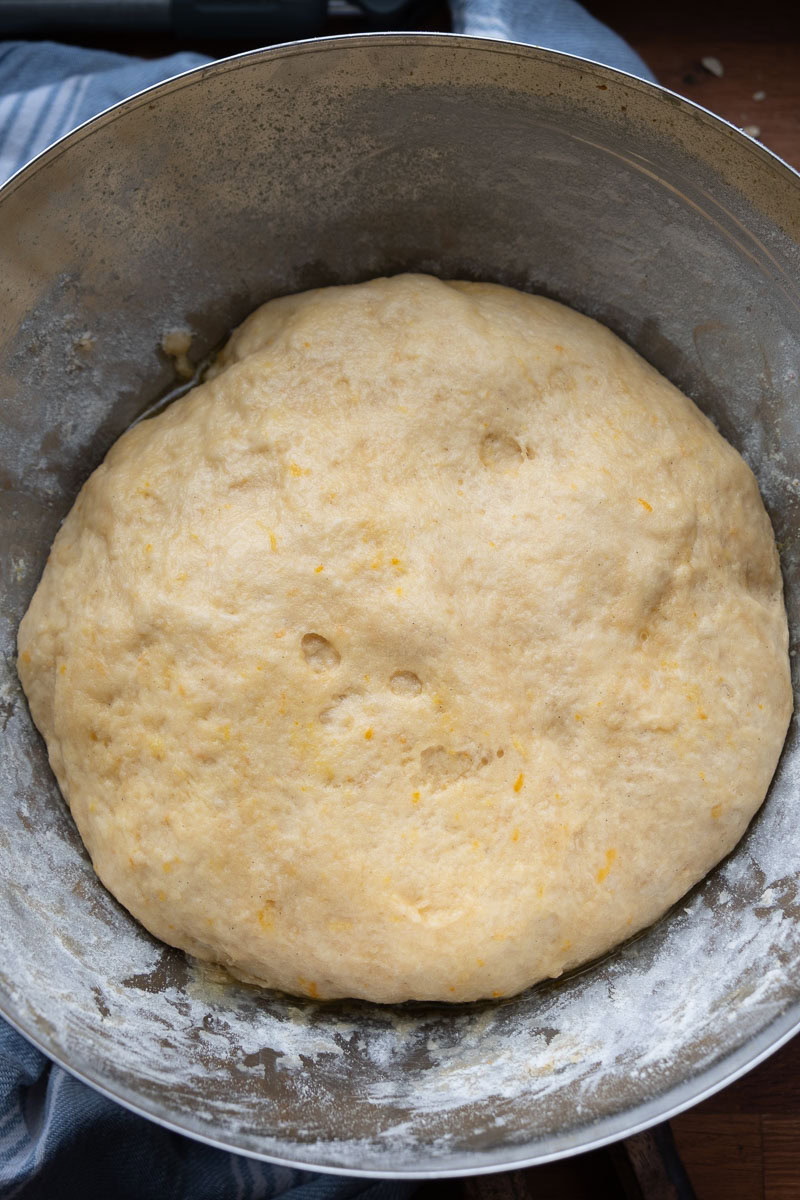
After 20 minutes of rest in the warm oven, the dough will get a series of stretch and folds. The image panel below shows how to do a stretch and fold (it's a different dough, but same idea).
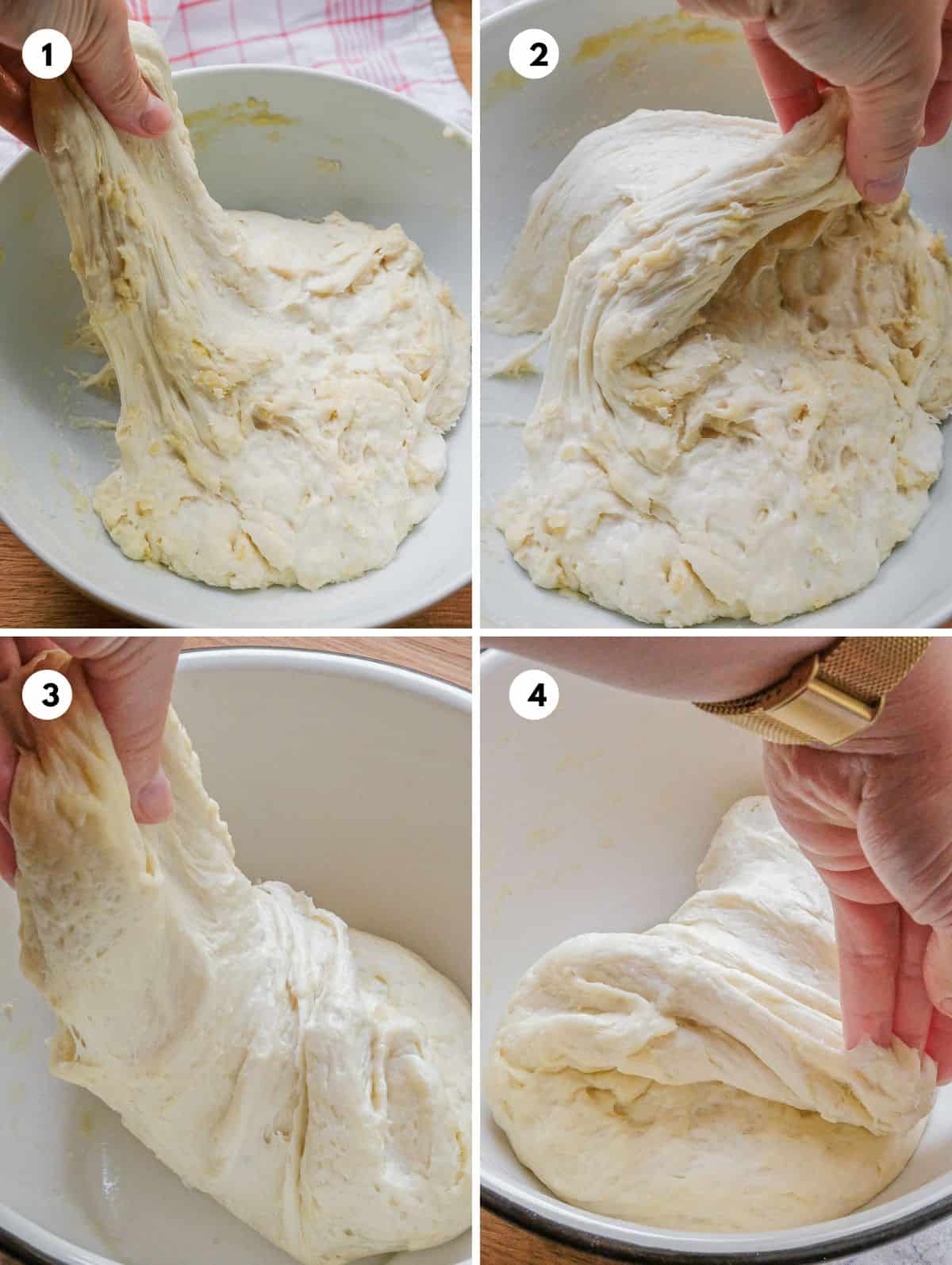
Three to four stretch and folds should be enough to incorporate air and also lengthen and strengthen the gluten.
You're going to then put the dough back into the warm oven for 20 more minutes, and then another round of stretch and folds. Then once more warm oven for 20 minutes and a round of stretch and folds.
That's a total of 60 minutes resting in the warm oven split into 20 minute periods followed by stretch and folds each time.
Step 6: Prepare the pans and filling while the dough rests
Prepare the loaf pans
Place the loaf pan in the center of a sheet of parchment paper, aligning the long side of the pan with the long side of the paper. With the pan still in place, make four straight cuts using scissors, cutting in toward the pan at each corner.
Each cut should be perpendicular to the edge of the paper and stop at the corner of the pan, removing a small square of parchment from each corner.
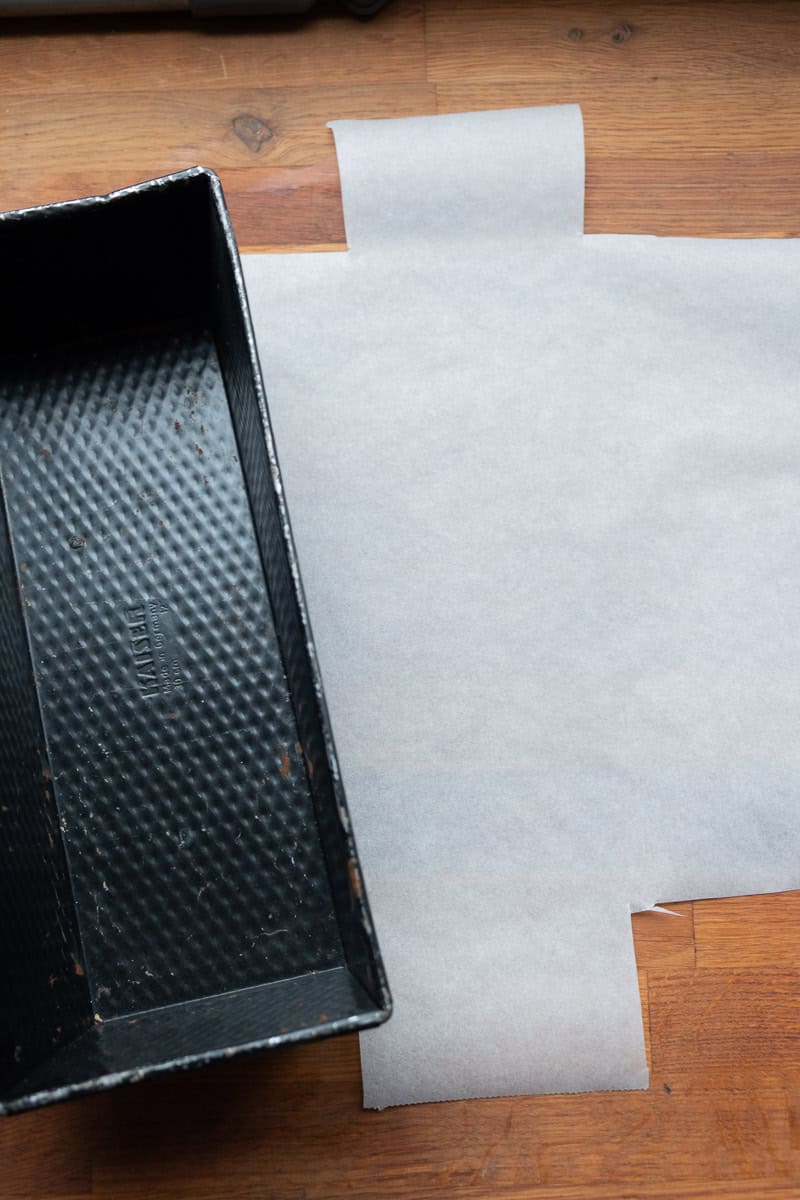
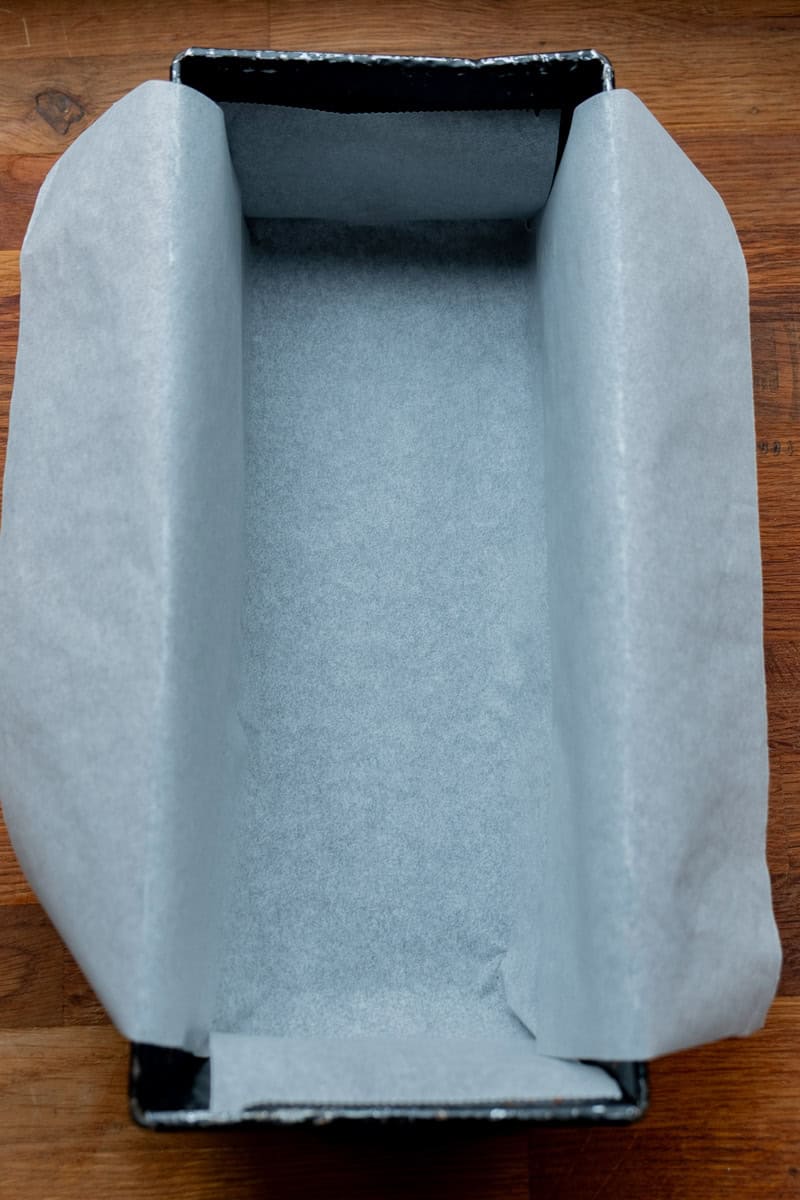
When you lift the pan away, you will be left with a rectangular sheet of parchment with four flaps. These fold neatly up the sides of the loaf pan, allowing the paper to fit cleanly inside without bunching or excessive creasing which can leave indents in the cozonaci.
Preparing a parchment paper liner this way takes a few extra minutes but it's worth the time investment because it:
- Helps get the shaped dough into the pan without ruining the shape;
- Prevents the cozonac from sticking to the pans;
- Helps get the finished cozonac out of the pans without having to cut around the edges or bang on the bottom of the pans (been there, don't recommend).
Make the filling
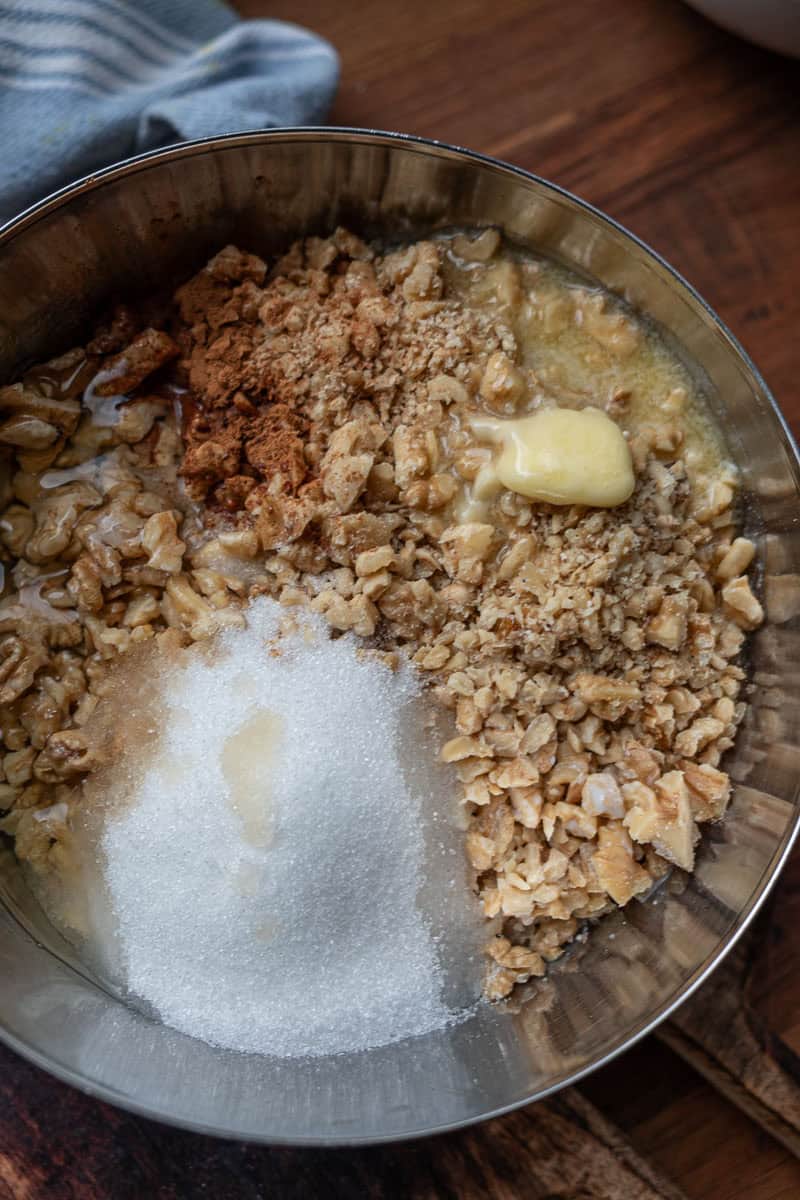
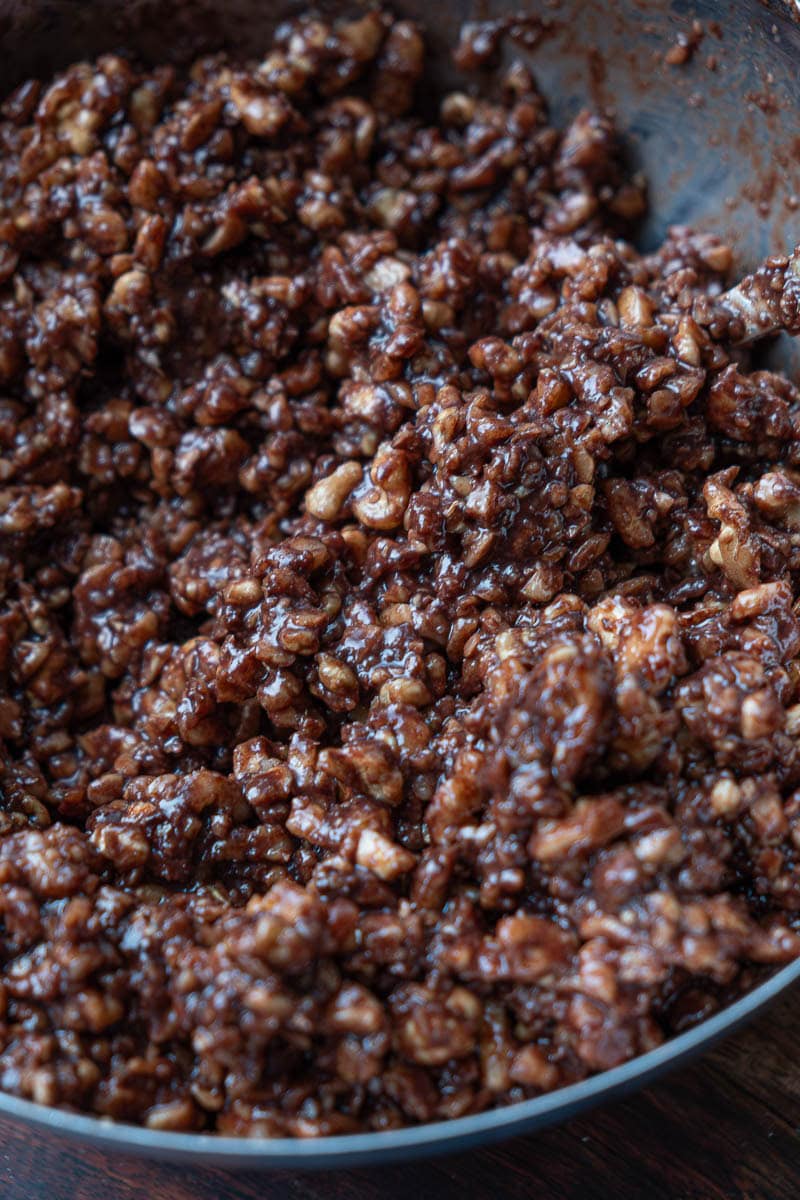
To make the filling, blend all the filling ingredients in a food processor until a thick, spreadable paste forms.
If you don't have a food processor, finely chop the walnuts by hand and mix them thoroughly with the remaining ingredients.
Some size variation is nice, so you can leave a few larger pieces for texture, but most of the walnuts should be chopped very finely - no larger than a grain of rice - so the mixture holds together and spreads easily.
Step 7: Shape the loaves
Divide the dough and filling in two
Divide the dough in two roughly equal pieces. If you want them exactly equal then you'll need to weigh the dough. Just for reference, my own dough usually weighs between 1550-1750 grams (775-875 g per piece) or 3.4-3.9 lb total (27-31 oz or about 1¾-2 lb per loaf).
My filling typically weighs around 800 grams total or 400 grams per cozonac (about 28 oz total or 14 oz per loaf).
Your dough weight may vary due to variation in ingredient weight (eggs, zests, essences etc.) and dough loss to bowl, hook, scraper, hands etc.
Once you've divided the dough and filling in two, lightly flour a work surface and turn out one half of the dough.
For total precision you can divide it up again into 2 equal pieces for a twist or 3 pieces for a braid.
If you aren't too fussed about exactitude then roll out the whole piece so it's about 10 cm / 4 inches longer than the loaf pan on either side. You can then just cut it into 2 pieces for a twist shape or 3 pieces for a braid.
Tip: Once the dough is rolled (or when you start your twist or braid) recommend moving it onto the prepared parchment paper so it's easier for you to move it into the prepared loaf pan.
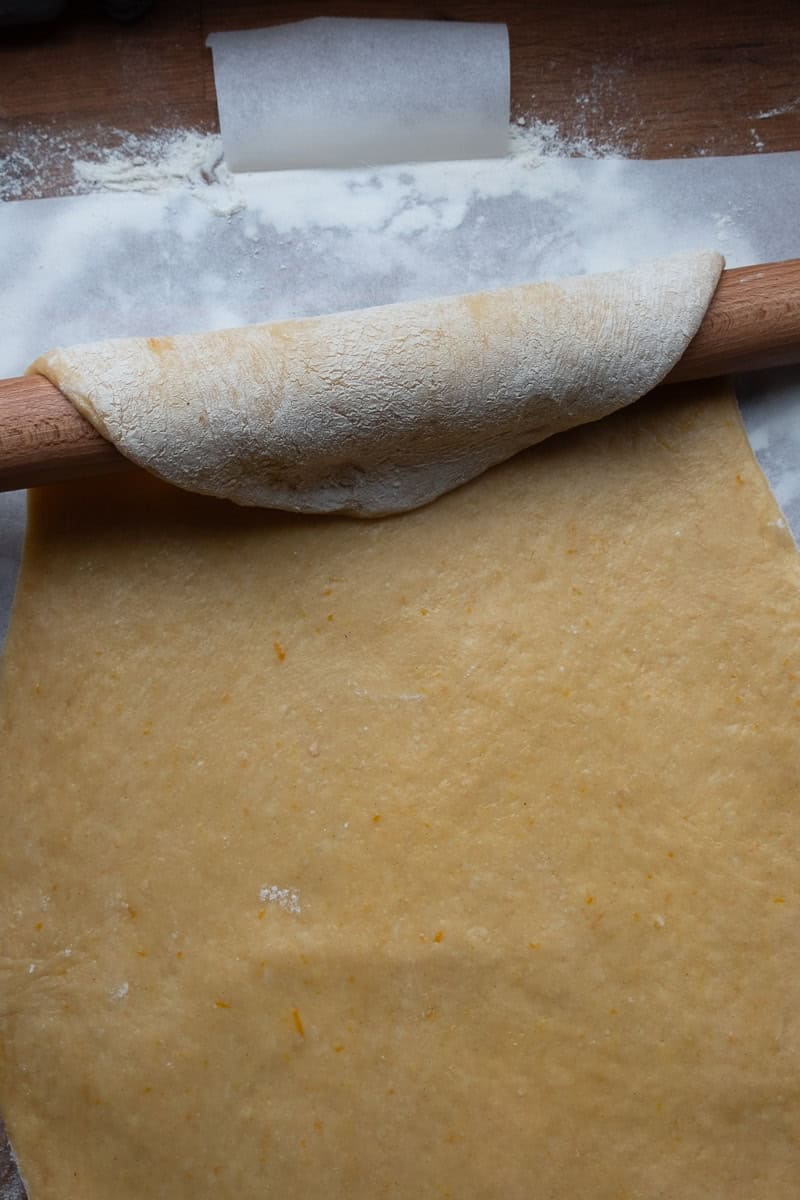
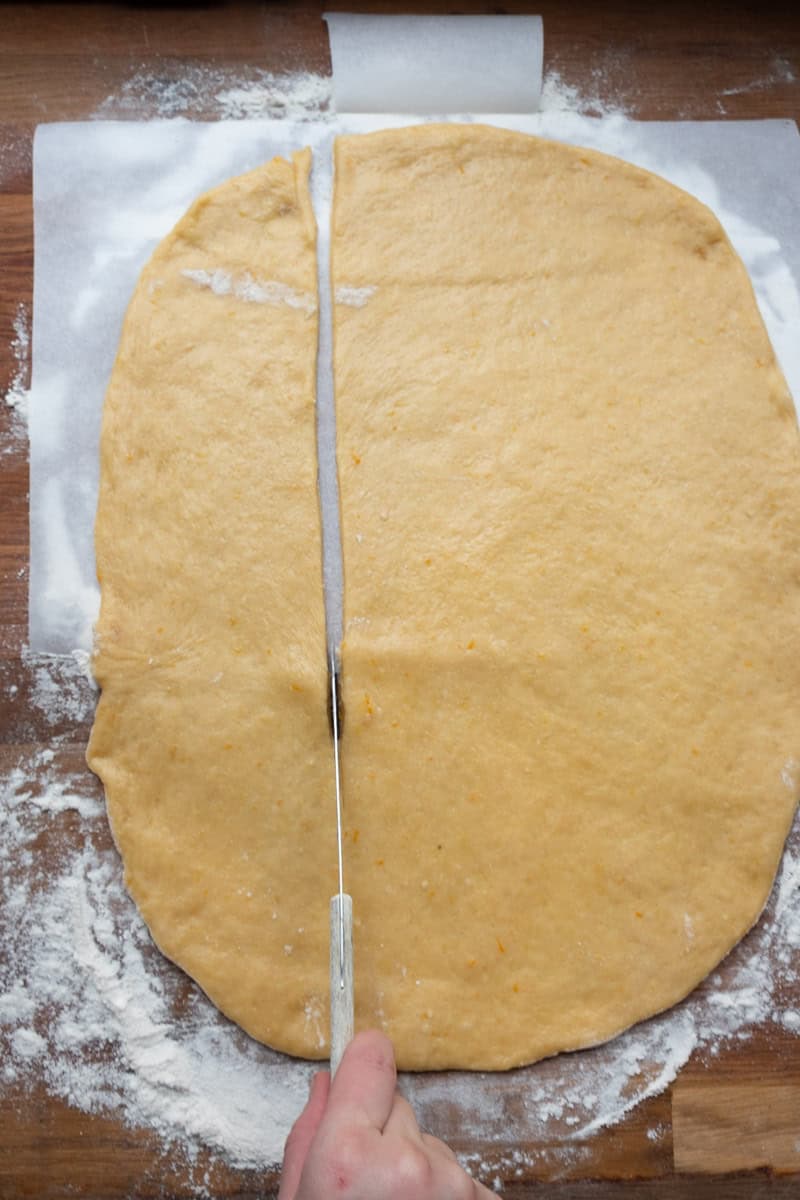
After you've cut the dough, gently spread the filling on the pieces leaving about a cm or half an inch on one side so it can seal when you roll it up.
You can add any additions you like like chocolate chips or Turkish delight.
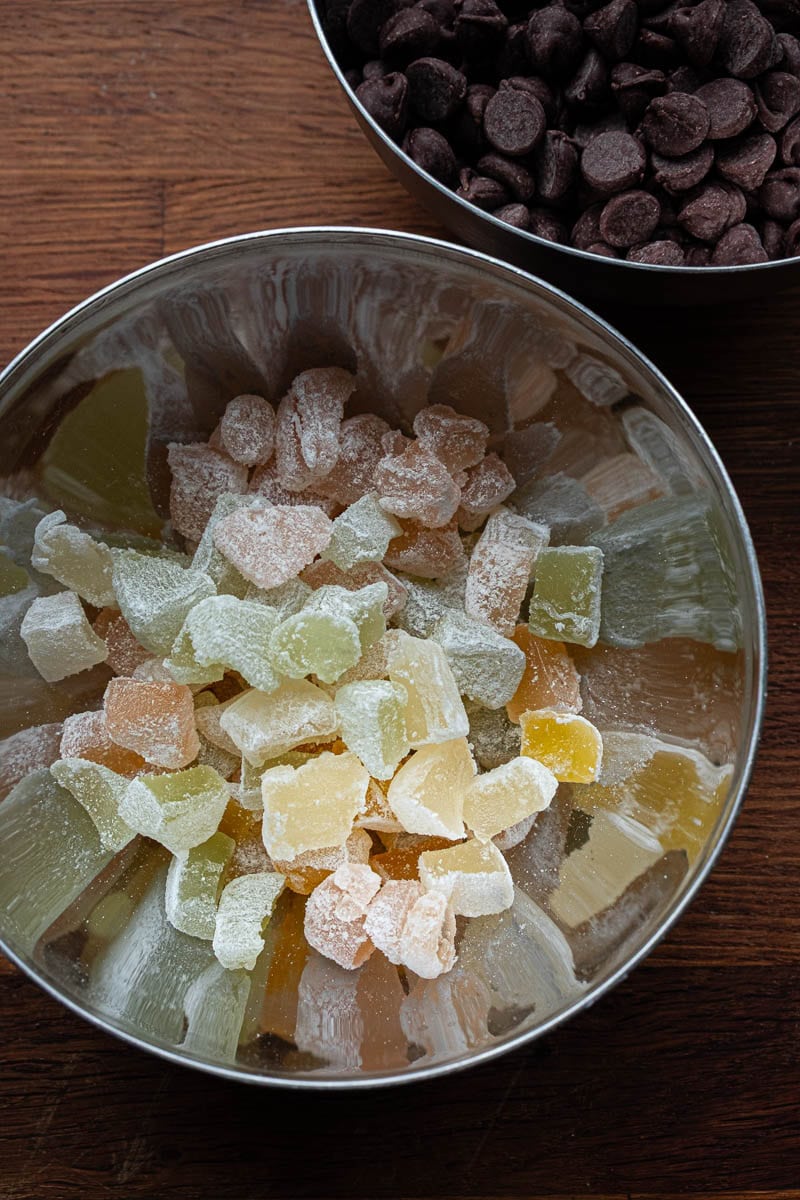
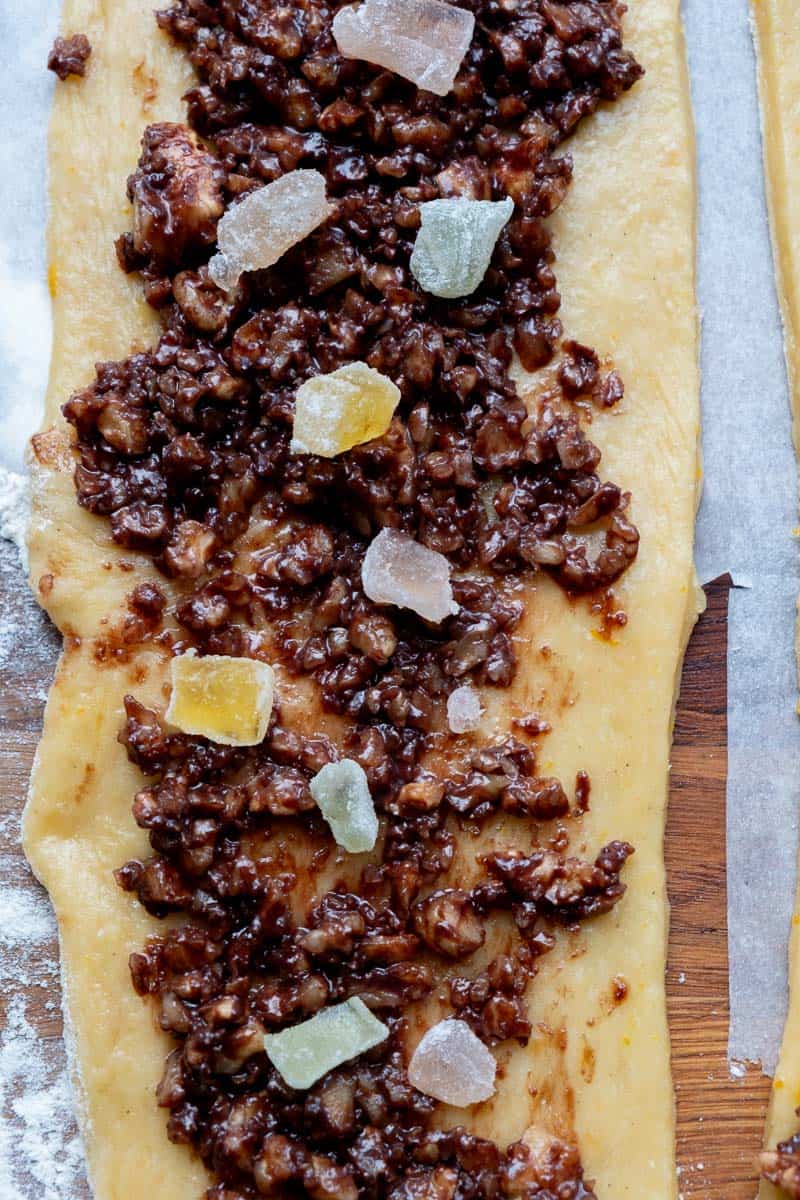
After spreading on the filling, roll the pieces of dough carpet-style into rolls, making sure they seal.
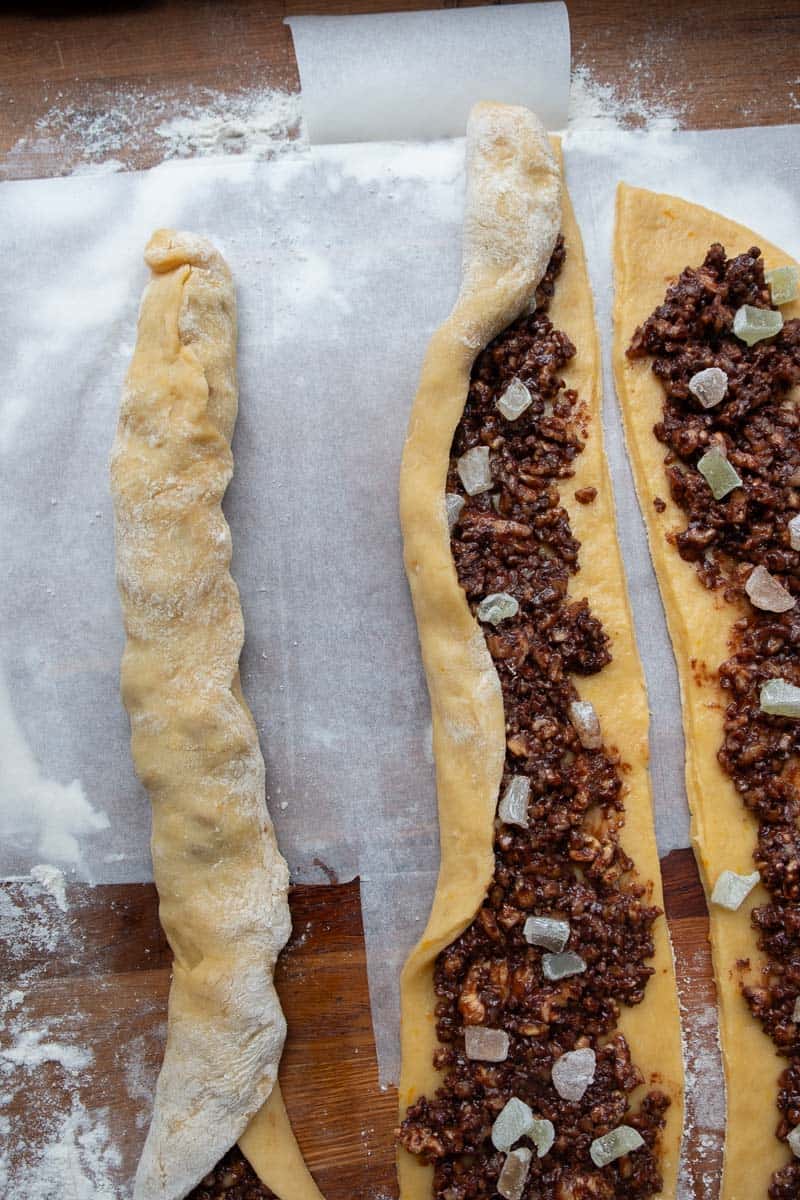
If they don't seal easily you can apply a little eggwash.
Once you have rolls, then bring together the ends of the rolls and either twist (if two pieces) or braid (if 3 pieces).
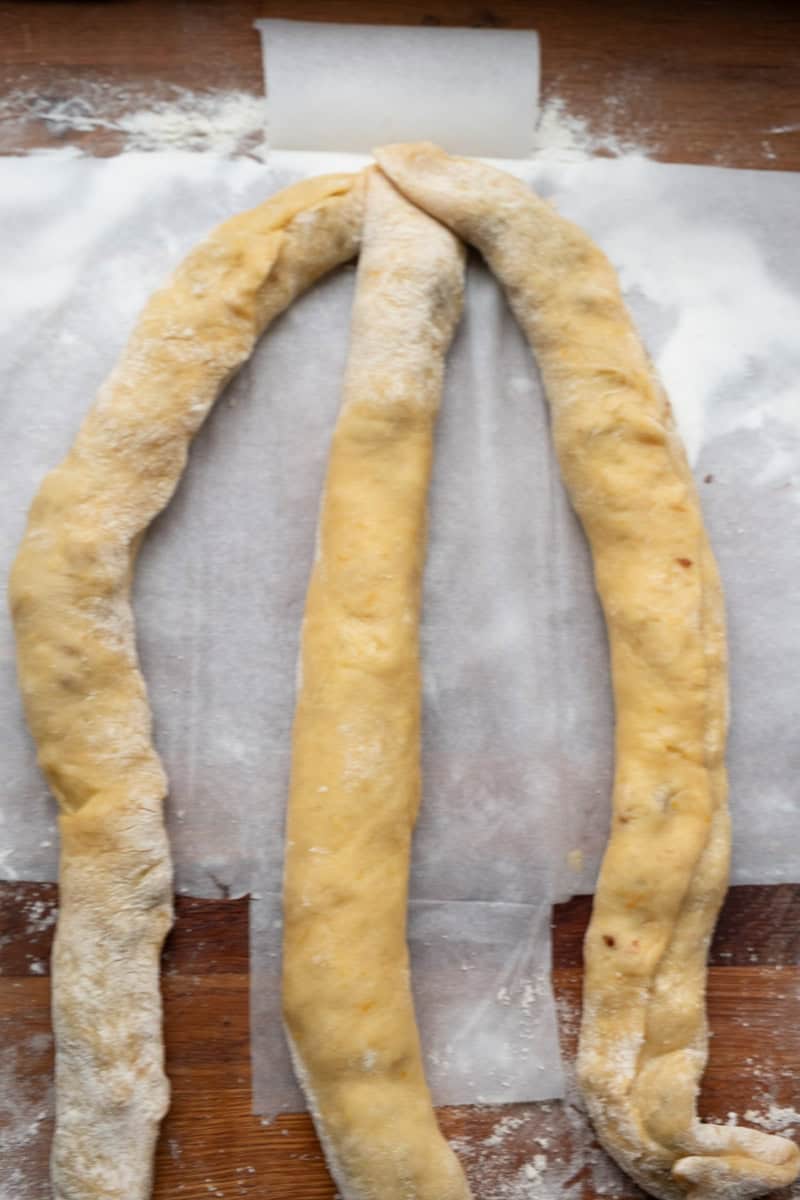
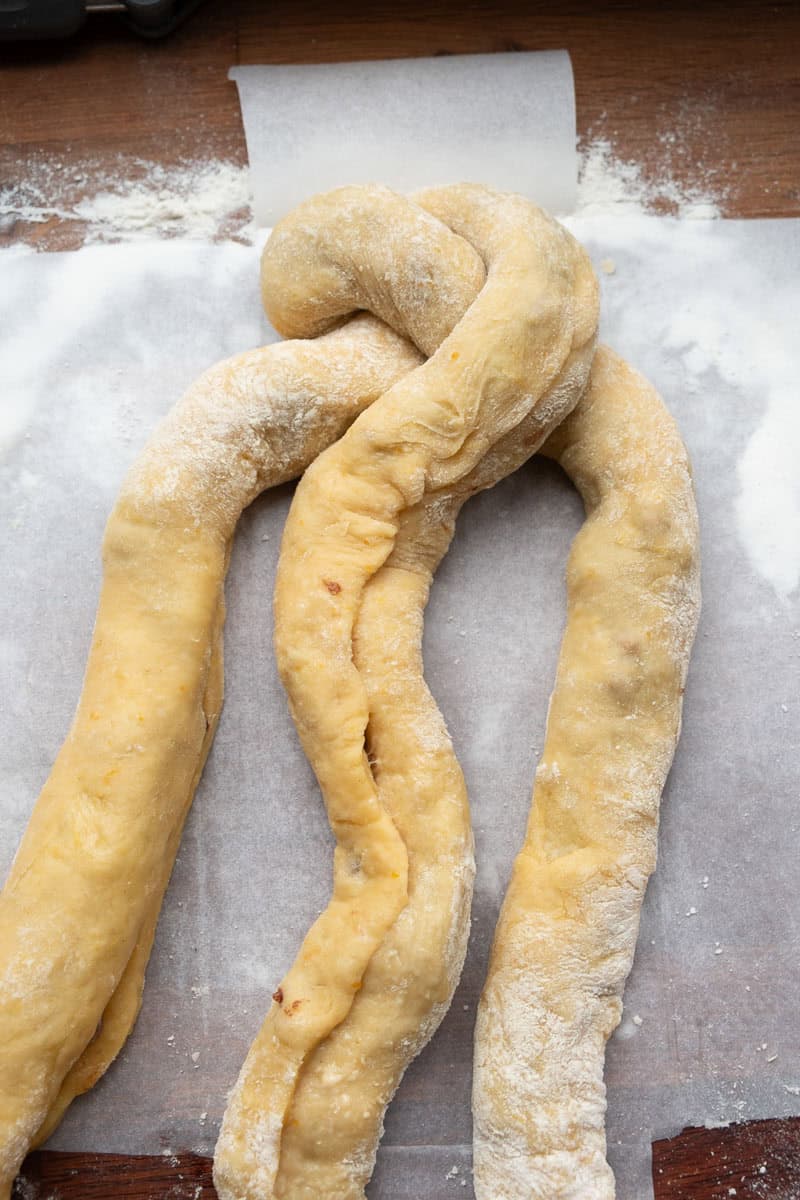
When twisting or braiding, keep in mind that the final shape and size of the loaf should fit into the loaf pan. If it's much wider, you might get some puckering on the edges.
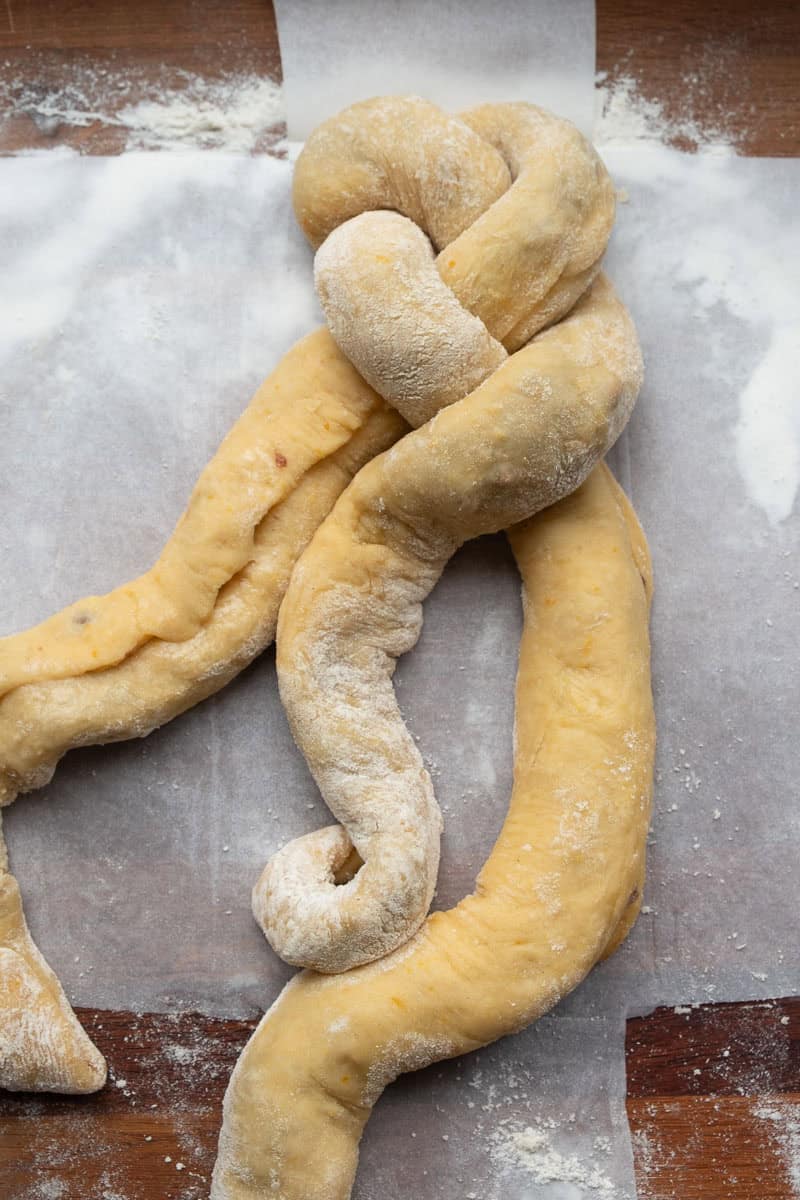
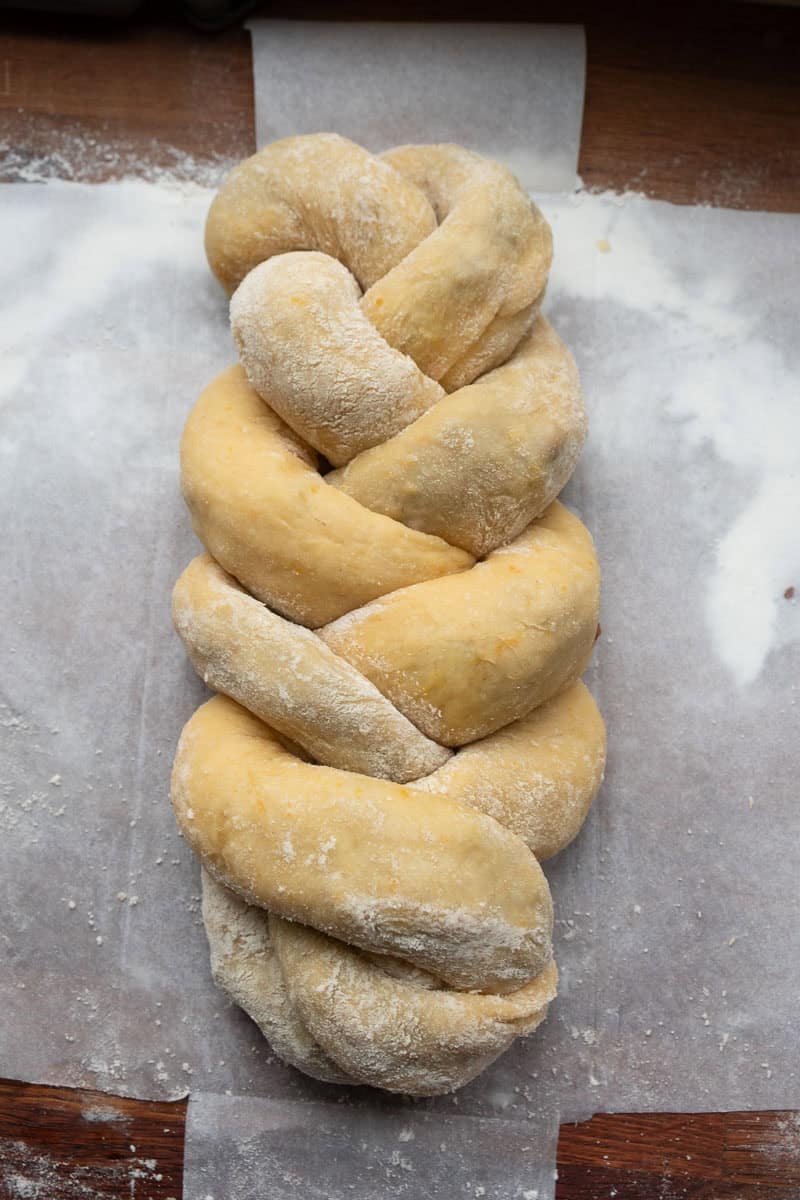
To make a twist shape

Step 8: Final proof and bake
Once your cozonac is formed, you are now almost at the finish line.
One final proof in the warm oven (50 C / 120 F) for 20-30 minutes or until the dough has puffed back up and feels airy and jiggly when gently tapped.
Once the final proof is done, take the loaf out and preheat the oven to 175 C / 350 F with the fan on (convection setting) if you have it. If not, you may need to add 10-15 minute additional baking time at the end - check doneness with a toothpick inserted in the thickest part.
Apply an eggwash to the cozonaci just before they go into the oven.
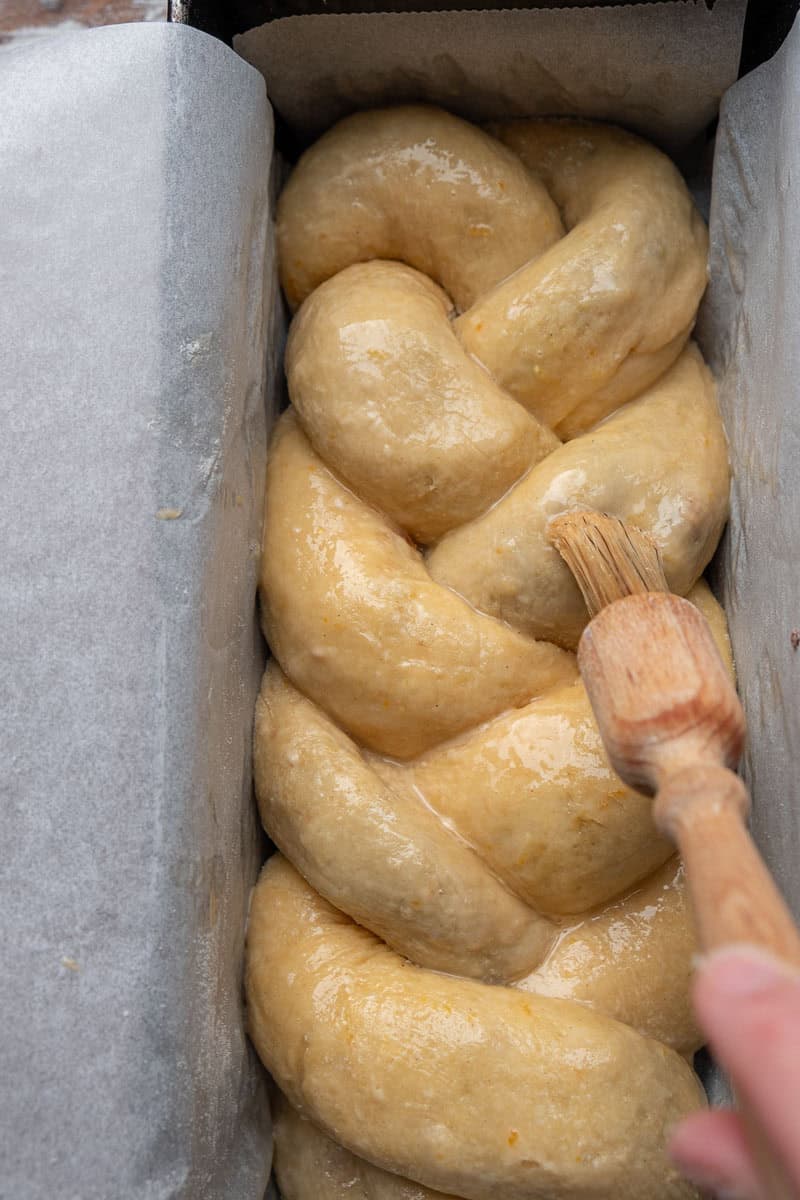
You will need to do a 2 step bake to get the color just right and to make sure the top doesn't burn.
First, bake at 175 C / 350 F for about 15 minutes or until the top of the cozonac is already turning dark brown. At this point, cover the tops with a sheet of aluminum foil and reduce the temperature to 150 C / 300 F then bake another 30 minutes.
If you don't have a convection setting, they won't brown as rapidly so just keep an eye and see if they need to be covered (they might not need it at all in a non-convection oven).
Serving and storing
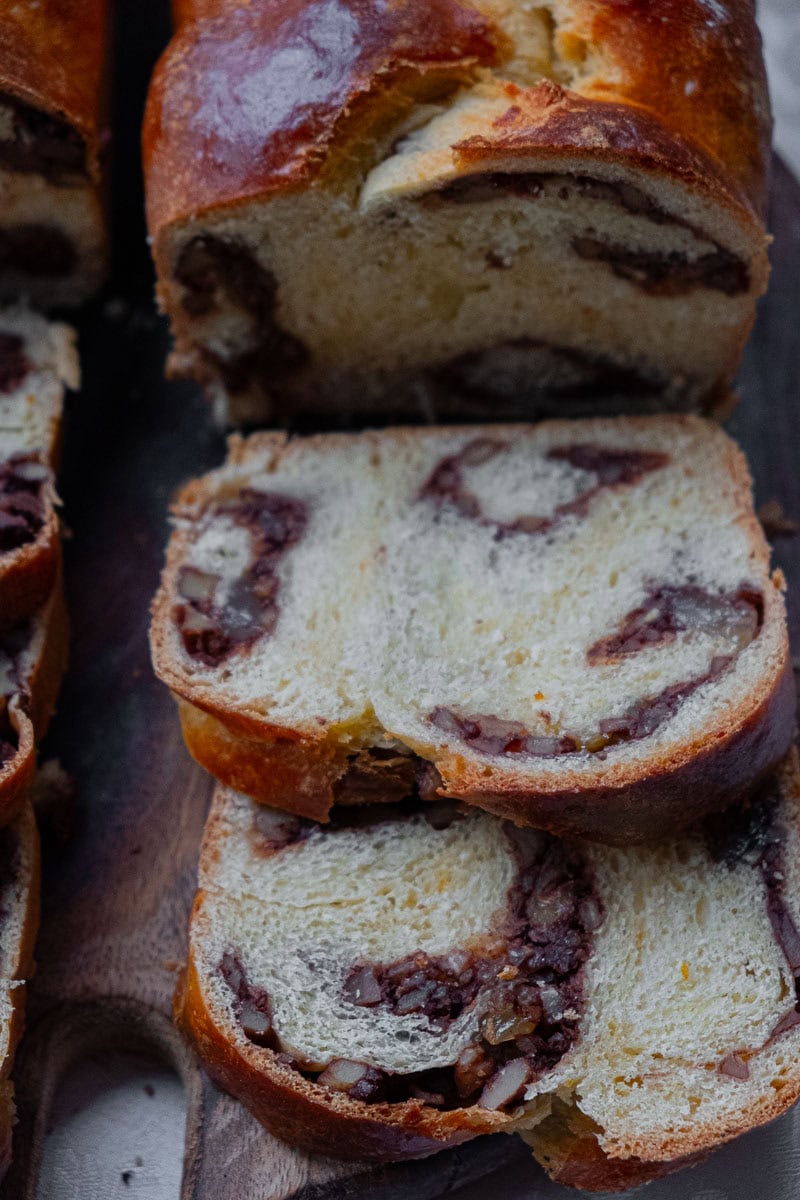
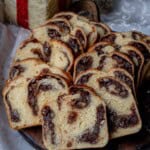
Cozonac is usually served as a dessert after Christmas dinner or Easter meals, usually pre-sliced and fanned out on a plate as shown in the photo above. Often the sliced cozonac isn't finished, so it's also enjoyed for breakfast with coffee during the holidays.
More Romanian Recipes



Recipe
No Knead Cozonac (Cozonac Fără Frământare)
Ingredients
sponge (preferment)
- 200 grams flour
- 200 ml milk
- 14 grams dry yeast or 40 grams fresh yeast
dough
- 800 grams flour
- 200 ml milk
- 200 grams sugar
- 200 grams butter very soft or lightly melted
- 2 eggs
- 4 egg yolks
- zest of one lemon
- zest of one orange
- 1.5 teaspoons vanilla bean paste or substitute vanilla extract
- 1 teaspoon rum essence
- 20 ml spiced rum 1 tablespoon and 1 tsp
- 12 grams salt
filling
- 500 grams walnuts
- 100 grams sugar
- 80 ml milk
- 60 grams egg white about 2 egg whites
- 30 grams butter
- 12 grams cocoa powder
- 20 ml spiced rum 1 tablespoon and 1 tsp
- 0.5 teaspoon rum essence
- 3 grams salt
extras
- 2 teaspoons vegetable oil to grease the bowl when resting the dough (optional)
- 1 tablespoon butter for preparing the loaf pans
- 1 tablespoon flour for preparing the loaf pans
- 1 egg beaten well for eggwash
Equipment
- 2 loaf pans see recipe post for size details
- stand mixer with dough hook attachment
- food processor for making the filling (optional)
- parchment paper for lining the pans (optional)
- aluminum foil for covering the loaves while baking
- pastry brush for eggwash
Instructions
make the sponge (20 minutes)
- Make the sponge by mixing the sponge ingredients and letting it rise in a warm oven (50C / 120 F) for 15-20 minutes until bubbly.
prepare the other ingredients
- Mix the flour, salt and citrus zest in a large bowl. In another medium sized bowl mix the sugar, eggs, butter, vanilla, rum essence and rum extract.
- Once the sponge is ready, add it along with the wet ingredients to the large bowl with the dry ingredients.
- Mix first with a spoon and then with your hands until a smooth ball forms.
- After a total of 30 minutes of mixing the dough is ready for the first proof.
proof the dough (70 minutes)
- Put the dough in the warm oven (50 C / 120 F) for 20 minutes exactly.
- After 20 minutes, do 3-4 stretch and folds. Then put back in warm oven for 20 more minutes.
- Repeat once more (for a total of 60 minutes in the oven) then take the dough out of the oven and do your final stretch and fold then set aside until ready to shape.
prepare the loaf pans and make the filling* (5 minutes)
- While the dough is proofing you can prepare the loaf pans and parchment paper (if using). Cut parchment paper to fit your pans (see post for tips). Prepare the loaf pans by rubbing with a layer of butter and then flour on all the surfaces that will be in contact with the dough.
- If you want some bigger nut pieces in the cozonac, set aside 100 grams. These can be either quickly pulsed in a food processor to desired consistency or rough chopped with a knife. Set them aside until ready to use.
- Add the walnuts and all the other dry ingredients for the filling to the bowl of the food processor and pulse until the mixture is fine and smooth. Alternatively if you don't have a food processor then finely chop the nuts so most are about the size of a grain of rice, then mix all the filling ingredients together.
shape (20 minutes)
- Cut the dough into two equal pieces. Cover one of them while you roll out the other.
- Roll out the dough roughly into the shape of a rectangle that's about 10cm /4 inches longer and wider than your loaf pan. Gently slide the parchment paper underneath the rolled out dough to make it easier to move after shaping.
- Cut the dough again into either 2 pieces (to make a twist shape) or 3 pieces (to make a braid shape).
- Distribute the filling equally for all the pieces of dough and spread on in a thin layer.
- Roll the pieces of dough into carpet-like rolls.
- Bring together the ends of the rolls and either twist (if two pieces) or braid (if 3 pieces).
- Gently lift the loaf with the parchment paper and place it into the prepared loaf pans.
- Cover the prepared loaf with a clean kitchen cloth, and repeat this process on the remaining piece of dough.
final proof (20-30 minutes)
- Once both loaves and ready and in the loaf pans, put them back in the warm (50 C / 120 F) oven. Proof in the warm oven for 20-30 minutes or until significantly puffed up.
- Take the loaves out of the oven, and heat the oven up to 175 C / 350 F ideally with the fan setting (convection).
- Apply eggwash to the loaves just before baking.
bake (45 minutes)
- Put the loaves in the preheated oven. Set two timers: one for the total baking time of 45 minutes and another for 15 minutes.
- After 15 minutes, check on the loaves. If they are very dark brown on top already, then gently cover them with aluminum foil (like a tent) and reduce the oven temperature to 160 C / 320 F. If they are not very dark, then wait another 5 minutes before you tent them and reduce the oven temperature.
- After 45 minutes the cozonaci should be ready. If not using convection you may need to add 10-15 more minutes. Check doneness with a toothpick inserted in the thickest part.
- Allow the cozonaci to cool at least for 15-20 minutes before before removing from pans and another 15-20 before slicing.
Comments
No Comments